Situation Summary
Kuwait faces an elevated but manageable external military threat following two waves of Iranian drone and missile attacks on June 29–30, 2026, with at least 24 unmanned systems intercepted by Kuwaiti air defences. Domestic security remains stable; the Ministry of Interior reports no new internal threats or civil unrest. Regional tension is high due to Iran's ongoing response to U.S. military action, but Kuwaiti authorities and the U.S. Embassy assess the situation as contained and are maintaining normal operations under heightened vigilance.
Key Developments
- Iranian drone attacks intercepted, June 29–30, 2026 (coastal and border areas). Kuwaiti Army air-defence units detected and neutralized at least 24 Iranian drones across two attack waves. No confirmed damage to civilian or critical infrastructure has been reported.
- U.S. military facilities in Kuwait targeted by Iranian IRGC claims, June 28–29, 2026 (unspecified bases). Iran's Islamic Revolutionary Guard Corps claimed strikes on multiple U.S. installations in Kuwait as part of retaliatory operations. Kuwaiti and U.S. sources have not yet released detailed damage assessments.
- U.S. Embassy resumes normal operations, late June 2026 (Kuwait City). The embassy confirmed continued diplomatic and consular operations while maintaining close monitoring of regional missile and drone activity.
- Ukraine defence agreement activated with military adviser deployment, June 28–30, 2026 (Kuwait City and military facilities). Ukraine's foreign ministry announced that a 2018 defence cooperation agreement entered into force on June 28, with Ukrainian military experts deploying to assist Kuwait in counter-drone and counter-missile defence.
- No domestic security incidents reported, June 30, 2026 (nationwide). The Ministry of Interior confirmed zero new internal threats, civil unrest, or crime spikes despite ongoing regional military activity.
- Kuwaiti authorities condemn attacks and reassure public, June 30, 2026 (Kuwait City). Official statements emphasize that air defences have managed the threat, internal security is stable, and daily life continues uninterrupted.
- Heightened regional alert affects travel perception, June 29–30, 2026 (Bahrain–Kuwait corridor). Emergency sirens and alerts in Bahrain, triggered by concurrent Iranian drone and missile activity, have elevated security concerns for regional transit and infrastructure, though no formal border or flight closures have been announced.
Highest-Risk Areas
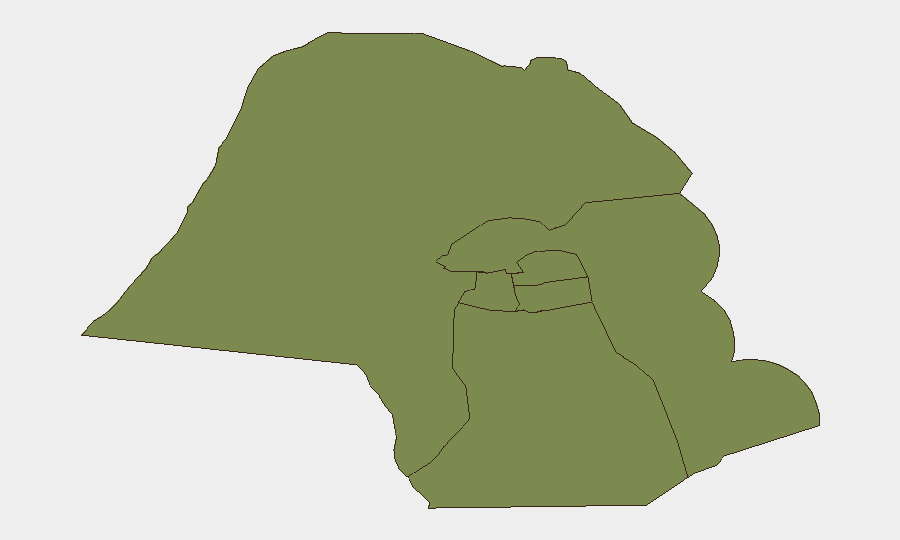
Jahra Governorate carries significantly elevated risk (31.8) and warrants priority monitoring; its proximity to Iraq's border and historical role in cross-border tensions make it the primary exposure zone. The five remaining governorates (Ahmadi, Farwaniya, Hawalli, Mubarak al-Kabir, and Capital) show similar, lower composite scores (1.8 each), reflecting broadly distributed but moderate baseline risk. The current spike in external military activity does not yet translate to sub-national civilian risk variance, but Jahra's geographic and historical profile makes it a sentinel area for early warning of escalation.
How GeoBit Would Assist
Security teams should deploy AOI Monitoring & Early Warning on Jahra Governorate and key U.S./allied military facilities to detect pattern changes in drone or missile activity. Conflict & Military tracking (battle mapping, force structure, weapons-capability analysis) provides real-time intelligence on Iranian drone and missile capabilities and Kuwaiti air-defence effectiveness. Multi-language OSINT and Telegram/X monitoring coupled with sentiment & temporal analysis enable early detection of domestic unrest or public panic that might follow future attack waves.
7-Day Outlook
Iranian attack cycles may continue or pause pending diplomatic or military developments; U.S.–Iran escalation dynamics remain the primary driver. Kuwaiti air defences have proven effective, and internal stability is holding. Corporate security teams should maintain heightened vigilance on personnel travel to and from the region and monitor updates from the U.S. Embassy and Kuwaiti Ministry of Interior for any shift toward domestic unrest or infrastructure disruption.
Highest-Risk Areas — Ranked
| # | State / Region | Risk |
|---|---|---|
| 1 | Jahra Governorate | 31.8 |
| 2 | Ahmadi Governorate | 1.8 |
| 3 | Farwaniya Governorate | 1.8 |
| 4 | Hawalli Governorate | 1.8 |
| 5 | Mubarak al-Kabir Governorate | 1.8 |
| 6 | Capital Governorate | 1.8 |
Sources
Previous Daily Briefs
A new Kuwait brief is written every day — each with its own risk map and downloadable CSV. Here's the last week; use the calendar to go further back.
📅 Browse every day by calendar →
Highlighted days have a brief. Tap a day for that day's map & analysis, or “csv” for that day's dataset ($5).