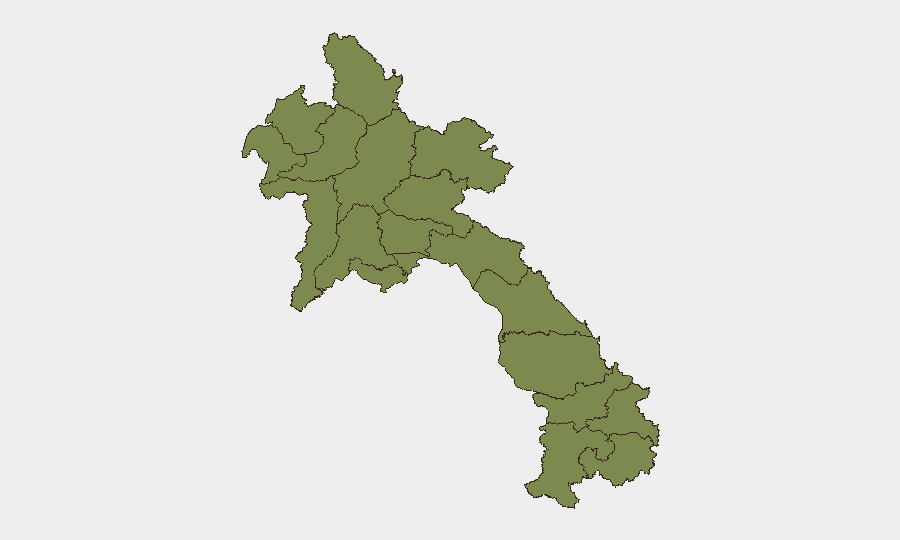
Situation Summary
Laos remains a low-threat environment with no verified security incidents, civil unrest, or acute travel disruptions reported in the last 24–48 hours. The country's composite threat score of 19 reflects structural risks—petty crime, historical border sensitivities, and administrative constraints—rather than active instability or conflict. Political conditions continue to be characterized as stable, with no armed clashes or protests in recent reporting.
Key Developments
No new security, civil unrest, crime, or travel-risk incidents have been verified in Laos in the last 24–48 hours according to multi-source monitoring and current security feeds.
Note on recent advisory activity: The Australian Department of Foreign Affairs and Trade updated its travel advisory for Laos on 17 July 2026, elevating advisory guidance to highlight crime risks and methanol poisoning from contaminated spirits (particularly "Tiger" brand products). This represents a policy/advisory change rather than a new acute incident; the underlying poisoning cases referenced date to 2024 and fall outside the current window.
Highest-Risk Areas
Vientiane Province dominates the sub-national risk profile, with a composite score of 31.3—more than five times the next-ranked region. This concentration reflects capital-city dynamics: higher population density, greater concentration of foreign nationals and business activity, and historical cybercrime and petty-crime enforcement activity (notably a July 11 cybercrime raid in Vientiane with 122 arrests, now outside the 48-hour window). Bolikhamsai Province registers elevated risk at 4.7, while all other provinces cluster at 1.3–1.3, indicating relatively uniform low baseline risk across the hinterland. Northern and northeastern border provinces—Luang Namtha, Bokeo, Phongsaly, Houaphanh, and Xaisomboun—carry historical sensitivities (disputed/sensitive border zones with Thailand, Vietnam, and China) but show no acute current incidents.
How GeoBit Would Assist
Security teams with personnel or assets in Laos would benefit from Intel Sweep and global event-feed monitoring to detect early signs of civil unrest, cross-border incidents, or crime spikes in real time. Area-of-Interest (AOI) monitoring with alerting on Vientiane Province and northern border zones would provide persistent early warning of localized instability. Multi-language OSINT and Telegram/social-media intelligence would help identify emerging public-health threats (e.g., contaminated product recalls) and detect sentiment shifts or official policy announcements that might affect operations. Routing & network analysis capabilities can support duty-of-care teams in identifying alternative routes around known high-risk zones during travel planning.
7-Day Outlook
No significant escalation is anticipated in the 7-day horizon. Laos's political and security environment is expected to remain stable, with risk concentrated in routine crime (petty theft, occasional robbery in urban areas) and product-safety hazards rather than systemic instability. Duty-of-care teams should maintain standard precautions—awareness of petty-crime hotspots, avoidance of counterfeit or unverified alcohol products, and compliance with local administrative procedures—but no acute travel restrictions or security alerts are foreseeable.
Highest-Risk Areas — Ranked
| # | State / Region | Risk |
|---|---|---|
| 1 | Vientiane Province | 31.3 |
| 2 | Vientiane Prefecture | 6.3 |
| 3 | Bolikhamsai | 4.7 |
| 4 | Luang Namtha | 1.3 |
| 5 | Bokeo Province | 1.3 |
| 6 | Phongsaly | 1.3 |
| 7 | Oudomxay | 1.3 |
| 8 | Luang Prabang | 1.3 |
| 9 | Houaphanh | 1.3 |
| 10 | Xiangkhouang Province | 1.3 |
| 11 | Sainyabuli Province | 1.3 |
| 12 | Xaisomboun Province | 1.3 |
Sources
Previous Daily Briefs
A new Laos brief is written every day — each with its own risk map and downloadable CSV. Here's the last week; use the calendar to go further back.
📅 Browse every day by calendar →
Highlighted days have a brief. Tap a day for that day's map & analysis, or “csv” for that day's dataset ($5).
Atlas — our AI intelligence desk — emails them this snapshot personally. Nothing else, no list.