Situation Summary
Luxembourg maintains a low overall security threat profile (rank #194 globally, composite score 2.0) with stable civil order and minimal organized violence. The country's primary security concerns remain petty crime in urban transit hubs and the persistent legacy hazard of unexploded ordnance in rural northern and eastern zones. Recent event signals on 9 July reflect internal political and media commentary rather than security incidents, indicating a stable operational environment for corporate activity.
Key Developments
- Petty crime incidents, Luxembourg-wide (9 July, confirmed): Luxembourg Police confirmed two burglaries across the country within the preceding 24 hours; specific locations not yet disclosed in available reporting. Standard precautionary alert for mobile and property theft in transit and tourist zones remains in effect.
- Unexploded ordnance risk, north/east regions (ongoing hazard): Rural construction, agricultural, and excavation activity in the Ardennes-adjacent districts continues to pose low-frequency but genuine risk of ordnance discovery, particularly during development or soil-moving operations. No active incident reported in the last 48 hours.
- Political discourse, internal (9 July): Multiple public statements from columnists and internal Luxembourg commentary on 9 July reflect routine civil debate; no security or stability implications identified.
Highest-Risk Areas
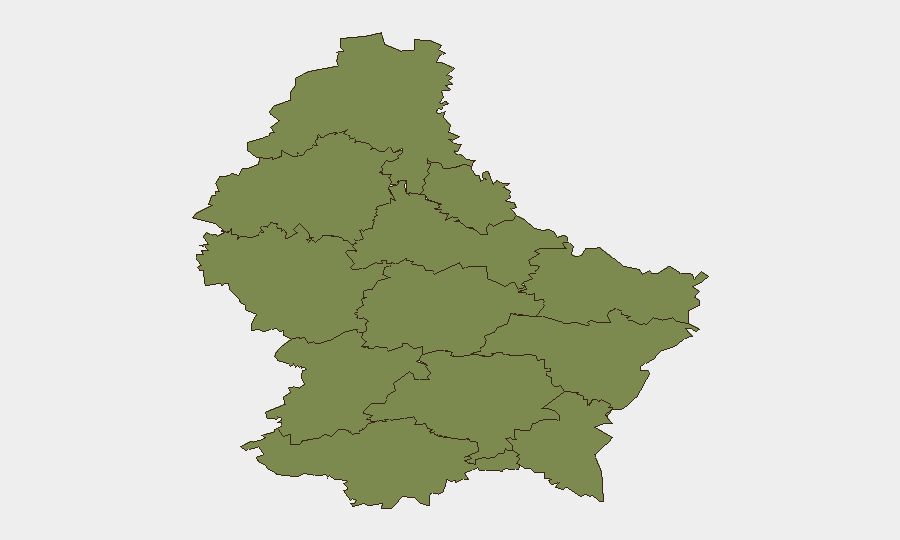
Mersch Canton emerges as the only statistically elevated sub-national concern (composite risk 31.5), significantly above all other cantons (clustered at 1.5). The source of Mersch's risk elevation is not specified in available event data and warrants focused monitoring to establish whether it reflects historical crime density, infrastructure criticality, or transient incident clustering. All other cantons—including Luxembourg Canton (the capital region)—register uniform low risk, suggesting the threat environment is geographically concentrated and contained.
How GeoBit Would Assist
GeoBit's Intel Sweep and multi-language event feed aggregation would provide real-time corroboration of petty crime incidents (location, method, target profile) to allow security teams to update traveler briefings and adjust transit protocols dynamically. AOI Monitoring & Early Warning capability applied to Mersch Canton and known ordnance-risk zones in the north/east would flag emerging incident clusters or construction activity that might trigger ordnance discovery. GIS & Spatial Analysis layered with crime and infrastructure data would help corporate teams identify safe routing, secure transit hubs, and lower-risk operational zones for personnel and asset movement.
7-Day Outlook
No indicators suggest deterioration in Luxembourg's security posture over the next seven days. Petty crime risk will remain seasonally present in summer travel corridors; ordnance risk is static and location-specific rather than trend-driven. Focus should remain on routine duty-of-care protocols (traveler awareness, secure transportation of valuables, avoidance of construction zones in the north) rather than elevated alert posture.
Highest-Risk Areas — Ranked
| # | State / Region | Risk |
|---|---|---|
| 1 | Mersch Canton | 31.5 |
| 2 | Wiltz Canton | 1.5 |
| 3 | Clervaux Canton | 1.5 |
| 4 | Diekirch Canton | 1.5 |
| 5 | Vianden Canton | 1.5 |
| 6 | Redange Canton | 1.5 |
| 7 | Capellen Canton | 1.5 |
| 8 | Luxembourg Canton | 1.5 |
| 9 | Esch Canton | 1.5 |
| 10 | Remich Canton | 1.5 |
| 11 | Echternach Canton | 1.5 |
| 12 | Grevenmacher Canton | 1.5 |
Sources
Previous Daily Briefs
A new Luxembourg brief is written every day — each with its own risk map and downloadable CSV. Here's the last week; use the calendar to go further back.
📅 Browse every day by calendar →
Highlighted days have a brief. Tap a day for that day's map & analysis, or “csv” for that day's dataset ($5).
Atlas — our AI intelligence desk — emails them this snapshot personally. Nothing else, no list.