Situation Summary
Malta remains in a low-incident security posture as of 20 June 2026, with no verified large-scale unrest, infrastructure disruption, or terrorism activity reported in the last 24–48 hours. The composite national threat score of 4 reflects stable conditions, though a single "Disapprove" event signal was registered on 18 June without confirmed operational detail. The absence of credible multi-source reporting on significant incidents across major news and open social channels is consistent with a quiescent period for travel, port, and asset operations.
Key Developments
- No verified security incidents identified in Malta in the last 24–48 hours across indexed open-source news, social media, and government feeds. Police, airport, and transport authority accounts show no active alerts or closures as of 20 June.
- Disapprove event signal (18 June, location unconfirmed): One unverified GeoBit event trigger was recorded but lacks corroboration in open press or public emergency channels; operational context and geographic specificity remain unclear.
- Continued absence of protest, demonstration, or civil-unrest reporting across major platforms and local sources. No labor action, political mobilization, or mass-gathering alerts are current.
Highest-Risk Areas
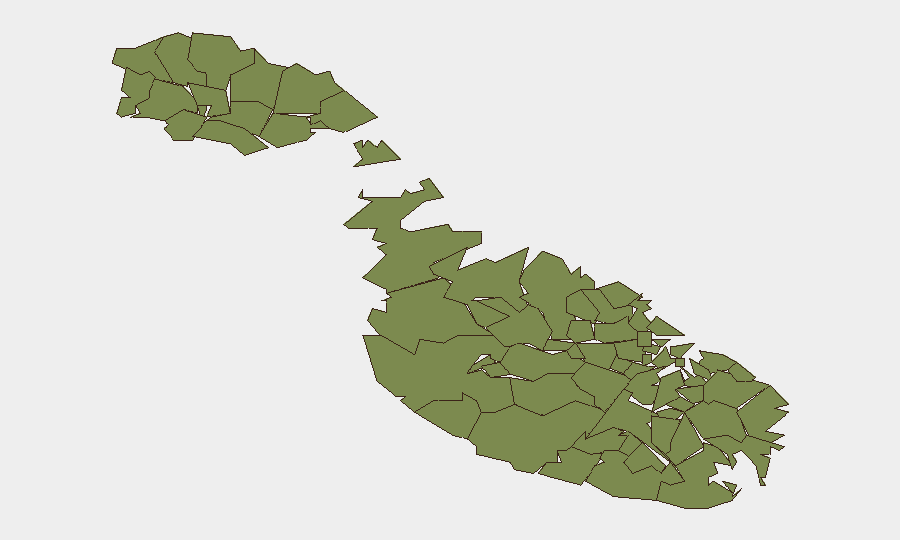
Mosta (composite risk 1.3) significantly exceeds all other municipalities in the sub-national ranking, with a risk score of 31.3—approximately 24 times higher than all other tracked regions. The driver of Mosta's elevation is not decomposed in available data; corporate teams with operations or personnel in Mosta should confirm whether this reflects a localized incident, infrastructure concern, or data anomaly with on-ground contacts or local authorities. All other municipalities—including Santa Venera, Birkirkara, Għarb, Saint Lawrence, Kerċem, and others—cluster at risk 1.3, indicating uniform low baseline threat. The concentration of risk in a single locality warrants clarification before operational decisions; GeoBit's sub-national granularity identifies the anomaly but does not yet explain it.
How GeoBit Would Assist
Corporate security teams in Malta should use AOI (Area-of-Interest) Monitoring & Early Warning with persistent geofencing around key asset locations (ports, airports, data centers, office clusters) to detect emerging incidents in near-real time before they mature. Intel Sweep and multi-language OSINT fusion across government feeds, local police accounts, transport operators, and social channels would provide corroboration of the Mosta signal and clarify whether the elevated sub-national risk reflects operational or analytical artifact. Network & Actor Analysis and sentiment tracking on election-monitoring and political feeds would provide advance notice of any organized civil action or regime-stability shifts that could affect business continuity.
7-Day Outlook
Malta's security trajectory over the next week is expected to remain stable absent new triggering events. The elevated Mosta risk score should be monitored but does not yet signal imminent incident escalation. Duty-of-care teams are advised to maintain standard vigilance on government and transport alerts and confirm ground truth on the Mosta signal through local partners or law-enforcement liaison.
Highest-Risk Areas — Ranked
| # | State / Region | Risk |
|---|---|---|
| 1 | Mosta | 31.3 |
| 2 | Santa Venera | 1.3 |
| 3 | Birkirkara | 1.3 |
| 4 | Għarb | 1.3 |
| 5 | Saint Lawrence | 1.3 |
| 6 | Kerċem | 1.3 |
| 7 | Għasri | 1.3 |
| 8 | Fontana | 1.3 |
| 9 | Żebbuġ | 1.3 |
| 10 | Victoria | 1.3 |
| 11 | Xagħra | 1.3 |
| 12 | Xewkija | 1.3 |
Previous Daily Briefs
A new Malta brief is written every day — each with its own risk map and downloadable CSV. Here's the last week; use the calendar to go further back.
📅 Browse every day by calendar →
Highlighted days have a brief. Tap a day for that day's map & analysis, or “csv” for that day's dataset ($5).