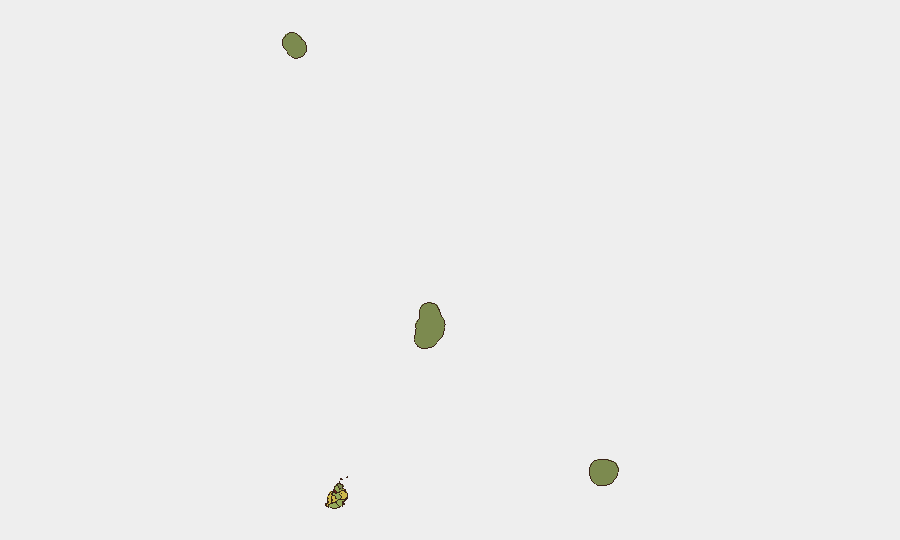
Situation Summary
Mauritius remains a low-threat jurisdiction (global rank #175, composite threat score 4) with no significant security incidents recorded in the past seven days. The threat environment is dominated by cyber risk to financial and commercial sectors rather than kinetic threats, street crime, or civil unrest. Port Louis continues to carry the highest concentration of risk exposure, reflecting its role as the capital and financial hub, though absolute risk levels remain modest by regional standards.
Key Developments
- Port Louis, 2 September 2026 – Mauritian Ministry of Technology, Communication and Innovation issued a formal advisory to the financial sector urging enhanced cyber-resilience measures in response to evolving cyberattack threats targeting banks and financial entities. This represents a preventive risk-management directive rather than a specific incident response.
- Mauritius (multi-location), identified 27 August 2026, disclosed 7 September 2026 – Ransomware group MeduzaLocker claimed responsibility for a cyberattack on the Hungry Lion quick-service restaurant chain, affecting multiple outlets in Mauritius. The threat actors demanded USD $50,000. The breach exposed customer and operational data; disruption and further ransom demands remain possible during ongoing negotiations.
- Port Louis (offshore finance), June–September 2026 – Mauritius Supreme Court appointed a receiver for K India Opportunities Fund Class F in June 2026, following India's SEBI action related to alleged market manipulation gains channeled through the Mauritius-based vehicle. Asset freezes and legal proceedings continue, elevating regulatory and reputational risk in the offshore fund sector.
- Chagos Archipelago (maritime/diplomatic), 6–8 September 2026 – The Maldives formally objected to the UK–Mauritius agreement over transfer of the Chagos Archipelago and reasserted its own territorial claim. Maldivian President Muizzu invited the UK Prime Minister for talks. This diplomatic dispute does not pose immediate security risk within Mauritius but signals potential long-term maritime-boundary and geopolitical complications.
Highest-Risk Areas
Port Louis (risk score 92) dominates the threat landscape, driven by its concentration of financial institutions, government offices, port infrastructure, and commercial activity—all attractive targets for cyber operations and financially motivated crime. Plaines Wilhems (68) and Black River (65) represent secondary risk clusters, likely reflecting commercial and logistics hubs. The cyber-advisory from the Ministry and the Hungry Lion ransomware incident both underscore that risk in Mauritius is primarily infrastructure and data-focused rather than tied to civil instability or organized violence. Outlying districts (Rodrigues, Saint Brandon, Agaléga) and the eastern coast show significantly lower risk exposure, making them relatively safer for operations and personnel.
How GeoBit Would Assist
Security teams should employ Intel Sweep and multi-language OSINT to monitor Mauritian financial-sector communications, regulatory notices, and dark-web threat-actor activity for early warning of future cyber campaigns. AOI Monitoring & Early Warning on Port Louis (financial district) and major commercial zones would flag emerging incidents—protests, infrastructure disruptions, or crime clusters—before they escalate. Network & Actor Analysis of MeduzaLocker and similar ransomware groups operating in the Indian Ocean region would support incident response and supply-chain risk assessment for any operations dependent on Hungry Lion or similar vendors.
7-Day Outlook
No immediate security escalation is anticipated. Cyber risk will likely remain the primary threat vector, particularly as financial institutions implement or fail to implement the Ministry's September 2 guidance. The Chagos diplomatic row poses no near-term operational threat within Mauritius but may create consular or regulatory friction over the coming weeks. Routine crime and weather-related disruptions remain the most probable day-to-day concerns for personnel and assets on the ground.
Highest-Risk Areas — Ranked
| # | State / Region | Risk |
|---|---|---|
| 1 | Port Louis | 92 |
| 2 | Plaines Wilhems | 68 |
| 3 | Black River | 65 |
| 4 | Flacq | 62 |
| 5 | Grand Port | 58 |
| 6 | Moka | 52 |
| 7 | Savanne | 48 |
| 8 | Pamplemousses | 45 |
| 9 | Rivière du Rempart District | 38 |
| 10 | Rodrigues | 22 |
| 11 | Saint Brandon | 8 |
| 12 | Agaléga | 5 |
Sources
Previous Weekly Briefs
A new Mauritius brief is written every Monday, covering the week — each with its own risk map and downloadable CSV. Use the calendar to go further back.
- September 2, 2026
- August 30, 2026
- August 27, 2026
- August 24, 2026
- August 22, 2026
- August 20, 2026
- August 18, 2026
📅 Browse past briefs by calendar →
Highlighted days have a brief. Tap a day for that day's map & analysis, or “csv” for that day's dataset ($5).
Atlas — our AI intelligence desk — emails them this snapshot personally. Nothing else, no list.