Situation Summary
Mauritius remains a low-threat jurisdiction globally (ranked #176; composite threat score 5) with no tracked security incidents during the reporting period. The country's overall stability profile is stable, though Port Louis—the capital and commercial hub—presents elevated risk (92) relative to other districts. Recent government-level announcements on law enforcement capacity-building and regional cooperation signal an institutional approach to organised crime and corruption vulnerabilities.
Key Developments
- Port Louis / National — 16 September: The government announced establishment of a National Crime Agency to strengthen capacity against serious and organised crime. The announcement, reported on 18 September, indicates a formal institutional response to crime governance but carries no confirmation of a specific triggering incident. [Secondary source only; no independent corroboration retrieved.]
- Mauritius (regional) — 17 September: Mauritius joined Comoros, Madagascar, Maldives, and Seychelles in a UNODC-supported regional initiative to strengthen protections for whistleblowers and witnesses reporting corruption. The initiative represents a formal commitment to cross-border anti-corruption governance in the Indian Ocean region.
- Diego Garcia / Government Level — 21 September: UK Prime Minister Keir Starmer held discussions with Mauritian Prime Minister Ramgoolam concerning the future military arrangements at Diego Garcia. The conversation was framed around protection of the base's operational continuity and UK national security interests. This represents a strategic geopolitical engagement rather than a reported security incident.
- No discrete crime, protest, or infrastructure incidents were confirmed in open sources for the week of 15–22 September.
Highest-Risk Areas
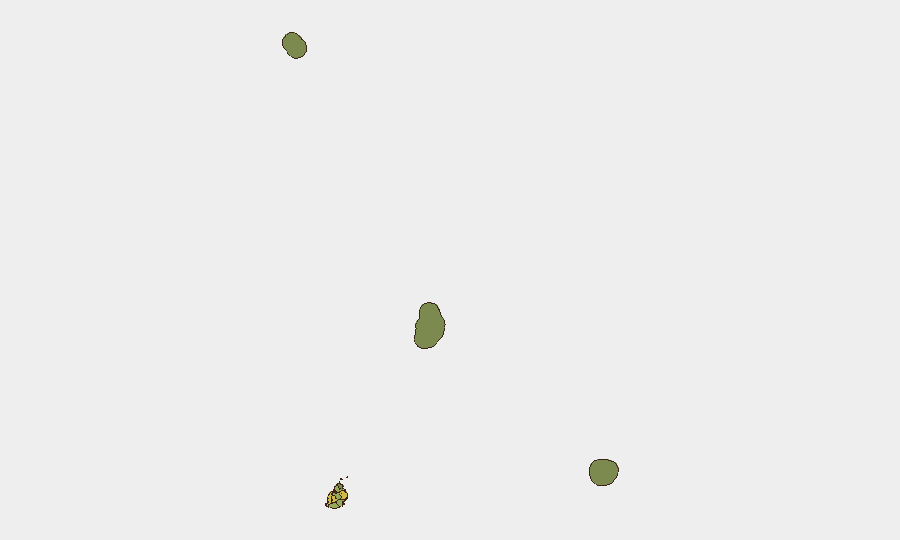
Port Louis (risk 92) remains the primary concentration point for security risk in Mauritius, reflecting its density as the capital, financial centre, and primary port of entry. The adjacent districts of Plaines Wilhems (68), Black River (65), and Flacq (62) account for secondary risk clusters, likely reflecting urbanisation, commercial activity, and population density. The outer islands—Rodrigues (22), Saint Brandon (8), and Agaléga (5)—present minimal tracked risk. Risk in Port Louis and surrounding districts is consistent with ordinary urban crime patterns in a developing island economy; no acute instability or organised conflict is indicated in the current reporting window.
How GeoBit Would Assist
Corporate security and duty-of-care teams operating in Mauritius should leverage Intel Sweep and multi-language OSINT to monitor government announcements, law enforcement actions, and regional crime trends on a continuous basis; AOI Monitoring & Early Warning on Port Louis and Plaines Wilhems to detect emerging crime or protest activity; and Network & Actor Analysis to track organised crime networks and corruption figures operating across the Indian Ocean region. Sentiment & temporal analysis of local media and official channels will provide early signals of policy shifts or emerging stability concerns before they escalate to operational impact.
7-Day Outlook
No acute security deterioration is expected in the near term. The government's institutional focus on crime agency capacity and regional corruption initiatives suggests a stable policy environment. Routine monitoring of Port Louis and monitoring of any downstream impacts from ongoing Diego Garcia negotiations is warranted for teams with strategic or operational interests in the jurisdiction.
Highest-Risk Areas — Ranked
| # | State / Region | Risk |
|---|---|---|
| 1 | Port Louis | 92 |
| 2 | Plaines Wilhems | 68 |
| 3 | Black River | 65 |
| 4 | Flacq | 62 |
| 5 | Grand Port | 58 |
| 6 | Moka | 52 |
| 7 | Savanne | 48 |
| 8 | Pamplemousses | 45 |
| 9 | Rivière du Rempart District | 38 |
| 10 | Rodrigues | 22 |
| 11 | Saint Brandon | 8 |
| 12 | Agaléga | 5 |
Sources
Previous Weekly Briefs
A new Mauritius brief is written every Monday, covering the week — each with its own risk map and downloadable CSV. Use the calendar to go further back.
- September 15, 2026
- September 8, 2026
- September 2, 2026
- August 30, 2026
- August 27, 2026
- August 24, 2026
- August 22, 2026
📅 Browse past briefs by calendar →
Highlighted days have a brief. Tap a day for that day's map & analysis, or “csv” for that day's dataset ($5).
Atlas — our AI intelligence desk — emails them this snapshot personally. Nothing else, no list.