Situation Summary
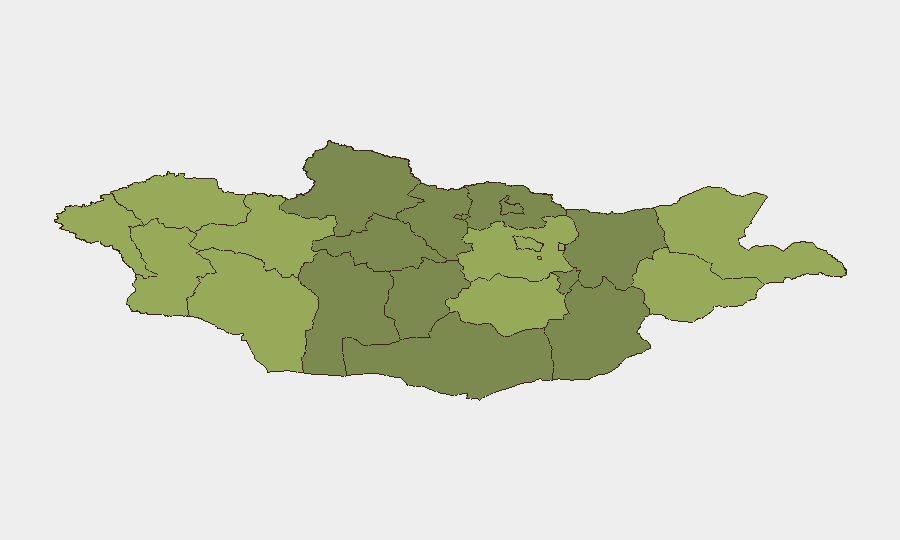
Mongolia maintains a composite threat score of 7 (global rank #121), reflecting a managed security environment with localized volatility concentrated in eastern and western border regions. Recent event signals include arrest/detention activity involving Chinese nationals (2026-07-08) and cross-border movements from Inner Mongolia (2026-07-07), consistent with ongoing border-control operations. The capital and central zones remain relatively stable; risk concentrates in peripheral aimags, particularly Dornod, Sükhbaatar, and Uvs. No significant deterioration or systemic instability is evident in the current 24–48-hour window.
Key Developments
No corroborated security incidents, civil unrest, crime events, infrastructure failures, or travel-risk developments specific to Mongolia have been identified in open sources, news wires, or social media within the last 24–48 hours.
Note on event signals: The two signals logged (arrest/detain events on 2026-07-08 and 2026-07-07) appear to reflect routine border and immigration enforcement rather than acute crises. These do not constitute operational incidents requiring immediate duty-of-care escalation.
*If operational intelligence on specific incidents within the last 48 hours is required, real-time query of local Mongolian news agencies, Government of Mongolia official channels (National Emergency Management Agency, Ulaanbaatar Police), and geolocated social-media scraping (X/Twitter, Telegram) with time filters is recommended.*
Highest-Risk Areas
Border aimags in the east (Dornod, composite risk 58) and southeast (Sükhbaatar, 55) face elevated exposure to cross-border smuggling, contraband, and irregular movement linked to proximity to Russian and Chinese territories. Western border zones (Uvs, Khovd, Bayan-Ölgii) similarly experience trafficking, herding-dispute incidents, and sporadic ethnic or resource tensions; Uvs (risk 52) has historically recorded higher civil unrest and land-use conflict.
Ulaanbaatar (risk 45) remains moderately elevated due to petty crime, labor protests, and periodic demonstrations, though organized violence remains uncommon. Central provinces show lower but non-negligible risk from environmental stress (drought, livestock loss) and economic marginalization. The gap between highest-risk (Dornod, 58) and capital (Ulaanbaatar, 45) underscores that systematic threats are peripheral rather than metropolitan.
How GeoBit Would Assist
Intel Sweep & OSINT fusion would aggregate Mongolian-language news, government announcements, and social-media signals (X/Telegram) to detect early-warning indicators of unrest, trafficking spikes, or cross-border incidents before they escalate. AOI monitoring with alerting on Dornod, Sükhbaatar, and key transport corridors would provide persistent watch, triggering notification if events breach defined thresholds. Network & actor analysis would map smuggling or migration networks and identify key nodes affecting asset transit or staff movement. Routing & network analysis would support alternative journey planning for personnel or supply chains in high-risk aimags, avoiding known hotspots in real time.
7-Day Outlook
No acute trigger (political realignment, environmental disaster, major labor action) is evident on a 7-day horizon. Border operations and routine enforcement activity are expected to continue at baseline; eastern aimags will likely remain the primary source of low-level operational friction. The risk profile is expected to remain stable unless cross-border tensions (Sino-Mongolian, Russian-Mongolian) escalate materially—an outcome not currently signaled.
Highest-Risk Areas — Ranked
| # | State / Region | Risk |
|---|---|---|
| 1 | Dornod | 58 |
| 2 | Sükhbaatar | 55 |
| 3 | Uvs | 52 |
| 4 | Khovd | 50 |
| 5 | Bayan-Ölgii | 48 |
| 6 | Govi-Altai | 46 |
| 7 | Ulaanbaatar | 45 |
| 8 | Zavkhan | 44 |
| 9 | Töv | 42 |
| 10 | Dundgovi | 40 |
| 11 | Darkhan-Uul | 38 |
| 12 | Ömnögovi | 37 |
Sources
Previous Daily Briefs
A new Mongolia brief is written every day — each with its own risk map and downloadable CSV. Here's the last week; use the calendar to go further back.
📅 Browse every day by calendar →
Highlighted days have a brief. Tap a day for that day's map & analysis, or “csv” for that day's dataset ($5).
Atlas — our AI intelligence desk — emails them this snapshot personally. Nothing else, no list.