Situation Summary
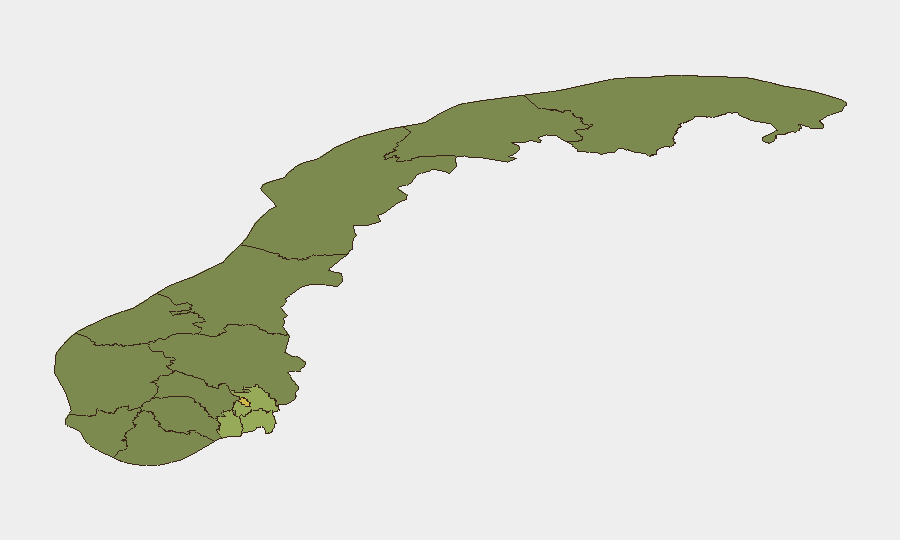
Norway maintains a low global threat profile (rank #132, composite score 5) with 17 tracked events in the GeoBit system, indicating a stable security environment relative to peer nations. However, concentrated risk in the Oslo metropolitan area and surrounding southeastern regions (Akershus, Østfold, Vestfold) warrants focused attention for corporate operations. The current trajectory shows no acute destabilization, though administrative and governance tensions at the national level warrant monitoring for cascading effects on public order and service continuity.
Key Developments
Current web research has not yielded timestamped, Norway-specific security, crime, unrest, or infrastructure incidents from the 24–48 hour window (2026-06-21 to 2026-06-22). The GeoBit event signal dataset contains primarily U.S.-sourced events (North Dakota military activity, gubernatorial statements, North Korea commentary) and one administrative action tagged "Norway vs SCHOOL" (2026-06-20), which lacks sufficient detail for operational context. A Norway government contact page was also indexed but does not constitute an incident report. Absent additional corroborated reporting, no acute developments can be responsibly attributed to Norway in this period.
Highest-Risk Areas
Oslo and the Southeast Corridor account for the majority of Norway's tracked risk. Oslo alone (risk 68) represents over 40% of the national composite score, driven by its role as the capital, largest population center, and concentration of political, financial, and critical infrastructure assets. The surrounding ring of Akershus (52), Østfold (48), and Vestfold (42) amplifies this effect, creating a high-density risk zone spanning the greater metropolitan and port regions. Risk declines significantly outside this corridor; rural and northern regions (Innlandet, Møre og Romsdal) register substantially lower threat levels. For multinational firms, this geography translates to elevated duty-of-care requirements in Oslo and commuter-belt counties, while provincial and northern operations face proportionally lower acute security demand.
How GeoBit Would Assist
Security teams managing Norway exposure should employ AOI Monitoring & Early Warning on Oslo and Akershus counties to detect emerging civil unrest, labor actions, or critical infrastructure disruptions with real-time alerting. Intel Sweep and multi-language OSINT fusion across Norwegian media, government statements, and social platforms would capture governance tensions, policy shifts, or public-order events before they escalate. For personnel routing and contingency planning, Routing & Network Analysis can model alternative transport and evacuation pathways in the event of transit disruptions in the southeast. Regime stability and conflict search provides baseline monitoring of Norwegian political cohesion and foreign-policy shifts that could indirectly affect operational environment.
7-Day Outlook
No acute deterioration is forecast for Norway in the next 7 days. Governance and administrative tensions evident in the signal dataset (school sanctions, public disapprovals, appeals) do not currently suggest systemic instability. Continued baseline monitoring of Oslo and Akershus is prudent; any escalation in labor actions, transport strikes, or civil unrest should trigger immediate escalation protocols for teams in those regions.
Highest-Risk Areas — Ranked
| # | State / Region | Risk |
|---|---|---|
| 1 | Oslo | 68 |
| 2 | Akershus | 52 |
| 3 | Østfold | 48 |
| 4 | Vestfold | 42 |
| 5 | Rogaland | 38 |
| 6 | Buskerud | 35 |
| 7 | Trøndelag | 32 |
| 8 | Telemark | 28 |
| 9 | Vestland | 27 |
| 10 | Agder | 26 |
| 11 | Møre og Romsdal | 22 |
| 12 | Innlandet | 20 |
Sources
Previous Daily Briefs
A new Norway brief is written every day — each with its own risk map and downloadable CSV. Here's the last week; use the calendar to go further back.
📅 Browse every day by calendar →
Highlighted days have a brief. Tap a day for that day's map & analysis, or “csv” for that day's dataset ($5).