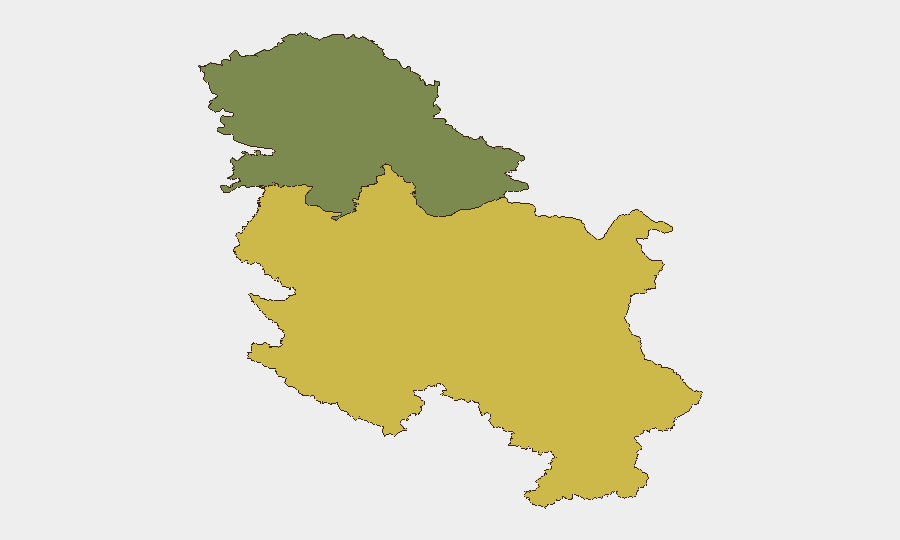
Situation Summary
Serbia remains in the lower-mid range of global security concern (rank #88, composite score 13) with volatile regional dynamics driven by proximity to the Ukraine conflict, EU-Russia tensions, and domestic political sensitivities. Central Serbia—particularly Belgrade and surrounding areas—accounts for the majority of tracked threat events and represents the primary risk concentration. Current incident activity is sparse but reflects underlying tensions around state security, online speech, and geopolitical alignment pressures.
Key Developments
- Raška, 24 June 2026 – Police arrested activist Veljko Raković on suspicion of endangering President Aleksandar Vučić's security through Instagram posts. He was ordered held for 48 hours pending transfer to Belgrade for further questioning. This incident underscores heightened state sensitivity to online criticism and alleged threats against senior leadership.
- Russia–NATO rhetoric escalation (24 June) – Threat signals involving Russia and NATO were cited in Serbia-linked event feeds, reflecting spillover from the broader Ukraine conflict and geopolitical polarization affecting regional stability perceptions.
- EU–Russia relations deterioration (23 June) – EU diplomatic moves to reduce relations with Russia, concurrent with NATO disapproval signals, reinforce pressure on Serbia's traditionally balanced foreign policy and heighten uncertainty around its EU candidacy pathway.
- Ukraine conventional military operations (23–25 June) – Ongoing Ukraine–Russia military activity continues to generate regional instability signals and potential refugee/displacement flow risks along Serbia's borders.
- Domestic law-enforcement activity (23 June) – Multiple arrest/detention signals and civilian-versus-criminal rejection events suggest routine but elevated police and judicial activity, possibly linked to organized crime or state-security investigations.
Highest-Risk Areas
Central Serbia (composite risk 65) dominates the threat landscape, driven by Belgrade's role as the political and economic hub, concentration of state institutions, and exposure to nationalist and pro-EU polarization. Vojvodina (risk 35), in the north, presents secondary risk, primarily linked to proximity to Hungary and the EU border, minority tensions, and organized-crime networks. The gap between the two suggests Central Serbia's political salience and law-enforcement intensity far exceed regional periphery concerns; however, Vojvodina's cross-border connectivity and trafficking exposure warrant continued monitoring.
How GeoBit Would Assist
Teams with personnel or assets in Serbia should employ AOI Monitoring & Early Warning on Belgrade and Raška to track arrests, protests, and official statements in real time. Intel Sweep combined with X/Twitter & Telegram OSINT and multi-language search would enable 24–48 hour corroboration of state-security incidents and online speech escalations before they drive broader unrest. Network & Actor Analysis and Regime-Stability assessment would clarify whether current incidents reflect isolated law-enforcement actions or signals of deepening political fragmentation.
7-Day Outlook
Near-term risk is expected to remain steady to slightly elevated. Continued EU–Russia diplomatic friction and Ukraine conflict momentum will sustain background pressure on Serbia's geopolitical positioning, while domestic law-enforcement activity around state-security matters may persist. No imminent large-scale instability is signaled, but the confluence of regional volatility and political sensitivities warrants sustained monitoring of Belgrade and Central Serbia through mid-July.
Highest-Risk Areas — Ranked
| # | State / Region | Risk |
|---|---|---|
| 1 | Central Serbia | 65 |
| 2 | Vojvodina | 35 |
Sources
Previous Daily Briefs
A new Serbia brief is written every day — each with its own risk map and downloadable CSV. Here's the last week; use the calendar to go further back.
📅 Browse every day by calendar →
Highlighted days have a brief. Tap a day for that day's map & analysis, or “csv” for that day's dataset ($5).