Situation Summary
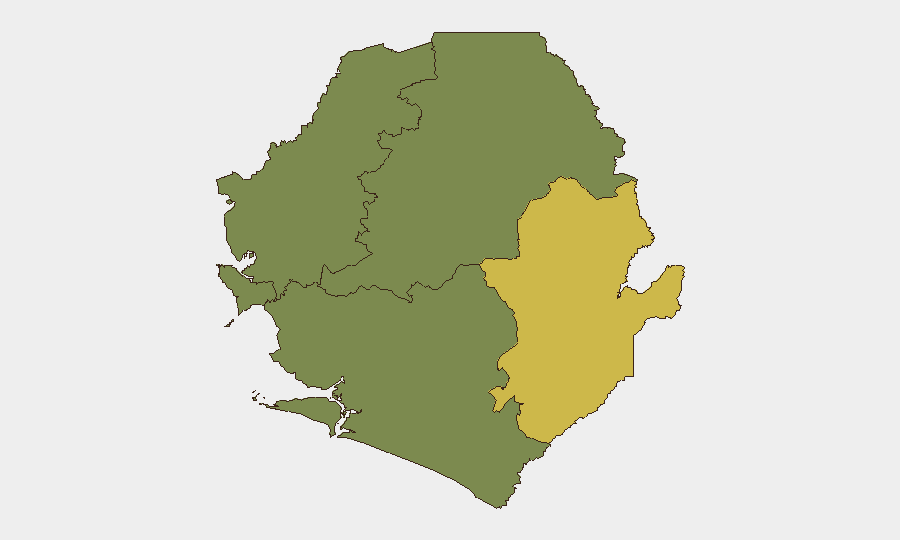
Sierra Leone remains a low-intensity threat environment globally (rank #158), with composite threat score of 4 and minimal verified security incidents in the last 48 hours. The country faces endemic structural risks—including regional drug-trafficking dynamics and public-health vulnerabilities (cholera activity noted in recent signals)—but these do not present acute, time-stamped incidents as of 13 June 2026. The security picture is stable at the national level; risk concentration is sharply sub-national, with Eastern Province bearing disproportionate exposure.
Key Developments
No clearly verified security or travel-risk incidents were identified in open sources for 11–13 June 2026. Web research covering wire services, regional outlets, government channels, and social-media OSINT did not yield corroborated, time-stamped reports of attacks, sudden crime spikes, protests, infrastructure failures, or political instability meeting cross-confirmation standards.
Note on event signals: Recent signals included public statements from the Sierra Club (environmental organization) and reports on cholera activity, neither of which constitute discrete security incidents requiring operational response as of this reporting cycle.
Analysts should monitor the following standing concerns:
- Regional drug-trafficking networks continue to create transshipment and enforcement pressure in border and coastal zones, though no specific incident was reported in the last 48 hours.
- Health-sector fragility: cholera activity requires disease-surveillance vigilance, particularly in areas with poor WASH infrastructure.
Highest-Risk Areas
Eastern Province (risk score 68) dominates the sub-national threat ranking and represents the clear priority for personnel and asset protection. Western Area (risk 35), which includes Freetown and the capital district, carries secondary but material risk. Northern, North Western, and Southern provinces register zero composite risk under current tracking and do not warrant elevated operational posture.
Eastern Province's elevated score reflects a combination of weak state capacity, border-region vulnerabilities, and historical crime/trafficking corridors. Western Area risk is primarily urban-crime and civil-unrest–related, concentrated in and around Freetown's commercial and port zones.
How GeoBit Would Assist
Intel Sweep and OSINT fusion across wire services, local media, X/Telegram, and government channels would provide 24-hour monitoring for protests, crime clusters, or political instability in Freetown and Eastern Province. AOI (Area-of-Interest) Monitoring & Early Warning with persistent alert rules on keywords (protest, unrest, shooting, strike, airport, border incidents) would enable shift-level detection of emerging threats before they reach corporate security channels. Routing & Network Analysis supports alternative-route and journey-planning decisions for personnel moving between Freetown and provincial locations, particularly Eastern Province, by identifying real-time detours around high-risk corridors.
7-Day Outlook
No imminent security escalation is forecast for the week of 13–19 June 2026. Baseline structural risks—trafficking, weak rule of law, health vulnerabilities—persist but show no signs of acute activation. Security teams should maintain standard duty-of-care protocols (travel advisory compliance, personnel check-ins, incident-reporting awareness) and escalate if localized unrest or crime spikes emerge in Eastern Province or Freetown.
Highest-Risk Areas — Ranked
| # | State / Region | Risk |
|---|---|---|
| 1 | Eastern Province | 68 |
| 2 | Western Area | 35 |
| 3 | North West Province, Sierra Leone | 0 |
| 4 | Northern Province, Sierra Leone | 0 |
| 5 | Southern Province, Sierra Leone | 0 |
Sources
Previous Daily Briefs
A new Sierra Leone brief is written every day — each with its own risk map and downloadable CSV. Here's the last week; use the calendar to go further back.
📅 Browse every day by calendar →
Highlighted days have a brief. Tap a day for that day's map & analysis, or “csv” for that day's dataset ($5).