Situation Summary
Slovakia remains stable with no significant security incidents, civil unrest, or infrastructure disruptions confirmed in the last 24–48 hours. The national composite threat score is 11 (ranked #null globally), reflecting low baseline risk. However, open-source monitoring has detected multiple diplomatic public statements involving Slovakia's Prime Minister, Czech Republic, and Hungary over 28–29 July, suggesting heightened political or bilateral messaging that warrants monitoring for escalation signals.
Key Developments
- Diplomatic Statement Activity, 28–29 July (Nationwide): Multiple public statements recorded between Slovakia's Prime Minister and neighboring states (Czech Republic, Hungary) on 28–29 July. No specific incident location or substantive conflict reported; communications appear political in nature. Significance: pattern of rapid diplomatic messaging may indicate bilateral tension or policy dispute requiring further clarification.
- No Confirmed Security or Unrest Events, 24–48 Hours (All Regions): Live web research, local news aggregators, police reports, and open-source incident monitoring confirm no new protests, political violence, serious crime spikes, or infrastructure failures in Slovakia during the last 24–48 hours.
- Stable National Security Signal (Countrywide): OpenWatch's live monitoring reports "NEUTRAL" status with no significant trend or actionable threat thesis despite 193 monitored events over the past 7 days, indicating routine political and social activity without acute instability.
Highest-Risk Areas
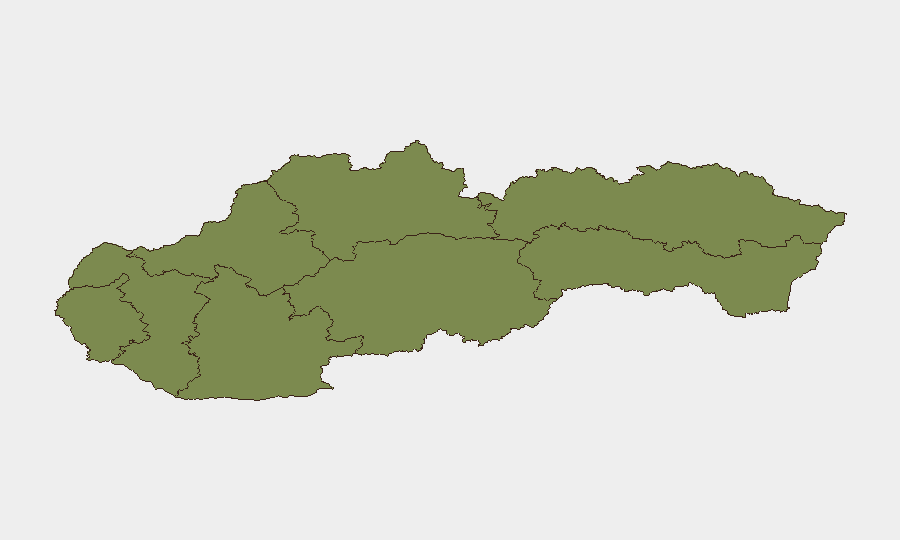
Bratislava region alone accounts for the vast majority of Slovakia's assessed risk, with a composite score of 31.3 compared to 1.3 across all other seven regions. This concentration reflects Bratislava's role as the capital and primary hub for political activity, diplomatic presence, and international business operations. All other regions—Košice, Žilina, Trnava, Trenčín, Nitra, Banská Bystrica, and Prešov—show uniform low risk and are not differentiated by current security indicators. Organizations with personnel or assets in Bratislava should maintain standard security awareness; those in outlying regions face negligible elevated risk on current data.
How GeoBit Would Assist
Security teams managing Slovakia operations would leverage GeoBit's OSINT Fusion & Corroboration and multi-language search capabilities to monitor the ongoing diplomatic messaging and establish whether current statements reflect routine policy discourse or signal escalating bilateral friction. AOI Monitoring & Early Warning with persistent watch on Bratislava and border regions would provide immediate alerting of any civil unrest, protest mobilization, or political violence—particularly relevant given the recent statement activity. Intel Sweep and global event feeds enable 24/7 baseline tracking to detect any threshold breach in stability before it affects ground operations.
7-Day Outlook
No acute security deterioration is forecast for the next 7 days; Slovakia is expected to remain stable pending clarification of the recent diplomatic messaging. Duty-of-care teams should maintain heightened awareness of political communication channels and official statements for any indication that bilateral tensions (if present) may translate to domestic policy disruption or travel restrictions. Standard security posture and monitoring protocols remain appropriate.
Highest-Risk Areas — Ranked
| # | State / Region | Risk |
|---|---|---|
| 1 | Region of Bratislava | 31.3 |
| 2 | Region of Košice | 1.3 |
| 3 | Region of Žilina | 1.3 |
| 4 | Region of Trnava | 1.3 |
| 5 | Region of Trenčín | 1.3 |
| 6 | Region of Nitra | 1.3 |
| 7 | Region of Banská Bystrica | 1.3 |
| 8 | Region of Prešov | 1.3 |
Sources
Previous Daily Briefs
A new Slovakia brief is written every day — each with its own risk map and downloadable CSV. Here's the last week; use the calendar to go further back.
📅 Browse every day by calendar →
Highlighted days have a brief. Tap a day for that day's map & analysis, or “csv” for that day's dataset ($5).
Atlas — our AI intelligence desk — emails them this snapshot personally. Nothing else, no list.