Situation Summary
Spain remains a moderate-risk environment (global rank #126) with a composite threat score of 6 across 286 tracked events. The security picture is shaped by persistent terrorist threats, active organized crime in specific regions, and elevated street crime in major tourist zones. Recent 24–48-hour developments indicate operational law-enforcement activity against both ISIS-linked cells and drug-trafficking networks, suggesting responsive but reactive security posture rather than acute escalation.
Key Developments
- Toledo, Madrid, Barcelona & Ceuta (13–14 July 2026): Spanish National Police arrested four young adults in a coordinated counter-terrorism operation on suspicion of ISIS-linked indoctrination, self-training, and propaganda activity. One detainee in Toledo had purchased a ticket to Turkey allegedly to reach Middle East conflict zones; computer equipment and documents were seized and pre-trial detention was ordered.
- Alicante/Murcia A-7 Corridor (recent, hearings "Thursday"): Police arrested four Spanish nationals linked to a drug-trafficking network after a 45-km high-speed chase ending in a vehicle crash near Abanilla. Eight AK-47 rifles were recovered; suspects face charges including weapons possession, criminal association, and assault on officers.
- Seville (within 48 hours prior to report): Two heatstroke deaths occurred within a 48-hour period, reflecting elevated occupational and public-health risk during extreme heat conditions in Andalusia.
- Nationwide Terror Threat Level: Spain's Interior Ministry maintains the national terrorism threat at Level 4 of 5, citing persistent risks from ISIS and Al-Qaida. Official guidance emphasizes heightened vigilance on public transport and in crowded tourist areas.
- Barcelona & Balearic Islands (recent years trend, current relevance): French travel advisories document significant rises in street theft and violent robberies targeting tourists in busy districts and on public transport, indicating sustained vulnerability in these zones.
- Nationwide Cybercrime Risk: Spanish security advisories report that one in five crimes now occurs online, with travelers particularly exposed to phishing, fraudulent messages, and scams during trips.
Highest-Risk Areas
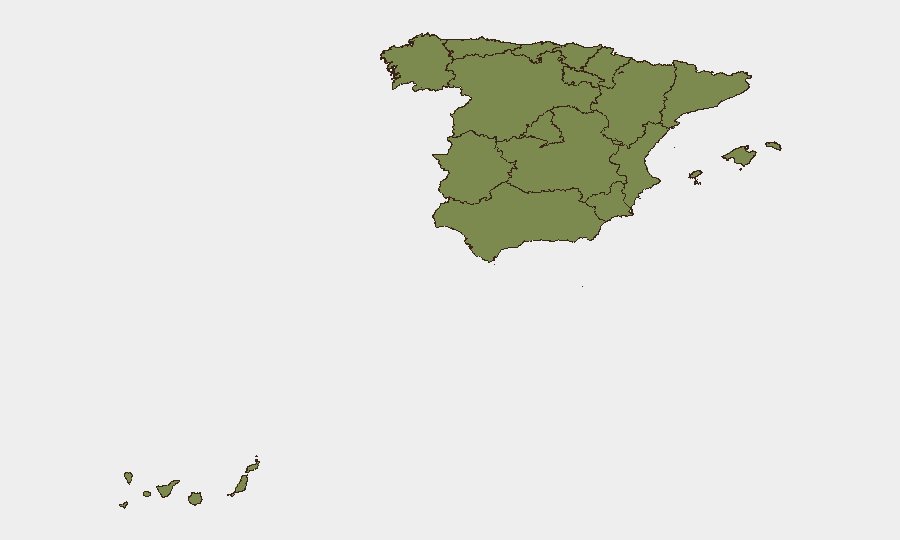
Castile-La Mancha (composite risk 32) significantly outpaces all other regions and drives the national risk profile; the recent Toledo counter-terrorism arrests underscore active ISIS recruitment and radicalization activity in this zone. Andalusia (16.2) follows, with Seville's acute heat-related deaths and broader occupational/public-health vulnerabilities, compounded by organized-crime and street-crime networks. Catalonia (12.2) remains elevated due to persistent street crime in Barcelona and the Balearic Islands targeting tourists. The Basque Country (5.0), Madrid (4.8), and Murcia (3.5) show moderate but meaningful risk, with the recent drug-trafficking operation in Murcia/Alicante illustrating active criminal networks in the latter.
How GeoBit Would Assist
Security teams managing personnel or assets in Spain would benefit from Intel Sweep and multi-language OSINT (X/Twitter, Telegram) to monitor emerging ISIS recruitment and radicalization networks in real time, particularly in Castile-La Mancha and Catalonia. AOI Monitoring & Early Warning on high-risk zones (Barcelona, major transport hubs, tourist centers) combined with Risk & Threat Assessment would provide persistent watch for street crime, terrorism, and cyber threats to traveling staff or facilities. Routing & Network Analysis enables identification of safe transit corridors and alternative travel routes for high-risk regions, reducing exposure to areas of active criminal or law-enforcement activity.
7-Day Outlook
No immediate escalation is evident, but the twin arrests (terrorism and drug trafficking) indicate sustained operational pressure on criminal and extremist networks. The national terrorism threat level remaining at 4/5 suggests authorities expect continued ISIS recruitment activity and possible attack planning. Heat conditions in Andalusia and associated health risks are likely to persist or intensify.
Highest-Risk Areas — Ranked
| # | State / Region | Risk |
|---|---|---|
| 1 | Castile-La Mancha | 32 |
| 2 | Andalusia | 16.2 |
| 3 | Catalonia | 12.2 |
| 4 | Autonomous Community of the Basque Country | 5 |
| 5 | Community of Madrid | 4.8 |
| 6 | Castile and León | 4 |
| 7 | Region of Murcia | 3.5 |
| 8 | Galicia | 2.5 |
| 9 | Valencian Community | 2.4 |
| 10 | Aragon | 2.3 |
| 11 | Canary Islands | 2.1 |
| 12 | Cantabria | 2.1 |
Sources
Previous Daily Briefs
A new Spain brief is written every day — each with its own risk map and downloadable CSV. Here's the last week; use the calendar to go further back.
📅 Browse every day by calendar →
Highlighted days have a brief. Tap a day for that day's map & analysis, or “csv” for that day's dataset ($5).
Atlas — our AI intelligence desk — emails them this snapshot personally. Nothing else, no list.