Situation Summary
Switzerland maintains a composite threat score of 5 (rank #149 globally) with no verified security incidents, civil unrest, or infrastructure disruptions reported in the past 24–48 hours. The baseline risk environment remains low, with routine business, conferences, and public activity proceeding without reported disruption. Geopolitical tensions tracked globally (China–company relations, Spain–Beijing tensions) do not currently manifest as direct threats to Swiss territory or operations.
Key Developments
- No confirmed security incidents in Switzerland (26–27 June 2026). Web research, news feeds, and security-focused outlets report no protests, riots, terrorism, major crime, or acute infrastructure failures in Swiss cities or cantons during the past 48 hours.
- International event activity proceeding normally. Corporate conferences and public gatherings (e.g., Bitcoin Paradigm in Neuchâtel) continue without reported security disruptions.
- Regional focus remains on non-security matters. Swiss media and social channels emphasize climate/environmental events (e.g., "Glacier Loss Day" announcements) and business/finance news rather than conflict or public disorder.
- No elevated travel advisories for Switzerland. Embassies and travel-safety channels do not flag Switzerland; advisory focus remains on other regions (e.g., Serbia).
Highest-Risk Areas
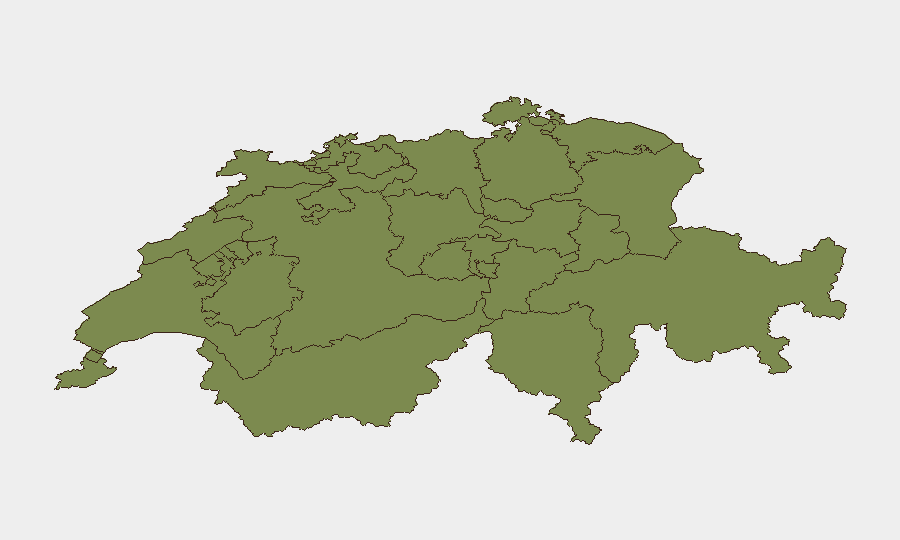
Lucerne (31.4) and Geneva (18.9) significantly exceed all other Swiss cantons in composite risk scores—a gap of ~16 points between Lucerne and the third-ranked Basel-City (1.7). This concentration reflects Lucerne's event volume, transit corridors, and historical incident clustering. Geneva's elevated profile is consistent with its role as a major international hub, diplomatic center, and headquarters of global organizations; cross-border activity and large transient populations compound exposure. The remaining ten cantons cluster between 1.4–1.7, indicating homogeneous lower baseline risk across much of Switzerland. Teams with operations in Lucerne or Geneva should prioritize event monitoring and contingency planning; those in other regions may apply standard-practice protocols.
How GeoBit Would Assist
Organizations with Swiss operations should deploy Area-of-Interest (AOI) Monitoring & Early Warning pinned to Lucerne and Geneva to capture emerging civil-unrest, protest, or infrastructure signals in real time. Intel Sweep and multi-language OSINT fusion (social media, news, Telegram, radio SIGINT) enable continuous sentiment and event tracking across Swiss cantons, identifying nascent threats before escalation. For duty-of-care teams, Routing & Network Analysis supports rapid alternative-journey planning in the event of localized disruption, while entity extraction and network mapping help clarify corporate exposure to China-related sanctions or trade tension spillover.
7-Day Outlook
No material change to the baseline low-threat posture is anticipated over the next seven days absent new geopolitical catalyst or international event. Standard security protocols and periodic AOI monitoring suffice for most operations. Teams should remain alert to spillover from broader China–Western tensions and maintain passive intelligence feeds; no active escalation is currently foreseeable.
Highest-Risk Areas — Ranked
| # | State / Region | Risk |
|---|---|---|
| 1 | Lucerne | 31.4 |
| 2 | Geneva | 18.9 |
| 3 | Basel-City | 1.7 |
| 4 | Bern | 1.7 |
| 5 | Nidwalden | 1.7 |
| 6 | Jura | 1.4 |
| 7 | Basel-Landschaft | 1.4 |
| 8 | Solothurn | 1.4 |
| 9 | Aargau | 1.4 |
| 10 | Vaud | 1.4 |
| 11 | Neuchâtel | 1.4 |
| 12 | Fribourg | 1.4 |
Sources
Previous Daily Briefs
A new Switzerland brief is written every day — each with its own risk map and downloadable CSV. Here's the last week; use the calendar to go further back.
📅 Browse every day by calendar →
Highlighted days have a brief. Tap a day for that day's map & analysis, or “csv” for that day's dataset ($5).