Situation Summary
Turkmenistan remains stable with no acute security incidents reported in the past 24–48 hours. The country's composite threat score of 4 and global ranking at #173 reflect the absence of active conflict, organized violence, or infrastructure disruption. Security posture is defined by chronic authoritarian governance, opaque security services, and restricted movement rather than time-critical threats; no change in this baseline has emerged since June 23.
Key Developments
- Ashgabat, June 24 – International media report ongoing gradual expansion of tourist access, but note persistent strict visa controls and delayed implementation of the announced e-visa framework. This reflects continued bureaucratic opacity and administrative friction for business travelers and visitors, rather than a new security incident.
- Ashgabat, June 22 – The EU and Turkmenistan concluded the 18th Human Rights Dialogue. The EU again raised concerns over civil and political rights constraints; no new arrests, detentions, or escalation of repression was reported during or immediately after the session.
- No verified civil unrest, protests, violent crime, or infrastructure failures reported, June 23–24 – Open-source monitoring across international news outlets and social platforms detected no discrete incident activity in the current window.
Highest-Risk Areas
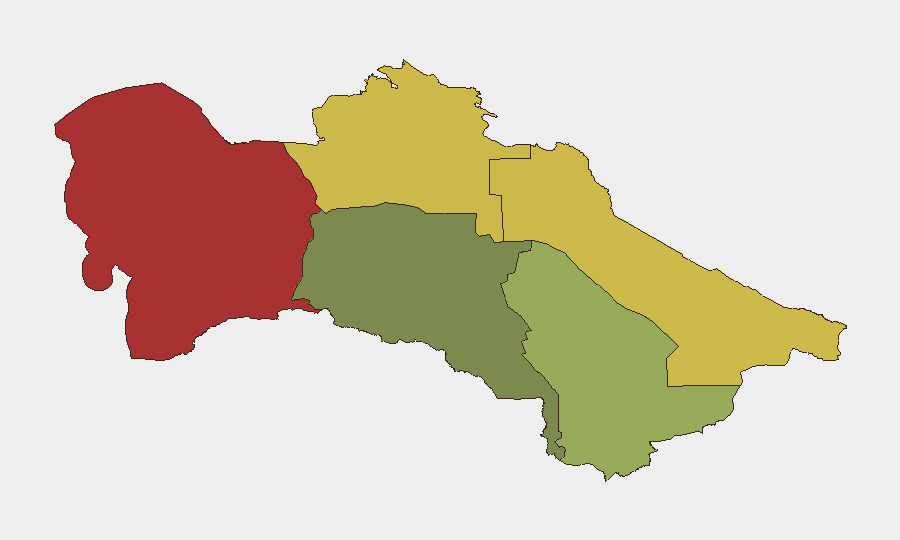
The Balkan Region (risk score 78) remains the primary focus, driven by proximity to the Caspian Sea, lower population density, weaker governance reach, and a history of trafficking and cross-border activity. Lebap (68) and Dashoguz (62) in the north carry elevated risk from border permeability, informal trade networks, and limited state presence. Mary (42) and Ahal (35) present moderate concern tied to travel restrictions and administrative control. Ashgabat City (18) is the lowest-risk zone, benefiting from heavy security apparatus presence and international diplomatic oversight, though systemic restrictions on assembly and expression apply uniformly.
How GeoBit Would Assist
Organizations with personnel or assets in Turkmenistan should employ AOI Monitoring & Early Warning on key cities and border zones (Balkan, Lebap, Dashoguz) to detect emerging unrest, unofficial demonstrations, or trafficking activity before mainstream reporting. Intel Sweep and multi-language OSINT (X/Twitter, Telegram, local media) will flag policy changes, visa delays, or security service actions affecting travel and operations. Network & Actor Analysis can map informal business and political networks to anticipate administrative friction or unofficial enforcement.
7-Day Outlook
No near-term escalation is forecast. Turkmenistan's security environment is unlikely to shift markedly in the next seven days absent external shock (regional conflict, sanctions, or major diplomatic incident). Operational risk for business and personnel will remain anchored to visa processing delays, surveillance awareness, and the chronic constraints on assembly and media—not acute incident threat. Routine monitoring for policy announcements and administrative changes is warranted; dramatic deterioration is not anticipated.
Highest-Risk Areas — Ranked
| # | State / Region | Risk |
|---|---|---|
| 1 | Balkan Region | 78 |
| 2 | Lebap Region | 68 |
| 3 | Dashoguz Region | 62 |
| 4 | Mary Region | 42 |
| 5 | Ahal Region | 35 |
| 6 | Ashgabat City | 18 |
Sources
Previous Daily Briefs
A new Turkmenistan brief is written every day — each with its own risk map and downloadable CSV. Here's the last week; use the calendar to go further back.
📅 Browse every day by calendar →
Highlighted days have a brief. Tap a day for that day's map & analysis, or “csv” for that day's dataset ($5).