Situation Summary
Belarus faces acute diplomatic and military pressure from both Ukraine and Russia as of 23 June 2026, with Kyiv threatening strikes on Belarusian communications infrastructure allegedly used to coordinate Russian drone operations. Minsk has rejected Ukrainian demands to dismantle relay stations and signaled resolve to defend its borders, while Moscow has publicly committed to use "the full range of measures" under the Russia–Belarus union treaty if Belarus is attacked. The risk picture remains concentrated in the capital and immediate surroundings, but border regions—particularly Gomel—show elevated tensions tied to cross-border military activity and infrastructure targeting rhetoric.
Key Developments
- Minsk / Moscow diplomatic response (23 June): Russian Foreign Minister Sergei Lavrov stated Russia is prepared to invoke union-treaty provisions to defend Belarus in response to Ukrainian threats against Belarusian territory.[3][5]
- Kyiv–Minsk infrastructure dispute (19–23 June): President Zelensky reiterated that Ukraine may strike Belarusian communication relay stations if they are not dismantled, claiming they facilitate Russian drone-attack coordination against Ukrainian targets.[1][2]
- Gomel region border assurances (23 June): Belarusian officials, citing President Lukashenko, announced that border security remains "controlled" and that the armed forces are sufficient to repel any aggressor; enhanced border controls are reported in place.[4]
- Bryansk–Gomel corridor incident (reported 23 June, unconfirmed): Multiple sources repeated claims of a drone strike on a school bus traveling from Gomel toward Russia's Black Sea region; independent corroboration of this incident is not yet established in available reporting.[1][8]
- Minsk infrastructure stance (23 June): Belarusian officials have not dismantled border relay stations; Ukrainian media reported Kyiv's public position has hardened accordingly, signaling potential imminent retaliation against infrastructure on Belarusian soil.[2][3]
- Border-area security posture (23 June): Gomel region authorities reported continued elevated border security measures and a tense but stable operational environment along the Belarus–Russia frontier.[4]
Highest-Risk Areas
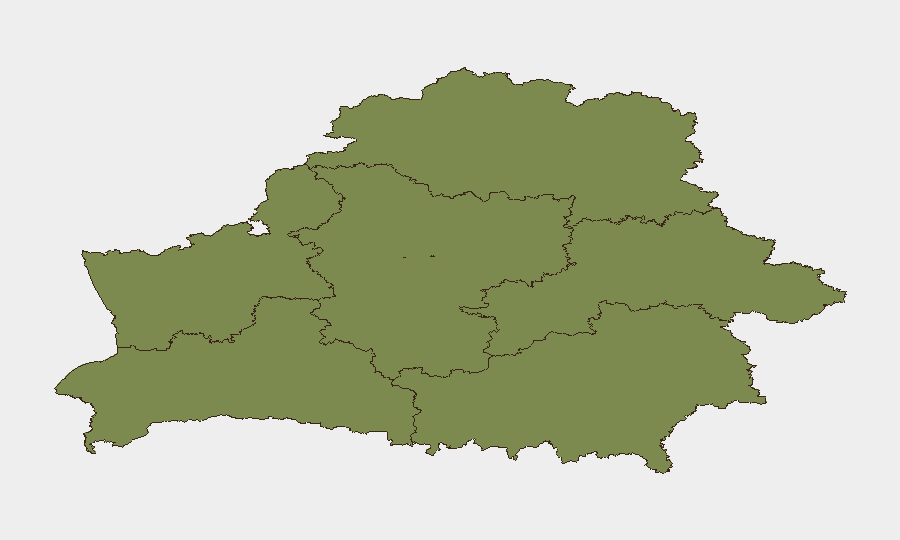
Minsk (31.3) and Minsk Region (25.2) account for the overwhelming majority of tracked security events and represent the primary concentration of risk—reflecting the capital's role as the seat of government, diplomatic channels, and transport/communications hubs. All other regions (Vitsebsk, Hrodna, Brest, Mahilyow, Homyel) register substantially lower composite scores (1.3–1.6), indicating that current event density and volatility are almost entirely centered on the capital and its immediate surroundings. However, Homyel (Gomel) Region's proximity to the Ukrainian and Russian borders and its role in transit infrastructure make it a secondary concern for asset exposure, particularly if cross-border drone or conventional military activity escalates.
How GeoBit Would Assist
Security teams operating or with personnel in Belarus should deploy AOI Monitoring & Early Warning on Minsk and Gomel Region to detect rapid escalation in military activity or infrastructure targeting. Intel Sweep and X/Twitter & Telegram OSINT capabilities enable continuous tracking of official statements, military movements, and cross-border rhetoric from Kyiv, Moscow, and Minsk to provide 24–48-hour early warning of policy shifts or tactical changes. Conflict & Military force-structure and weapons-capability tracking would clarify Belarusian and Russian air-defense readiness and the credibility of Ukrainian strike threats.
7-Day Outlook
The diplomatic temperature is likely to remain elevated; further Ukrainian public threats against Belarusian infrastructure and Russian counter-statements should be expected within the week. The actual execution of strikes remains uncertain, but the confluence of Kyiv's stated demands, Minsk's refusal to comply, and Moscow's public commitment to defend Belarus creates a scenario in which unintended or deliberate escalation could occur with little notice. Personnel and asset-security teams should assume threat-level volatility and maintain flexible contingency plans for Minsk and border regions.
Highest-Risk Areas — Ranked
| # | State / Region | Risk |
|---|---|---|
| 1 | Minsk | 31.3 |
| 2 | Minsk Region | 25.2 |
| 3 | Vitsebsk Region | 1.6 |
| 4 | Hrodna Region | 1.3 |
| 5 | Brest Region | 1.3 |
| 6 | Mahilyow Region | 1.3 |
| 7 | Homyel Region | 1.3 |
Sources
Previous Daily Briefs
A new Belarus brief is written every day — each with its own risk map and downloadable CSV. Here's the last week; use the calendar to go further back.
📅 Browse every day by calendar →
Highlighted days have a brief. Tap a day for that day's map & analysis, or “csv” for that day's dataset ($5).