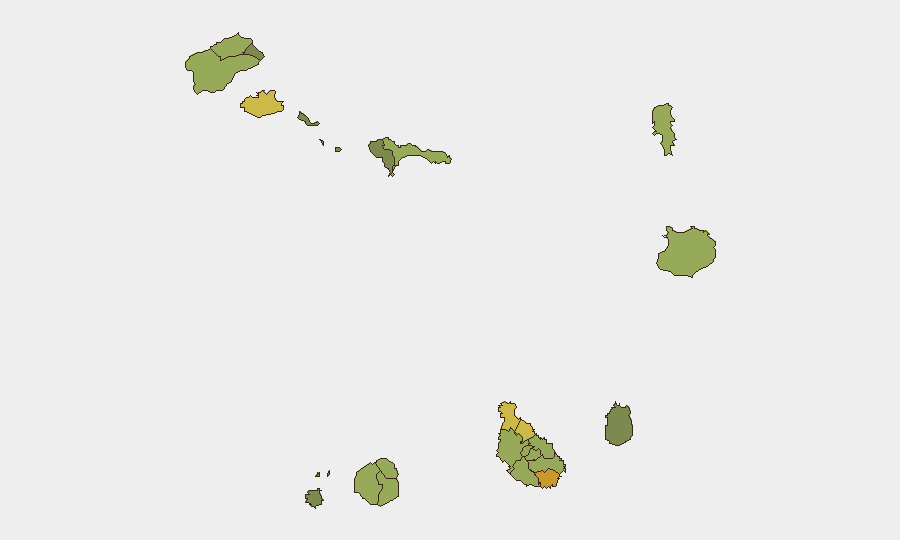
Situation Summary
Cape Verde remains a low-threat environment globally (rank #173, composite score 5) with no confirmed discrete security incidents tracked during the reporting period. Community-level safety concerns are emerging in the capital, Praia, reflecting localized urban crime vulnerability rather than systemic instability. The archipelago's geographic isolation and institutional capacity continue to constrain large-scale organized threats, though intra-island variation in risk is pronounced.
Key Developments
- Praia, Alto Safende — September 18, 2026: Residents reported heightened fear following allegations that a local woman had been assaulted twice and threatened with death. Community calls for justice and increased police presence were documented; however, the report originated from a single community source and lacks independent confirmation from law enforcement or secondary outlets. This should be treated as a community-safety signal rather than a verified incident.
Highest-Risk Areas
Praia (risk 72) and São Miguel (risk 68) dominate the sub-national risk profile, both anchored in Cape Verde's largest urban centers and associated with concentrations of petty crime, property theft, and interpersonal violence. São Vicente (risk 65) and Tarrafal (risk 62) follow, likely reflecting similar urban density and informal-settlement dynamics. The clustering of higher-risk municipalities in the northern and central island groups suggests that risk correlates with population size and urban informal economy activity rather than organized criminal or political instability. Remote and smaller islands (Sal, Porto Novo) register lower composite scores, consistent with reduced target density and fewer anonymous reporting channels.
How GeoBit Would Assist
Corporate security teams with personnel or assets in Praia, São Miguel, or São Vicente should activate AOI Monitoring & Early Warning to establish persistent watch on neighborhoods of concern and receive automated alerts when community-safety signals (crime reports, assault allegations, police activity) surface in real time. OSINT Fusion & Corroboration (multi-language web search, social-media sentiment analysis, and cross-referencing of local news and community forums) would help distinguish single-source rumors from confirmed patterns, as demonstrated by this week's unverified assault report. Risk & Threat Assessment layered with demographic and economic data would support site-specific security protocols and duty-of-care justification for restricted movement or staffing changes in higher-risk municipalities.
7-Day Outlook
No imminent escalation is anticipated. The absence of confirmed incidents and Cape Verde's institutional stability suggest that the current environment will remain characterized by baseline urban crime and sporadic community-safety concerns rather than organized threats or systemic breakdown. Continued routine monitoring of Praia and São Miguel is warranted to detect any shift in frequency or severity of reported incidents.
Highest-Risk Areas — Ranked
| # | State / Region | Risk |
|---|---|---|
| 1 | Praia | 72 |
| 2 | São Miguel | 68 |
| 3 | São Vicente | 65 |
| 4 | Tarrafal | 62 |
| 5 | São Filipe | 58 |
| 6 | Santa Catarina | 58 |
| 7 | Santa Cruz | 55 |
| 8 | Mosteiros | 52 |
| 9 | São Salvador do Mundo | 52 |
| 10 | Ribeira Grande | 50 |
| 11 | Porto Novo | 48 |
| 12 | Sal | 48 |
Sources
Previous Weekly Briefs
A new Cape Verde brief is written every Monday, covering the week — each with its own risk map and downloadable CSV. Use the calendar to go further back.
- September 15, 2026
- September 8, 2026
- September 2, 2026
- August 30, 2026
- August 27, 2026
- August 24, 2026
- August 22, 2026
📅 Browse past briefs by calendar →
Highlighted days have a brief. Tap a day for that day's map & analysis, or “csv” for that day's dataset ($5).
Atlas — our AI intelligence desk — emails them this snapshot personally. Nothing else, no list.