Situation Summary
Cuba's security posture remains constrained by sustained diplomatic isolation, economic contraction, and internal dissent. As of 1 July 2026, the country ranks #99 globally in GeoBit's composite threat assessment (score 12), with 135 tracked events. Recent signals indicate widening friction between Havana and the international community, including the United Nations, alongside domestic activism and law-enforcement responses. The near-term environment is characterized by economic stress, intermittent state repression, and limited transparency—conditions that elevate operational risk for organizations with personnel or assets on the island.
Key Developments
- Havana — 30 June 2026: Cuba's foreign minister publicly attributed ongoing shortages and economic distress to U.S. sanctions, signaling continuation of stalled diplomatic engagement and no near-term sanctions relief (diplomatic backdrop; not a discrete operational incident).
- Cuba (National) — 1 July 2026: International community and Cuban civil society issued disapproval statements regarding unspecified governance or policy matters; concurrent Ministry investigation and activist arrests logged on the same date, suggesting targeted state response to dissent (specific triggers not independently corroborated in available reporting).
- Havana — 1 July 2026: Citizen demonstrations and arrests of activists recorded; no geographic sub-district, casualty, or infrastructure-impact data available in current reporting.
- Cuba (National) — 29 June 2026: Multiple public statements from Cuban officials and residents; one arrest/detention incident involving a citizen and Cuban authorities reported; context and location unspecified.
- Broader Context (June 2026): Social-media reports cite recurring blackouts, fuel shortages, flight cancellations, and healthcare system pressure, but these remain unverified as discrete new incidents within the 24–48 hour window.
Note: Incident-level specificity is limited by available open-source reporting. GeoBit's event feed reflects signal-level activity; verification of precise locations, timings, and operational impact requires real-time on-ground or classified intelligence not reflected in public media.
Highest-Risk Areas
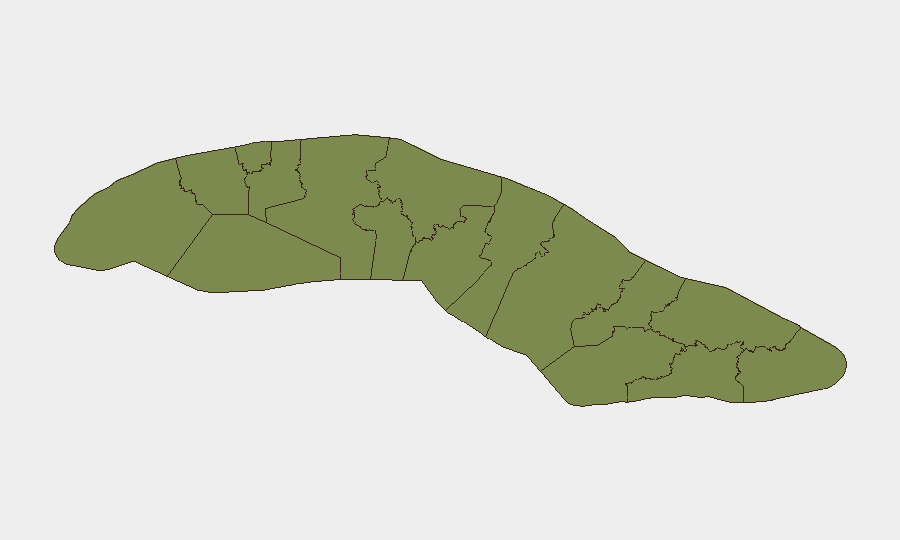
Sancti Spiritus province (risk 34.1) and Havana (risk 30) comprise 70% of tracked risk events, driven by a combination of activism, state security operations, and economic strain. Sancti Spiritus's elevated score likely reflects labor, agricultural, or resource-competition dynamics in Cuba's interior; Havana concentrates diplomatic friction, protest activity, and regime-control mechanisms. Santiago de Cuba, Las Tunas, and Pinar del Rio (risks 10.8, 10.3, 8.5 respectively) show secondary concentrations, possibly linked to border activity, internal displacement, or localized supply-chain disruptions. Organizations with assets in central or western Cuba should prioritize real-time monitoring of these provinces.
How GeoBit Would Assist
Security and risk teams should deploy AOI (Area-of-Interest) Monitoring & Early Warning on Havana and Sancti Spiritus to trigger alerts on protest activity, law-enforcement operations, or infrastructure failures affecting personnel. OSINT Fusion & Corroboration (X/Twitter, Telegram, multi-language search, and sentiment analysis) would disambiguate rumors from verified incidents and track activist or regime narratives in real time. GIS & Spatial Analysis combined with Routing & Network Analysis would enable rapid identification of safe corridors and alternative logistical routes during escalation, while Economic & Trade monitoring would provide early warning of new sanctions or currency/fuel shocks affecting supply chains and staff welfare.
7-Day Outlook
No major political events or scheduled governmental changes are signaled for the immediate week. Activism and state response are likely to remain episodic and localized. Economic pressure and diplomatic stalemate suggest a continuation of baseline risk: localized unrest, targeted arrests, intermittent service disruptions, and vigilant state security posture. Any sharper escalation would be preceded by signals detectable via OSINT and area monitoring.
Highest-Risk Areas — Ranked
| # | State / Region | Risk |
|---|---|---|
| 1 | Sancti Spiritus | 34.1 |
| 2 | Havana | 30 |
| 3 | Santiago de Cuba | 10.8 |
| 4 | Las Tunas | 10.3 |
| 5 | Pinar del Rio | 8.5 |
| 6 | Matanzas | 6.7 |
| 7 | Cienfuegos | 5 |
| 8 | Artemisa | 4.1 |
| 9 | Mayabeque | 4.1 |
| 10 | Villa Clara | 4.1 |
| 11 | Isle of Youth | 4.1 |
| 12 | Ciego de Avila | 4.1 |
Sources
Previous Daily Briefs
A new Cuba brief is written every day — each with its own risk map and downloadable CSV. Here's the last week; use the calendar to go further back.
📅 Browse every day by calendar →
Highlighted days have a brief. Tap a day for that day's map & analysis, or “csv” for that day's dataset ($5).