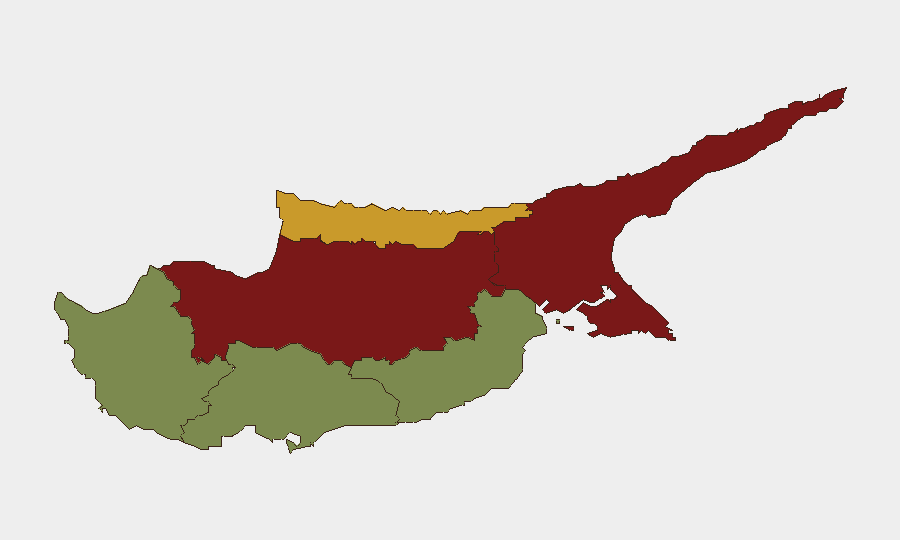
Situation Summary
Cyprus remains a low-threat jurisdiction globally (composite score 3) but faces localized public-order pressures concentrated in the divided capital and northern regions. Four discrete incidents over 48 hours—including inter-communal assault, youth vandalism, prison-system distress signals, and ongoing domestic-violence reporting—reflect fragmented crime drivers rather than a coordinated security breakdown. The temporary deployment of aerial firefighting assets to France marginally reduces domestic emergency capacity, though this is tactical rather than strategic. Overall trajectory is stable with manageable operational risks for businesses and residents outside designated high-risk zones.
Key Developments
- Nicosia, 3 August (Monday) – Three teenagers remanded in custody following violent assault on a 47-year-old Turkish Cypriot man, leaving victim in critical condition; police seeking a fourth suspect. Incident carries inter-communal sensitivity and elevates public-order risk in the capital.
- Limopetra, Limassol, 3 August (Monday night) – Group of hooded youths set tyres ablaze on a road, fled on police arrival, creating temporary traffic hazard and safety risk; investigation ongoing. Pattern consistent with low-threshold youth disorder rather than organized criminality.
- Cyprus nationwide, 2–3 August (overnight operations) – Police coordinated multi-district crime-prevention sweep: 3 arrests (illegal stay among charges), 492 drivers and 154 passengers checked, 307 traffic fines issued, 9 vehicles impounded, multiple speeding/drink-driving/drug-driving offences recorded. Indicates active enforcement posture and documented substance/road-safety concerns.
- Nicosia Central Prison & System, 3 August (reported Monday) – Prison officers publicly petitioned President Christodoulides, citing overcrowding, staff shortages, and "unacceptable" risk to officer safety. Signals structural vulnerability in correctional security and potential for internal incidents.
- Cyprus domestic violence reporting, 3 August (parliamentary disclosure) – Official data presented to parliament: 18,409 reports of violence against women recorded 2021–H1 2026. Current parliamentary debate indicates ongoing institutional awareness but also persistent prevalence of intimate-partner and gender-based violence across the population.
- Cyprus aerial firefighting deployment, 3 August (announced) – Two aircraft committed to assist French wildfire response, temporarily reducing domestic aerial emergency-response capacity. Marginal but quantifiable reduction in disaster-response readiness during fire season.
Highest-Risk Areas
Nicosia (risk 92) and Famagusta (risk 88) dominate the sub-national profile, reflecting the capital's inter-communal fault lines, proximity to the Attila Line, and concentration of administrative/economic activity, alongside Famagusta's status as a divided and historically disputed territory with restricted access. Kyrenia (risk 72) ranks third, likely reflecting similar demographic and political sensitivities in the north. Larnaca, Limassol, and Paphos show substantially lower composite scores (28, 22, 18 respectively), indicating that southern and western coastal zones present materially lower risk to corporate and residential operations. Organizations with personnel or assets in the Nicosia–Famagusta corridor should maintain heightened situational awareness; southern operations face routine, manageable risk.
How GeoBit Would Assist
Intel Sweep and multi-language OSINT fusion enable continuous monitoring of Cypriot news, social media, and police/civil alerts to detect escalating inter-communal or crime signals in real time. AOI Monitoring & Early Warning on Nicosia and Famagusta permits persistent watch and automated alerting when incidents occur within designated zones. Routing & Network Analysis supports security and duty-of-care teams in planning safe transit corridors and alternative routes around identified hotspots. Risk & Threat Assessment synthesizes sub-national data to inform staffing decisions and asset-protection posture adjustments.
7-Day Outlook
Near-term risk trajectory is likely stable but fragmented. Youth disorder and inter-communal tensions may produce sporadic incidents in the capital and northern regions; organized crime or large-scale violence indicators are absent. Police enforcement operations are visible and active. Prison-system distress signals warrant monitoring for potential industrial action or internal incidents, but no imminent breakdown is signaled. Southern and western zones should experience routine operational conditions.
Highest-Risk Areas — Ranked
| # | State / Region | Risk |
|---|---|---|
| 1 | Nicosia | 92 |
| 2 | Famagusta | 88 |
| 3 | Kyrenia | 72 |
| 4 | Larnaca | 28 |
| 5 | Limassol | 22 |
| 6 | Paphos | 18 |
Sources
Previous Daily Briefs
A new Cyprus brief is written every day — each with its own risk map and downloadable CSV. Here's the last week; use the calendar to go further back.
📅 Browse every day by calendar →
Highlighted days have a brief. Tap a day for that day's map & analysis, or “csv” for that day's dataset ($5).
Atlas — our AI intelligence desk — emails them this snapshot personally. Nothing else, no list.