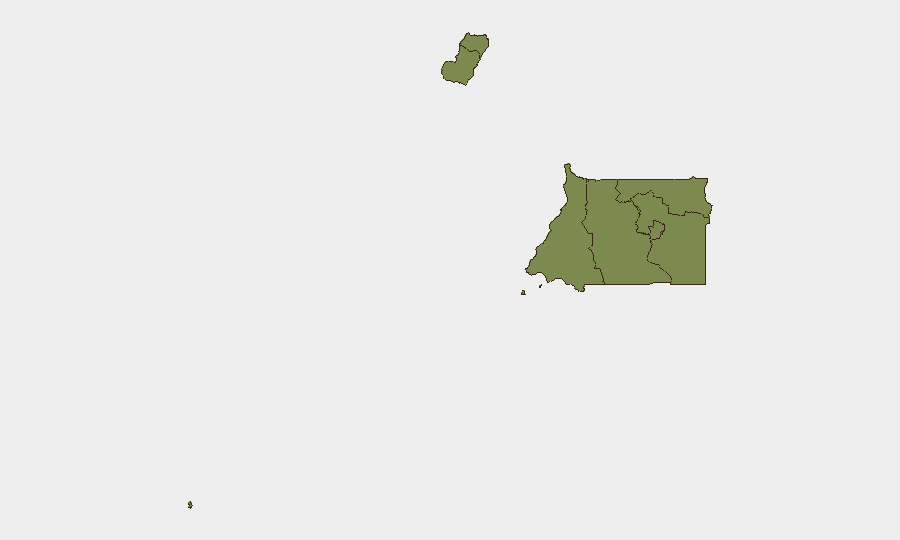
Situation Summary
Equatorial Guinea remains a low-to-moderate threat environment (global rank #141, composite score 5) with no verified security incidents, civil unrest, or critical infrastructure disruptions reported in the last 24–48 hours. The country faces persistent baseline risks including piracy in territorial waters, elevated common crime in urban centers (Malabo, Bata), and border-zone vulnerabilities; these are ongoing trends rather than acute escalations. A new Ebola-related quarantine protocol takes effect on 18 July 2026. The security posture is stable with no indicators of imminent destabilization.
Key Developments
- No discrete security, civil-unrest, crime, or infrastructure incidents verified in Equatorial Guinea for 15–17 July 2026. Multi-source web, social media, and regional news monitoring confirm an absence of reported incidents meeting publication threshold across conflict, terrorism, crime, political instability, or acute travel risk categories.
- Ebola quarantine measures effective 18 July 2026 (Spanish Foreign Ministry advisory, mid-July). New protocols affecting entry and movement; corporate security and duty-of-care teams should confirm applicability to personnel and asset-movement timelines.
- Persistent piracy activity in Equatorial Guinean waters (trend-level advisory, not dated incident). Spanish and regional advisories note ongoing maritime risk; no specific attack reported in last 48 hours, but pattern warrants continued maritime-route vigilance.
- Urban crime baseline remains elevated in Malabo and Bata (trend assessment, not acute incident). General deterioration noted in travel advisories; no specific crime surge or organized incident reported in the immediate 24–48h window.
Highest-Risk Areas
Litoral Province (composite risk 31.8) is the dominant driver of national risk, substantially outscoring all other provinces (which cluster at 1.8). This concentration reflects Litoral's position as the economic and administrative core—Bata is the largest city and commercial hub—and correlates with higher crime density, trafficking vectors, and informal-economy vulnerabilities typical of major urban centers. Bioko Norte and Sur, Kié-Ntem, Wele-Nzas, Annobón, Centro Sur, and the capital district Djibloho remain lower-risk zones, though border regions and maritime zones retain latent exposure to transnational crime and piracy. Corporate personnel and supply chains concentrated in Litoral should maintain heightened situational awareness and follow employer duty-of-care protocols; operations in peripheral provinces face proportionally lower threat density.
How GeoBit Would Assist
Security teams should employ AOI Monitoring & Early Warning to establish persistent watch over Litoral Province, Malabo, and maritime approaches, with automated alerting for civil unrest, security force deployments, or crime clusters. OSINT Fusion & Corroboration (X/Twitter, local news, regional feeds, multi-language search) provides real-time verification of rumors and incident reports, reducing false-positive escalations. Routing & Network Analysis supports duty-of-care planning by identifying secure transit corridors and alternative routes in Litoral and border zones, particularly relevant ahead of the 18 July Ebola protocols.
7-Day Outlook
No escalation trajectory is evident; the security environment is expected to remain stable through late July absent external shocks. The Ebola quarantine implementation on 18 July may temporarily increase checkpoint delays and document-verification friction at borders and major transit hubs, affecting logistics timelines rather than security posture. Monitoring should continue at baseline intensity, with focus on Litoral Province incident patterns and maritime-risk updates.
Highest-Risk Areas — Ranked
| # | State / Region | Risk |
|---|---|---|
| 1 | Litoral Province | 31.8 |
| 2 | Annobón Province | 1.8 |
| 3 | Kié-Ntem Province | 1.8 |
| 4 | Wele-Nzas Province | 1.8 |
| 5 | Bioko Norte | 1.8 |
| 6 | Bioko Sur | 1.8 |
| 7 | Centro Sur Province | 1.8 |
| 8 | Djibloho | 1.8 |
Sources
Previous Daily Briefs
A new Equatorial Guinea brief is written every day — each with its own risk map and downloadable CSV. Here's the last week; use the calendar to go further back.
📅 Browse every day by calendar →
Highlighted days have a brief. Tap a day for that day's map & analysis, or “csv” for that day's dataset ($5).
Atlas — our AI intelligence desk — emails them this snapshot personally. Nothing else, no list.