Situation Summary
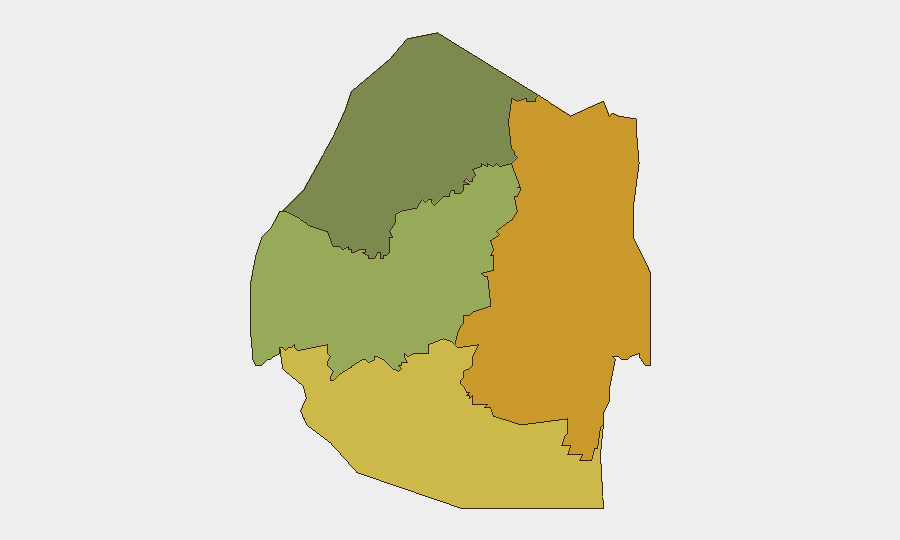
Eswatini remains a low-threat environment (global rank #110, composite score 8) with no discrete security incidents tracked in the current reporting window. The country's overall stability profile is stable, though significant sub-national variation exists, with Lubombo and Shiselweni regions carrying elevated composite risk scores (72 and 68 respectively). A fourth batch of U.S. deportees arrived on 9 July 2026, adding to ongoing immigration and detention-facility management operations with no immediate security implications reported.
Key Developments
- Matsapha Correctional Center, Matsapha — 9 July 2026 — Eswatini received 11 deportees from the United States in a fourth batch under the bilateral deportation arrangement; arrivals were processed at the heavily guarded facility and held temporarily pending onward placement.
- Matsapha Correctional Center, Matsapha — 9 July 2026 — Government statements indicated the deportees were "predominantly from African countries," consistent with prior batches under the U.S.–Eswatini repatriation protocol.
No additional security, civil-unrest, crime, conflict, infrastructure, or travel-risk incidents were verified in Eswatini during the 24–48 hour reporting window.
Highest-Risk Areas
Lubombo Region (eastern border zone, risk score 72) and Shiselweni Region (southern area, risk score 68) are the primary drivers of Eswatini's sub-national risk profile. Both regions exhibit composite scores significantly higher than Manzini (55) and Hhohho (35), likely reflecting cross-border movement dynamics, informal trading networks, and historical trafficking patterns associated with proximity to Mozambique and South Africa. Personnel and asset movements through or based in these regions warrant elevated due-diligence protocols. Hhohho, the seat of national government and primary urban center, presents the lowest regional risk score and remains the safest operational area for corporate presence.
How GeoBit Would Assist
Security teams operating in Eswatini should employ AOI Monitoring & Early Warning capabilities focused on Lubombo and Shiselweni to detect emerging civil unrest, cross-border incidents, or trafficking activity before they escalate. OSINT Fusion & Corroboration across local media, social platforms, and civil-society sources will provide real-time intelligence on political stability, labor actions, or detention-facility incidents (such as those involving deportee populations) that could affect operations. Routing & Network Analysis tools help identify safe transit corridors and alternative pathways in higher-risk southern and eastern zones, mitigating exposure during personnel movement or supply-chain operations.
7-Day Outlook
No acute security deterioration is anticipated over the next seven days. The routine arrival of deportees is administratively managed and carries no signals of broader instability. Continued monitoring of Lubombo and Shiselweni regions for cross-border activity and informal-sector disruptions remains prudent as a baseline duty-of-care measure; however, the overall threat trajectory for Eswatini remains flat and low-probability for the foreseeable term.
Highest-Risk Areas — Ranked
| # | State / Region | Risk |
|---|---|---|
| 1 | Lubombo | 72 |
| 2 | Shiselweni | 68 |
| 3 | Manzini Region | 55 |
| 4 | Hhohho Region | 35 |
Sources
Previous Daily Briefs
A new Eswatini brief is written every day — each with its own risk map and downloadable CSV. Here's the last week; use the calendar to go further back.
📅 Browse every day by calendar →
Highlighted days have a brief. Tap a day for that day's map & analysis, or “csv” for that day's dataset ($5).
Atlas — our AI intelligence desk — emails them this snapshot personally. Nothing else, no list.