Situation Summary
Georgia remains a low-threat environment nationally, with no major security incidents, civil unrest, armed clashes, or infrastructure disruptions detected in the last 24–48 hours. The country's composite threat score places it at rank #76 globally, reflecting a stable security posture across most regions. Structural risk concentrations in Shida Kartli and Tbilisi persist due to proximity to frozen-conflict zones, but no active escalations or cross-line incidents were recorded in the monitored period.
Key Developments
- No significant security incidents recorded (Georgia, last 24–48h): OSINT monitoring across 100+ news and social sources identified zero qualifying security events—no armed clashes, terrorist attacks, major protests, infrastructure failures, or civil unrest—meeting incident-reporting thresholds during the period.
- Frozen-conflict zones remain stable (Shida Kartli, Lower Kartli, Abkhazia; last 24–48h): Although structurally higher-risk due to proximity to South Ossetia and Abkhazia, no fresh military escalations, cross-border movements, or triggering incidents were detected.
- Tbilisi and western corridor operations normal (Tbilisi, Imereti, Guria, Adjara; last 24–48h): No new security developments or civil-unrest events affecting corporate movement or operational continuity; routine law-enforcement activity and petty crime remain the baseline risk profile.
- Travel and infrastructure corridors clear (countrywide; last 24–48h): No transport-corridor closures, major infrastructure failures, or travel-advisory–triggering events recorded; seasonal and weather impacts assessed as routine rather than operationally disruptive.
- Political and civil-society environment calm (countrywide; last 24–48h): No major protests, election-related disorder, or politically driven street unrest reached security-relevant thresholds in the monitored window.
Highest-Risk Areas
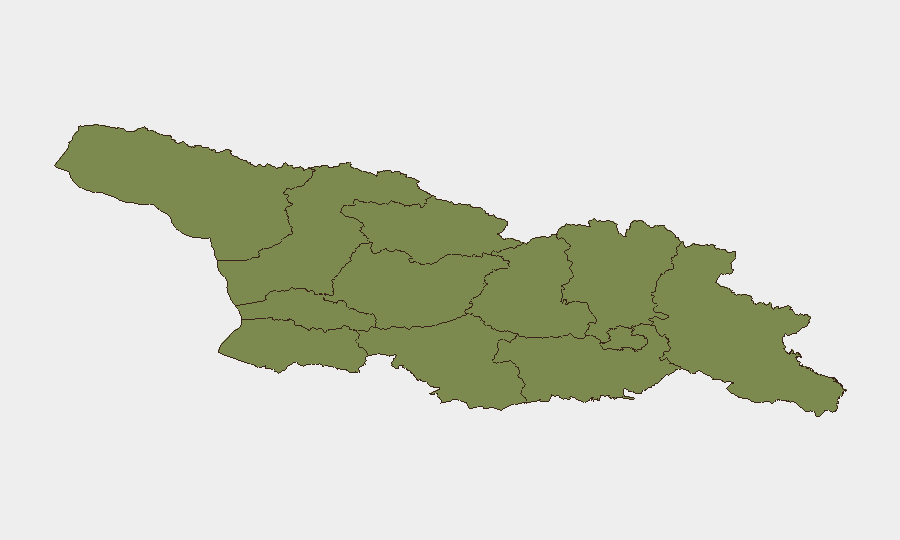
Shida Kartli dominates the sub-national risk profile (composite score 31.4), reflecting its position adjacent to the South Ossetia buffer zone and the legacy of the 2008 conflict; Lower Kartli carries similar structural exposure. Tbilisi and Abkhazia (both score 20.7) represent secondary risk nodes—the capital due to population density and occasional protest activity, and Abkhazia due to its frozen-conflict status and limited state control. All other regions score below 3.5, indicating that risk is geographically concentrated in conflict-proximate zones and the capital; the broader country remains low-threat for routine corporate operations.
How GeoBit Would Assist
Security teams operating in Georgia should deploy AOI Monitoring & Early Warning on Shida Kartli and the Abkhazia/South Ossetia buffer zones to detect any new military movements or cross-line incidents with immediate alerting. Intel Sweep and multi-language OSINT fusion across news, social platforms, and Telegram channels provide continuous situational awareness of political, protest, and civil-society developments affecting Tbilisi and major corridors. Routing & Network Analysis enables alternative-route planning around frozen-conflict regions and allows rapid identification of transport-corridor impacts should incidents occur.
7-Day Outlook
No major security escalation is anticipated over the next seven days based on current regional dynamics and the absence of triggering developments in the 24–48-hour baseline. Structural risks in Shida Kartli and Abkhazia remain unchanged; routine vigilance is warranted but heightened alert is not indicated. Corporate operations in Tbilisi and western regions are expected to remain unimpeded.
Highest-Risk Areas — Ranked
| # | State / Region | Risk |
|---|---|---|
| 1 | Shida Kartli | 31.4 |
| 2 | Tbilisi | 20.7 |
| 3 | Autonomous Republic of Abkhazia | 20.7 |
| 4 | Mtskheta-Mtianeti | 3.5 |
| 5 | Lower Kartli | 1.4 |
| 6 | Kakheti | 1.4 |
| 7 | Samegrelo-Upper Svaneti | 1.4 |
| 8 | Guria | 1.4 |
| 9 | Autonomous Republic of Adjara | 1.4 |
| 10 | Racha-Lechkhumi and Kvemo Svaneti | 1.4 |
| 11 | Imereti | 1.4 |
| 12 | Samtskhe-Javakheti | 1.4 |
Previous Daily Briefs
A new Georgia brief is written every day — each with its own risk map and downloadable CSV. Here's the last week; use the calendar to go further back.
📅 Browse every day by calendar →
Highlighted days have a brief. Tap a day for that day's map & analysis, or “csv” for that day's dataset ($5).