Situation Summary
Indonesia remains a mid-tier global security concern (rank #48, composite threat score 36) with 570 tracked events, characterized by localized friction points rather than acute nationwide instability. Over the past 24–48 hours, verified incident reporting is limited; activity is dominated by government statements, investigative actions, and administrative proceedings rather than violent episodes or large-scale disruptions. The national security trajectory is stable, though Jakarta and Java provinces continue to show elevated institutional and political risk drivers. Routine corporate travel and asset-protection protocols remain appropriate across most operational areas.
Key Developments
- National – 11 June 2026 · Authorities initiated multiple investigative actions targeting residents, advocacy figures, and government entities, reflecting widening administrative and judicial scrutiny. Scope and outcome remain under clarification via open sources.
- Jakarta – 11–13 June 2026 · Political, judicial, and criminal activity concentrated in the capital; no corroborated large-scale security incidents reported in open sources during this window, though institutional statements and legal proceedings dominate the signal environment.
- East Java – 12 June 2026 · Police issued public statements and disapproval notices linked to governance and administrative friction; localized tensions without confirmed street-level violence or infrastructure impact noted in available reporting.
- National – 11 June 2026 · An unconventional violence signal attributed to criminal actor(s) was flagged but remains incompletely specified in open sources regarding location, casualty numbers, and operational detail. Incident clarification is ongoing.
- Java and outlying regions – 11–13 June 2026 · Multiple localized friction points identified tied to governance and administrative tensions; overall national trajectory remains stable with no corroborated riots, insurgent attacks, or major disruptions documented in 13–14 June reporting.
Highest-Risk Areas
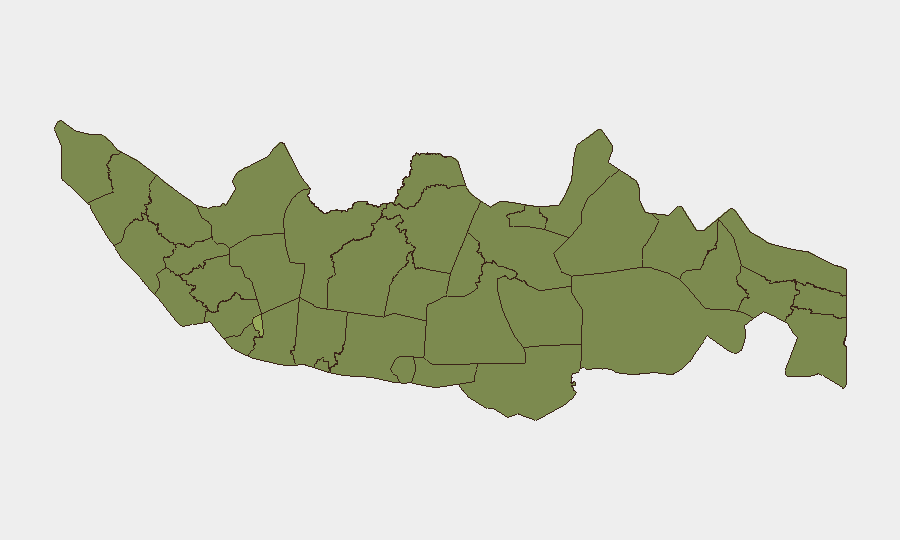
Jakarta (risk 55.1) dominates Indonesia's sub-national risk profile, driven by concentrated political, judicial, and criminal activity with institutional scrutiny and investigative actions. South Sulawesi, West Java, and East Java (36.2, 36.0, and 34.5 respectively) show secondary clustering, reflecting localized governance friction and administrative tension but without escalation to large-scale violence. North Sumatra, Central Java, and West Nusa Tenggara (32.5, 31.4, 29.9) complete the highest-risk tier. This concentration in Java and key provincial capitals reflects Indonesia's urbanization and governance complexity rather than armed insurgency or terrorism; security teams should prioritize Jakarta operations and Java-based supply chains for enhanced monitoring and contingency planning.
How GeoBit Would Assist
Security teams would deploy Intel Sweep and multi-language OSINT (X/Twitter, Telegram, YouTube feeds, and election monitoring) to track emerging investigative actions, political statements, and localized friction in real time across Jakarta and Java provinces. AOI Monitoring & Early Warning with persistent geographic watches on Jakarta, East Java, and West Java would provide 24/7 alerting on protest activity, police actions, or infrastructure disruptions before they escalate. Network & Actor Analysis would clarify the identities, intent, and operational scope of criminal actors and government entities involved in the 11 June unconventional-violence incident and ongoing investigations.
7-Day Outlook
Indonesia's security picture is expected to remain stable over the next seven days, with investigative and judicial activity continuing at current pace but without indication of escalation to region-wide protest, violence, or travel restrictions. Jakarta and Java will sustain elevated institutional risk (political appointments, legal proceedings, administrative scrutiny) rather than street-level security incidents. Duty-of-care teams should maintain routine protocols while monitoring for shifts in investigative intensity or signs of public mobilization.
Highest-Risk Areas — Ranked
| # | State / Region | Risk |
|---|---|---|
| 1 | Special capital Region of Jakarta | 55.1 |
| 2 | South Sulawesi | 36.2 |
| 3 | West Java | 36 |
| 4 | East Java | 34.5 |
| 5 | North Sumatra | 32.5 |
| 6 | Central Java | 31.4 |
| 7 | West Nusa Tenggara | 29.9 |
| 8 | Central Kalimantan | 26.4 |
| 9 | Aceh | 25.9 |
| 10 | South Papua | 25.9 |
| 11 | Banten | 25.9 |
| 12 | East Nusa Tenggara | 25.5 |
Sources
Previous Daily Briefs
A new Indonesia brief is written every day — each with its own risk map and downloadable CSV. Here's the last week; use the calendar to go further back.
📅 Browse every day by calendar →
Highlighted days have a brief. Tap a day for that day's map & analysis, or “csv” for that day's dataset ($5).