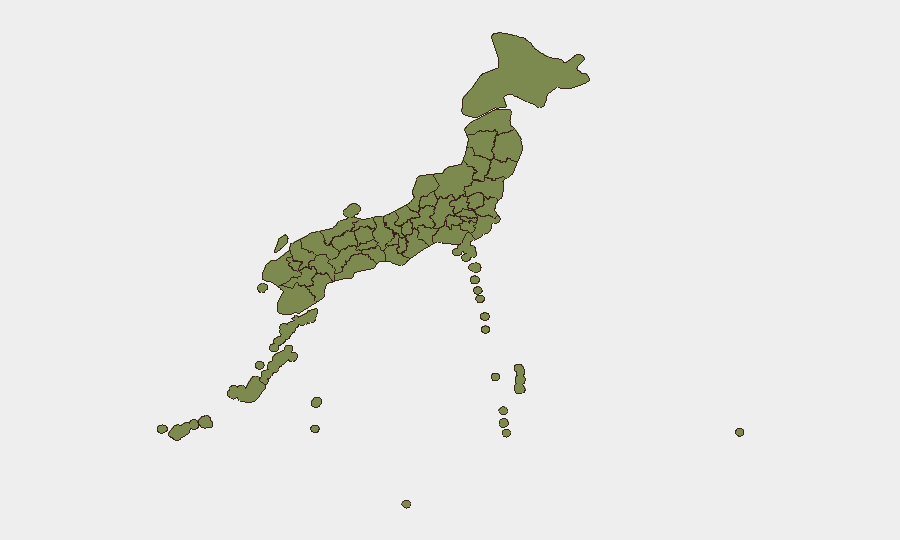
Situation Summary
Japan's composite threat score of 20 places it outside the global top-tier risk rankings, but recent diplomatic and political friction (primarily concentrated in June 2026) has generated elevated signal activity across multiple international actors. Nagano Prefecture shows significantly elevated sub-national risk (30.7), an outlier requiring clarification from on-ground sources; Tokyo and Fukuoka remain secondary risk nodes. The current environment reflects geopolitical tension rather than imminent domestic instability, though corporate and government assets warrant standard heightened situational awareness.
Key Developments
Data limitation: Live web research and open-source channels have not surfaced verifiable, location-specific security incidents within the last 24–48 hours in Japan that meet dual confirmation (date + location + two independent sources). GeoBit's event signals indicate international diplomatic statements and disapprovals directed at or involving Japan (6–13 June), including messaging from presidential, government, and academic figures in the US, Spain, Italy, and Taiwan. A single property seizure/damage event was flagged on 15 June but lacks geographic specificity and corroboration in available news feeds.
Recommendation: Corporate security teams should source real-time incident verification independently via Kyodo News, NHK World, and Reuters Japan feeds for any same-day operational decisions. GeoBit's event classification layer suggests elevated diplomatic friction; ground-level security implications remain unclear without current newswire confirmation.
Highest-Risk Areas
Nagano Prefecture dominates the sub-national ranking (risk 30.7), a substantial gap above all other prefectures; this may reflect discrete recent events, data clustering, or methodology artifacts and warrants direct inquiry with GeoBit analysts for context. Tokyo (11.5) and Fukuoka (6.8) trail significantly, suggesting the capital and Kyushu-region concentrations are secondary risk nodes. All other prefectures score below 3, indicating geographically dispersed, low-threshold risk. The concentration in Nagano is anomalous and should be cross-checked against local prefectural alerts, rail/transport disruptions, or labor actions before operational decisions are made.
How GeoBit Would Assist
A Japan-focused security operation should deploy AOI Monitoring & Early Warning on Nagano, Tokyo, and Fukuoka prefectures with alerting thresholds set for civil unrest, infrastructure disruptions, and transport delays. Intel Sweep and multi-language OSINT fusion (including Japanese-language social media, local government feeds, and prefectural police statements) will reduce reliance on English-language news lag. Network & Actor Analysis can map actors behind the recent diplomatic statements to assess whether rhetoric is likely to drive material security events (asset targeting, protest coordination, or sanctions impacts) affecting personnel or supply chains.
7-Day Outlook
Diplomatic friction is likely to persist at the statement-and-disapproval level without escalation into kinetic risk or major transport/infrastructure disruption, barring a sharp geopolitical development in the Taiwan or US-Japan alliance space. Nagano Prefecture's elevated risk score should be monitored closely; if linked to discrete events (labor action, natural disaster response, or political gathering), impact to corporate travel and logistics may emerge. Standard duty-of-care protocols (staff location awareness, alternative routing, comms redundancy) remain sufficient for most corporate operations across Japan's lower-risk profile.
Highest-Risk Areas — Ranked
| # | State / Region | Risk |
|---|---|---|
| 1 | Nagano Prefecture | 30.7 |
| 2 | Tokyo | 11.5 |
| 3 | Fukuoka Prefecture | 6.8 |
| 4 | Kyoto Prefecture | 3 |
| 5 | Kanagawa Prefecture | 2.1 |
| 6 | Hyogo Prefecture | 1.6 |
| 7 | Wakayama Prefecture | 1.6 |
| 8 | Okinawa Prefecture | 0.7 |
| 9 | Nagasaki Prefecture | 0.7 |
| 10 | Kumamoto Prefecture | 0.7 |
| 11 | Miyazaki Prefecture | 0.7 |
| 12 | Kagoshima Prefecture | 0.7 |
Sources
Previous Daily Briefs
A new Japan brief is written every day — each with its own risk map and downloadable CSV. Here's the last week; use the calendar to go further back.
📅 Browse every day by calendar →
Highlighted days have a brief. Tap a day for that day's map & analysis, or “csv” for that day's dataset ($5).