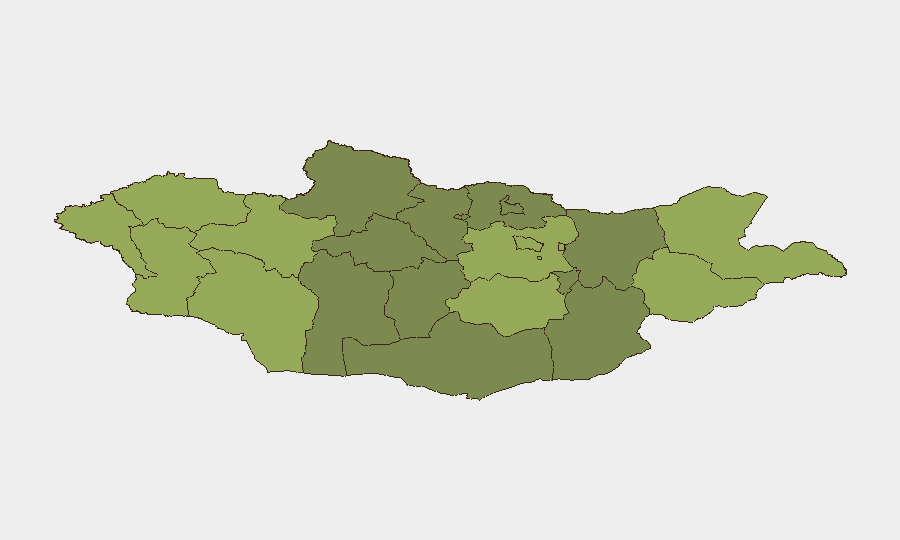
Situation Summary
Mongolia remains a stable country with a composite threat ranking of #144 globally and no credible security incidents reported in the last 24–48 hours. Open-source monitoring across major news outlets, OSINT feeds, and social media has identified no acute conflict, civil unrest, terrorism, organized crime, or infrastructure disruption within the country's borders in the immediate period. Border provinces carry structurally elevated risk scores but have not generated acute developments warranting immediate escalation.
Key Developments
- No verified Mongolia-based security incidents identified in the past 48 hours across international news, regional monitoring, civil unrest feeds, and X/Twitter surveillance specific to Mongolia.
- Ulaanbaatar (July 9–10, 2026, outside immediate window): A Korean presidential state visit to the capital concluded without reported disruption, protests, or security incidents; follow-up monitoring has not identified related unrest.
- Border provinces (Dornod, Sükhbaatar, Uvs, Khovd) – current status: These regions retain elevated structural risk scores but no cross-border incidents, armed clashes, or travel-critical disruptions have been reported in the 24–48h period.
- National advisory posture – ongoing: Foreign-government travel advisories for Mongolia continue to recommend "exercise normal safety precautions" with no new time-specific incident alerts or deterioration flagged over the last two days.
Highest-Risk Areas
Dornod (risk 58), Sükhbaatar (risk 55), and Uvs (risk 52) drive the country's sub-national risk profile, followed by Khovd (50) and Bayan-Ölgii (48). These five regions—concentrated in Mongolia's northern and western borders—carry persistent structural vulnerabilities linked to cross-border dynamics, limited state presence, and proximity to Russia and Kazakhstan. Ulaanbaatar (risk 45) ranks seventh, reflecting standard metropolitan-area concentrations of crime and protest potential; no acute incident activity has been detected there in the reporting window. Risk scores in these areas are baseline assessments, not indicators of imminent threat.
How GeoBit Would Assist
Security teams protecting personnel or assets in Mongolia can deploy Intel Sweep and global event feeds with X/Twitter and Telegram OSINT to maintain real-time visibility of civil unrest, organized crime, and protest activity across Ulaanbaatar and provincial centers. AOI Monitoring & Early Warning capability allows persistent watch of Dornod, Sükhbaatar, and border regions for cross-border incidents or sudden escalations, with immediate alerting. Multi-language search and sentiment analysis across open-source platforms enable early detection of political or security shifts before they crystallize into reportable incidents.
7-Day Outlook
Mongolia's security environment is forecast to remain stable over the next seven days, absent unforecast geopolitical or domestic political developments. Border-region risk will persist at current structural levels but is not expected to generate acute tactical threats to corporate assets or personnel in the near term. Standard duty-of-care protocols—including routine travel-risk checks and staff awareness of local conditions—remain sufficient for most corporate operations.
Highest-Risk Areas — Ranked
| # | State / Region | Risk |
|---|---|---|
| 1 | Dornod | 58 |
| 2 | Sükhbaatar | 55 |
| 3 | Uvs | 52 |
| 4 | Khovd | 50 |
| 5 | Bayan-Ölgii | 48 |
| 6 | Govi-Altai | 46 |
| 7 | Ulaanbaatar | 45 |
| 8 | Zavkhan | 44 |
| 9 | Töv | 42 |
| 10 | Dundgovi | 40 |
| 11 | Darkhan-Uul | 38 |
| 12 | Ömnögovi | 37 |
Sources
Previous Daily Briefs
A new Mongolia brief is written every day — each with its own risk map and downloadable CSV. Here's the last week; use the calendar to go further back.
📅 Browse every day by calendar →
Highlighted days have a brief. Tap a day for that day's map & analysis, or “csv” for that day's dataset ($5).
Atlas — our AI intelligence desk — emails them this snapshot personally. Nothing else, no list.