Situation Summary
Nepal remains a low-to-moderate composite threat environment (rank #null globally, score 28/100) with concentrated risk in Bagmati Province, home to the capital and seat of government. Political unrest centered on youth-led protests and demands for ministerial resignation peaked in mid-July but continues at lower intensity; sporadic incidents including suspicious vehicle placements, low-level IED activity in hill districts, and routine security-force deployments characterize the current posture. No major escalation or new conflict actors have emerged in the past 48 hours; the security picture remains volatile but contained to known flashpoints.
Key Developments
Note: Open-source reporting indexed in the past 24–48 hours from 21 July 2026 does not contain clearly time-stamped, cross-confirmed new incidents meeting the recency threshold. The following reflect the most recent documented developments and ongoing risk conditions:
- Kathmandu (Bagmati Province) – protest activity and political tensions, last confirmed mid-July. Youth-led demonstrations demanding Prime Minister resignation continued around Parliament, Maitighar Mandala, and central administrative zones; police mobilization and arrest/detention events were recorded on 19–20 July per GEOBIT event signals, but no specific new large-scale confrontation is confirmed within the last 48 hours.
- Kathmandu area – suspicious vehicle incidents, July 13. Multiple abandoned or deliberately placed vehicles near media houses (OnlineKhabar, Kantipur Publications, Himalaya Television) and a supermarket triggered security investigations and public concern; incident remains under investigation.
- Rolpa District (Trikota Rural Municipality, Libang) – IED detonation, timing recent but not clearly within 48h window. An improvised explosive device was detonated by unknown actors; no casualties reported but indicates ongoing low-level militant or criminal activity in hill districts outside the capital.
- Morang District – police investigation activity noted 20 July. GEOBIT event signals reference investigative activity involving police and district authorities; specific incident details not publicly available, suggesting either low-profile criminal investigation or administrative matter.
- Karnali Province – government disapproval signal recorded 19 July. Regional tension with central government noted in event data; underlying grievance not specified in available open sources.
Highest-Risk Areas
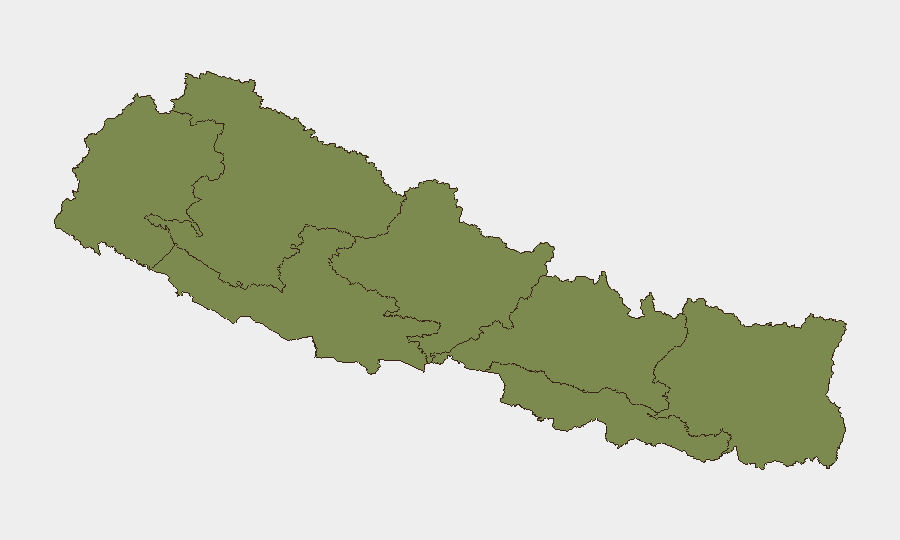
Bagmati Province (composite risk 31.3) dominates Nepal's threat profile, driven by Kathmandu's concentration of political power, youth activism, security-force presence, and media attention. Gandaki Province (14.7) and Karnali Province (8) represent secondary tiers of concern, likely reflecting historical militancy residues, resource disputes, and intermittent regional grievances. All other provinces score below 4, indicating that risk outside the western and central zones is minimal or historical. Organizations with personnel or assets should prioritize situational awareness in Kathmandu and major transport corridors (e.g., Narayangadh–Muglin highway); hill districts warrant routine monitoring but do not present acute near-term threat to most corporate operations.
How GeoBit Would Assist
Security teams operating in Nepal would employ AOI Monitoring & Early Warning on Kathmandu (Parliament, media houses, administrative zones) and key highway corridors to detect protest escalation, security-force deployments, or incident clusters in real time. Intel Sweep and multi-language OSINT fusion on Telegram, X, and local news feeds would surface emerging political demands, protest scheduling, and civil-unrest signals 24–72 hours before major events. Routing & Network Analysis would enable alternative-route planning for personnel and supply movement if primary roads (Narayangadh–Muglin) are disrupted by accidents or blockades.
7-Day Outlook
Political tensions in Kathmandu are expected to remain elevated but below the threshold for mass confrontation in the near term, barring a new triggering event (self-immolation, security-force casualty, or major policy announcement). Weather, monsoon-season road conditions, and routine administrative disruptions will remain secondary risks to logistics and movement. No indicators of armed-group mobilization or cross-border incident triggers are currently evident.
Highest-Risk Areas — Ranked
| # | State / Region | Risk |
|---|---|---|
| 1 | Bagamati Province | 31.3 |
| 2 | Gandaki Province | 14.7 |
| 3 | Karnali Province | 8 |
| 4 | Lumbini Province | 3.6 |
| 5 | Sudurpashchim Province | 1.3 |
| 6 | Koshi Province | 1.3 |
| 7 | Madhesh Province | 1.3 |
Sources
Previous Daily Briefs
A new Nepal brief is written every day — each with its own risk map and downloadable CSV. Here's the last week; use the calendar to go further back.
📅 Browse every day by calendar →
Highlighted days have a brief. Tap a day for that day's map & analysis, or “csv” for that day's dataset ($5).
Atlas — our AI intelligence desk — emails them this snapshot personally. Nothing else, no list.