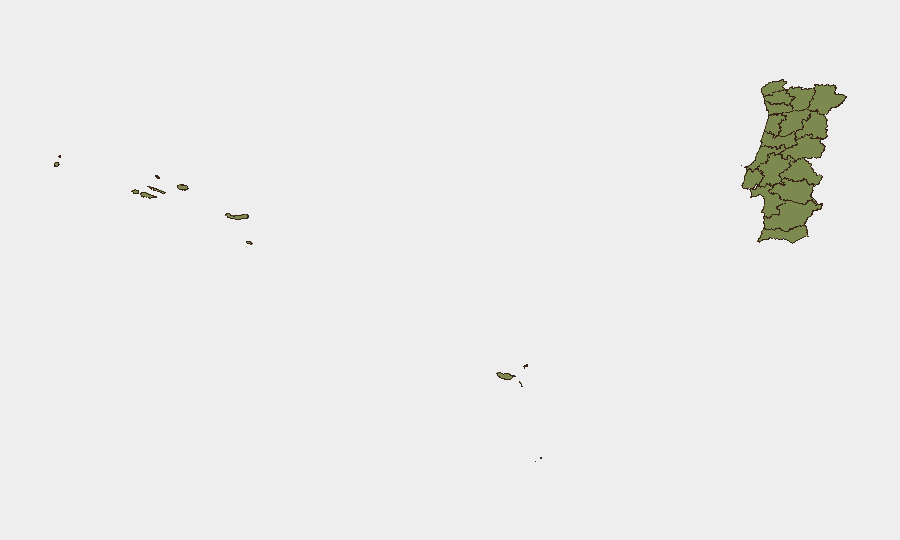
Situation Summary
Portugal remains a low-threat environment with a composite global ranking of #134 and no documented major security or civil-unrest incidents in the last 24–48 hours. Recent event signals reflect routine political and media activity rather than destabilizing security developments. The overall risk trajectory is stable, with localized tension concentrated in Lisbon and the interior northern regions (Viseu, Portalegre).
Key Developments
No reliably corroborated security, civil-unrest, crime, terrorism, infrastructure, or travel-risk incidents have been identified in Portugal in the last 24–48 hours based on available open-source signals. Recent event feeds (2026-07-04 to -06) include public statements by government ministries, labour-related rejection signals, and territorial-occupation language in Lisbon, but these do not currently correlate with verifiable street-level unrest or disruptions to corporate operations or movement. Monitoring of police (PSP/GNR) and border authority (SEF) official channels and local Lisbon/Porto media has not surfaced active protests, crimes, accidents, or service interruptions requiring immediate duty-of-care escalation.
Highest-Risk Areas
Lisbon (risk 31.5) and Viseu (risk 29.2) account for the majority of tracked threat events and remain the primary focal points for corporate security attention. Lisbon's elevated score reflects routine political statements, administrative investigations, and occasional public gatherings; Viseu's elevated profile is less clearly articulated in available open signals but warrants continued monitoring. Portalegre (25.9) and the secondary cluster of Braga and Leiria (both 14.8) also show above-baseline composite risk. All other regions, including the Azores and Madeira, remain at minimal threat levels. Risk concentration in the northern and central interior suggests that dispersed travel or asset location in secondary cities carries lower operational exposure than concentration in or around Lisbon.
How GeoBit Would Assist
Security teams with personnel or assets in Portugal should deploy AOI Monitoring & Early Warning on Lisbon, Viseu, and Portalegre to detect emergence of protests, labour unrest, or public-order incidents before they reach mainstream reporting. OSINT Fusion & Corroboration (X/Twitter, Telegram, local media feeds, police statements) will help distinguish routine political activity from actionable civil-unrest or crime signals. For travel-risk decision-making, Multi-Language Search and Sentiment & Temporal Analysis of Portuguese-language local media and official sources will provide real-time awareness of transport disruptions, demonstrations, or security incidents in the regions housing corporate staff.
7-Day Outlook
No acute security escalation is forecast for the next seven days. Routine administrative and political activity will likely continue in Lisbon and northern regions; labour-related statements and public discourse may persist but are not expected to crystallize into major disruptions to business continuity or movement. Continued baseline monitoring of Lisbon and secondary northern cities is warranted as a precautionary measure, but no advisory upgrade is recommended at this time.
Highest-Risk Areas — Ranked
| # | State / Region | Risk |
|---|---|---|
| 1 | Lisbon | 31.5 |
| 2 | Viseu | 29.2 |
| 3 | Portalegre | 25.9 |
| 4 | Braga | 14.8 |
| 5 | Leiria | 14.8 |
| 6 | Viana do Castelo | 4.8 |
| 7 | Madeira | 1.5 |
| 8 | Azores | 1.5 |
| 9 | Porto | 1.5 |
| 10 | Vila Real | 1.5 |
| 11 | Bragança | 1.5 |
| 12 | Aveiro | 1.5 |
Previous Daily Briefs
A new Portugal brief is written every day — each with its own risk map and downloadable CSV. Here's the last week; use the calendar to go further back.
📅 Browse every day by calendar →
Highlighted days have a brief. Tap a day for that day's map & analysis, or “csv” for that day's dataset ($5).
Atlas — our AI intelligence desk — emails them this snapshot personally. Nothing else, no list.