Situation Summary
Qatar faces an elevated but contained near-term security environment following a confirmed missile interception event over Doha on 9 July. Regional tensions—particularly involving Iran—have generated multiple official statements and military posturing across 13 July, but no new direct attacks on Qatari territory have been reported in the past 24 hours. The national threat composite remains low (rank #161 globally, score 4.0), though sub-national risk concentration in Doha and Al Shahaniya warrants heightened vigilance by organizations with personnel or assets in those zones.
Key Developments
- Doha, 9 July 2026 – Qatar's Ministry of Interior issued a high-alert shelter-in-place directive after explosions were reported over the capital; incoming Iranian missiles were intercepted by air defense, with injuries reported from debris. An "all-clear" message followed later that day.
- Qatar / Iran diplomatic stance, 13 July – Qatar formally disapproved of Iran's recent actions; Iran simultaneously rejected Qatar's position. Multiple public statements and rejections from both parties suggest diplomatic friction rather than imminent escalation.
- Military/Defense signaling, 13 July – Artillery/tank activity was reported involving Qatar's defense force and Qatari military units; context and location details remain limited in open reporting.
- Regional alignment, 13 July – Israel publicly disapproved of Iran's conduct, reflecting broader regional concern over Iranian military posturing.
- Demand from U.S. political figures, 12 July – A U.S. Senator issued demands (content unspecified in available reporting); reflects U.S. interest in the incident.
- Ongoing event noise, 12–13 July – Public statements from a newspaper, a company, and a president have circulated; most appear rhetorical rather than indicative of new operational threats, though sentiment tracking indicates elevated tension.
Highest-Risk Areas
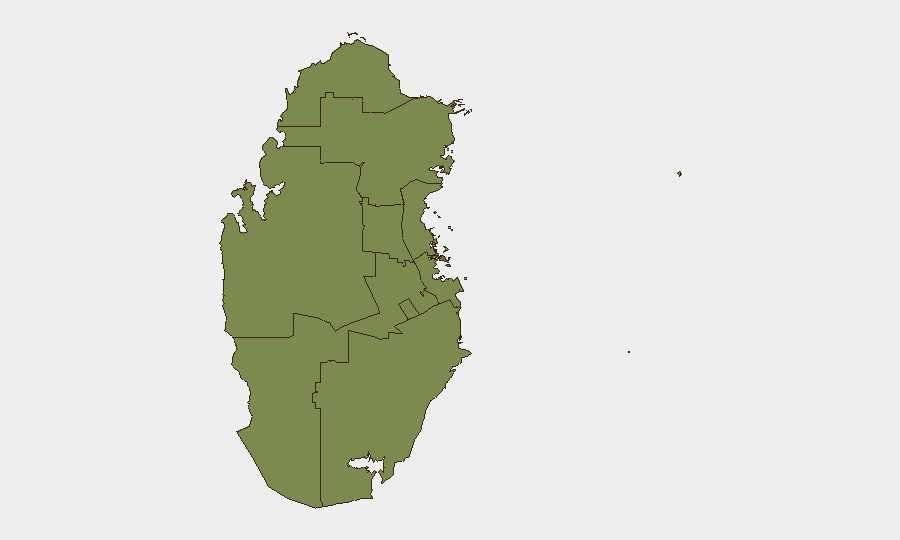
Al Shahaniya (risk score 31.5) significantly outpaces all other sub-national zones and demands primary focus; no specific recent incidents are attributed to it in available reporting, suggesting the score may reflect historical patterns, infrastructure criticality, or strategic positioning. Doha (10.1) is the second-highest-risk area and aligns with the confirmed 9 July missile interception event, making it the primary immediate concern for organizations with downtown or capital-region operations. All other emirates register minimal scores (1.5), indicating risk is geographically concentrated and not indicative of a nationwide security collapse. Organizations should prioritize duty-of-care protocols in Doha and inquire into Al Shahaniya's specific vulnerabilities through GeoBit's spatial and area-of-interest tools.
How GeoBit Would Assist
Teams should deploy AOI Monitoring & Early Warning on Doha and Al Shahaniya to detect emerging militant activity, protest mobilization, or infrastructure threats in near-real time. Conflict & Military tracking combined with OSINT fusion (Twitter, Telegram, regional media) will provide early signal of any further Iranian military posturing or Qatari defensive repositioning. Routing & Network Analysis should be used to identify alternative transportation corridors and safe zones within high-risk areas for staff movement and evacuation planning.
7-Day Outlook
Regional rhetoric is expected to cool slightly as immediate diplomatic crisis-management unfolds; however, Iranian military presence and capability in the Gulf remain a persistent underlying threat. Organizations should assume Doha will require elevated security posture for 7–14 days and that further public statements will precede any tactical developments. No imminent large-scale attack is indicated, but localized incidents (debris, secondary explosions, or insider activity) remain credible in high-risk zones.
Highest-Risk Areas — Ranked
| # | State / Region | Risk |
|---|---|---|
| 1 | Al Shahaniya | 31.5 |
| 2 | Doha | 10.1 |
| 3 | Ash Shamal | 1.5 |
| 4 | Al Rayyan | 1.5 |
| 5 | Al Khor and Al Thakhira | 1.5 |
| 6 | Al-Daayen | 1.5 |
| 7 | Umm Salal | 1.5 |
| 8 | Al Wakrah | 1.5 |
Sources
Previous Daily Briefs
A new Qatar brief is written every day — each with its own risk map and downloadable CSV. Here's the last week; use the calendar to go further back.
📅 Browse every day by calendar →
Highlighted days have a brief. Tap a day for that day's map & analysis, or “csv” for that day's dataset ($5).
Atlas — our AI intelligence desk — emails them this snapshot personally. Nothing else, no list.