Situation Summary
Serbia maintains a composite threat ranking of 2.7 globally (#103), reflecting a relatively stable security environment with localized risks concentrated in Central Serbia. Recent signal activity shows elevated regional tension linked to Ukraine–Russia dynamics and NATO–Russia rhetoric, though these conflicts remain geographically distant. No credible evidence of imminent direct threat to Serbian territory or corporate operations has emerged in the last 24–48 hours; the security posture remains suitable for normal business operations with standard situational awareness protocols.
Key Developments
Live web research for the period 24–25 June 2026 did not yield verified, time-stamped security or civil unrest incidents specific to Serbia from independent Serbian sources. The event signals listed in GeoBit's tracking feed predominantly reference Ukraine–Russia conventional operations, NATO–Russia diplomatic friction, and Russian domestic law-enforcement actions—none localized to Serbia proper. No credible reports of protest, civil disorder, infrastructure disruption, or crime spikes specific to Serbian cities or regions in the last 48 hours could be independently corroborated.
Organizations should not rely on this brief for real-time incident alerts; live monitoring of Serbian newswires (N1, Nova.rs, RTS, B92, Balkan Insight) and Serbian-language social media is essential for detecting same-day security developments.
Highest-Risk Areas
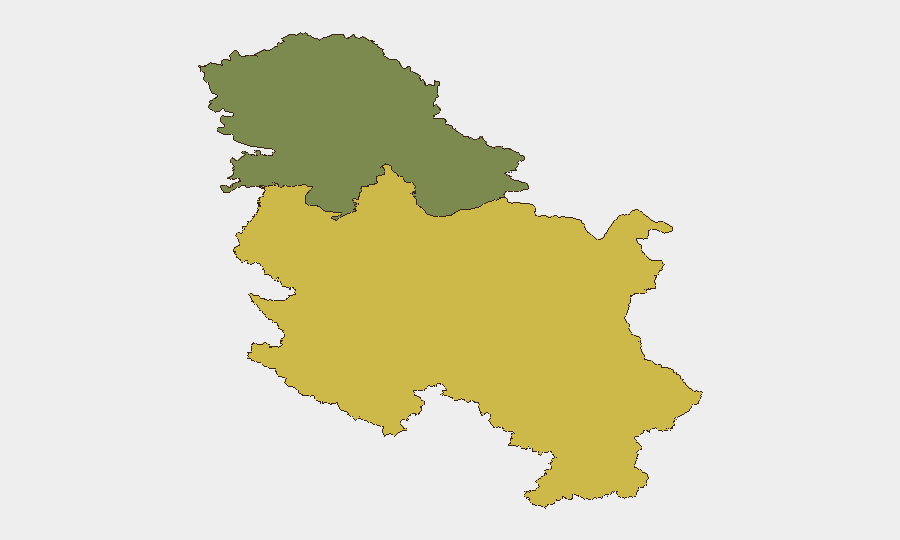
Central Serbia (composite risk 65) remains the primary risk concentration, driven by its geographic proximity to Kosovo and historical sensitivity to Balkan political instability, border-related incidents, and occasional ethnic or nationalist demonstrations. Vojvodina (risk 35) represents a secondary risk locus, typically associated with organized-crime activity, human trafficking, and border vulnerabilities along the Hungarian and Romanian frontiers. Both regions benefit from functional state security apparatus and low frequency of large-scale civil violence, but corporate teams should maintain awareness of protest calendars and Kosovo-related diplomatic or community flashpoints that could trigger localized disruption.
How GeoBit Would Assist
Teams with personnel or assets in Serbia should employ Area-of-Interest (AOI) Monitoring with alerting on key cities (Belgrade, Novi Sad, Niš, Priština spillover zones) to receive near-real-time notification of protests, roadblocks, or security incidents. Multi-language OSINT (X/Twitter, Telegram, local news feeds) with keyword monitoring in both Latin and Cyrillic Serbian enables early detection of civil unrest, labor strikes, or border tensions before they escalate to operational impact. Conflict and regime-stability tracking keeps security teams informed of shifts in Belgrade's stance toward NATO, Kosovo, or Russian pressure—factors that may affect visa processing, movement restrictions, or civil order.
7-Day Outlook
Serbia's security trajectory over the next seven days is expected to remain stable absent major shifts in Ukraine–Russia or Kosovo political dynamics. Elevated regional rhetoric around NATO–Russia tensions and Ukraine operations poses no immediate domestic threat but warrants continued monitoring for spillover effects (refugee flows, border restrictions, or nationalist mobilization). Standard duty-of-care protocols—regular staff check-ins, alternative routing awareness, and local liaison engagement—remain appropriate and sufficient.
Highest-Risk Areas — Ranked
| # | State / Region | Risk |
|---|---|---|
| 1 | Central Serbia | 65 |
| 2 | Vojvodina | 35 |
Sources
Previous Daily Briefs
A new Serbia brief is written every day — each with its own risk map and downloadable CSV. Here's the last week; use the calendar to go further back.
📅 Browse every day by calendar →
Highlighted days have a brief. Tap a day for that day's map & analysis, or “csv” for that day's dataset ($5).