Situation Summary
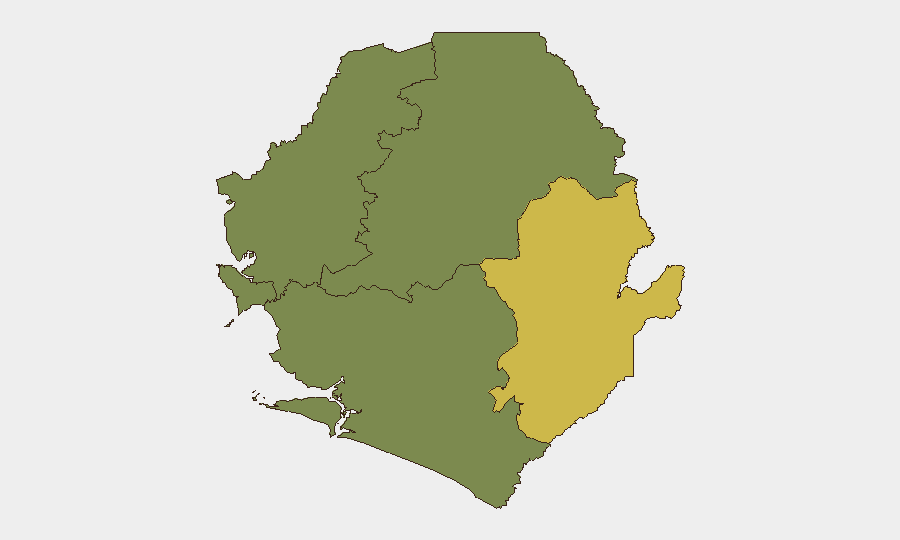
Sierra Leone remains a baseline-risk environment (#135 globally, composite score 4/10) with no major escalatory security incidents reported in the last 24–48 hours. The country faces persistent structural vulnerabilities—organized crime, drug-transit activity, limited state capacity—but no imminent signs of political instability, armed conflict, or widespread civil unrest. Risk is concentrated in the Eastern Province (composite score 68), which significantly exceeds all other regions; Western Area (score 35) registers moderate concern.
Key Developments
No verified, dated security or instability incidents have been reliably identified in open sources for the 24–48 hours ending 2026-06-17. Available web signals reference diplomatic statements (ministries, Kenya) and ongoing public-health monitoring (cholera surveillance) without specific incident confirmation. Close monitoring of Sierra Leone Police, Government of Sierra Leone official channels (X/Twitter), and regional alert feeds (ECOWAS, UN Crisis Group) shows no major escalation. Web search did not surface reports of riots, attacks, infrastructure failures, or sudden political developments in the immediate window.
Recommend continued watch on:
- Local media outlets (AYV News, Politico SL, Sierraloaded, Awareness Times) for same-day reporting.
- Government health and security agency announcements regarding cholera case trends and public-order response.
- ECOWAS and UN regional office statements for any multilateral concern flags.
Highest-Risk Areas
Eastern Province (score 68) dominates the sub-national risk profile and warrants priority duty-of-care attention. The province's elevated composite score reflects a combination of organized crime activity, weak governance capacity, and limited law enforcement reach—typical of Sierra Leone's more remote, mineral-rich eastern frontier. Western Area (score 35), which includes Freetown and surrounding peri-urban zones, ranks second; this reflects urban crime, drug-trade choke points, and occasional political tension tied to capital-city concentration of government and commercial activity. Northern, North West, and Southern provinces show minimal detected threat signals (score 0), consistent with lower population density and less reporting infrastructure.
How GeoBit Would Assist
Teams with personnel or assets in Sierra Leone should employ AOI Monitoring & Early Warning on Eastern Province and Western Area to detect emerging civil unrest, crime spikes, or infrastructure disruption with automated alerting. Intel Sweep and X/Twitter OSINT provide real-time visibility into government announcements, police operations, and ground-level incident reporting from local accounts. Network & Actor Analysis supports mapping of drug-trafficking and organized-crime networks operating through Sierra Leone's borders and ports, informing route-planning and asset-movement decisions.
7-Day Outlook
No indicators suggest major escalation or new security crisis in the next 7 days. Baseline operational risk (crime, trafficking, health surveillance) will persist, particularly in Eastern and Western zones. Continue standard monitoring cadence and maintain liaison with local security partners and diplomatic contacts for early warning of any sudden policy, health, or security shifts.
Next Brief: 2026-06-18 | Data Confidence: Baseline | Last Updated: 2026-06-17 06:00 UTC
Highest-Risk Areas — Ranked
| # | State / Region | Risk |
|---|---|---|
| 1 | Eastern Province | 68 |
| 2 | Western Area | 35 |
| 3 | North West Province, Sierra Leone | 0 |
| 4 | Northern Province, Sierra Leone | 0 |
| 5 | Southern Province, Sierra Leone | 0 |
Sources
Previous Daily Briefs
A new Sierra Leone brief is written every day — each with its own risk map and downloadable CSV. Here's the last week; use the calendar to go further back.
📅 Browse every day by calendar →
Highlighted days have a brief. Tap a day for that day's map & analysis, or “csv” for that day's dataset ($5).