Situation Summary
Singapore remains a low-threat, stable jurisdiction with a composite threat score of 5 (rank #156 globally) and no verified security incidents, civil unrest, or infrastructure disruptions reported in the last 24–48 hours. Web research across major news outlets, government feeds, and international wire services confirms no new terrorism alerts, protests, violent crime, or transport/telecom outages affecting corporate operations or travel safety. The security environment is consistent with Singapore's established baseline as one of Asia's most secure financial and logistics hubs.
Key Developments
No credible, time-stamped security, civil-unrest, or public-safety incidents have been independently verified in Singapore in the last 24–48 hours. Searches of mainstream media (Channel NewsAsia, Straits Times, TODAY), government agency feeds (Singapore Police Force, Internal Security Department), and international wire services (Reuters, AFP, AP) returned no new alerts, protests, infrastructure failures, or mass-casualty events with confirmed dates in this window. Existing Internal Security Department advisories on radicalisation remain unchanged since March 2026. No new government travel advisories targeting Singapore have been issued by major foreign governments in the last 1–2 days.
Highest-Risk Areas
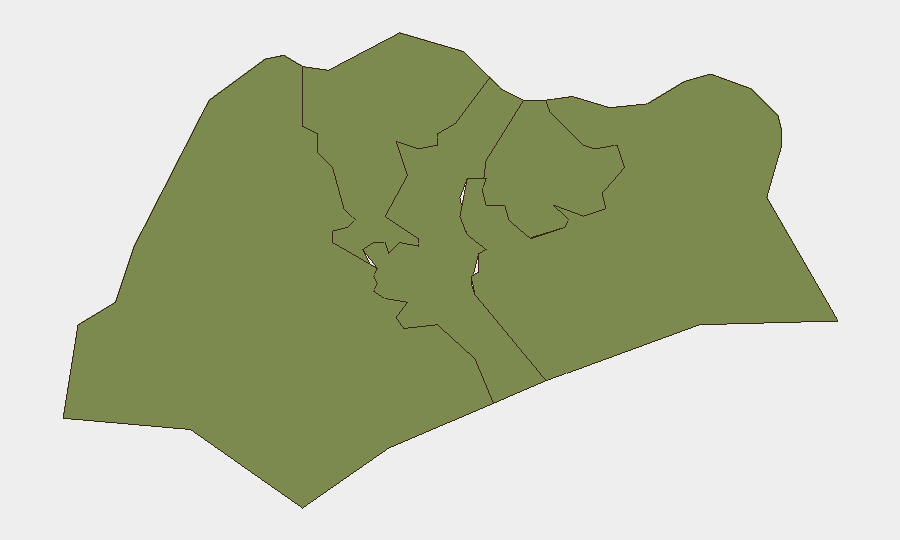
The Northwest region carries the highest composite risk score (31.9), substantially above all other areas; the Southwest follows at 16.3. Central, Northeast, and Southeast regions all register minimal risk (1.9 each). The disproportionate elevation of Northwest-region risk warrants confirmation of its geographic and sectoral drivers—whether linked to border proximity, maritime traffic, specific infrastructure, or analytical weighting—to allow security teams to prioritize protective resources and monitoring accordingly. Further granular analysis by GeoBit's GIS and spatial tools would clarify whether this reflects persistent structural vulnerabilities or incident clustering.
How GeoBit Would Assist
AOI Monitoring & Early Warning would establish persistent watch over Singapore's highest-risk Northwest zone and key corporate assets (ports, financial districts, transport nodes), with automated alerting on emerging civil unrest, infrastructure disruption, or security incidents. Intel Sweep and OSINT fusion (X/Twitter, Telegram, multi-language news feeds) enable real-time detection of protest activity, extremist activity, or destabilizing rhetoric before mainstream reporting. Routing & Network Analysis supports rapid alternative-route planning for personnel and supply chains if transport corridors become unsafe or congested.
7-Day Outlook
Singapore's security posture is expected to remain stable over the next seven days absent major regional shocks or sudden policy shifts. Continued baseline monitoring of Northwest-region drivers and standard corporate-asset protection protocols remain appropriate. GeoBit's standing alert thresholds on Singapore should remain active to flag any anomalies in social sentiment, security-force activity, or cross-border incidents that could signal a shift in the current low-threat environment.
Report Date: 25 June 2026 | Data Cutoff: 24–25 June 2026 | Next Update: 26 June 2026
Highest-Risk Areas — Ranked
| # | State / Region | Risk |
|---|---|---|
| 1 | Northwest | 31.9 |
| 2 | Southwest | 16.3 |
| 3 | Central | 1.9 |
| 4 | Northeast | 1.9 |
| 5 | Southeast | 1.9 |
Sources
Previous Daily Briefs
A new Singapore brief is written every day — each with its own risk map and downloadable CSV. Here's the last week; use the calendar to go further back.
📅 Browse every day by calendar →
Highlighted days have a brief. Tap a day for that day's map & analysis, or “csv” for that day's dataset ($5).