Situation Summary
Slovakia remains at low overall threat (composite score 4; no tracked incidents in the current reporting window). No confirmed security incidents, civil unrest, infrastructure failures, or acute travel disruptions have been reported in the past 24–48 hours. The country's security environment is stable, with routine political activity (parliamentary election campaign preparations) and policy announcements (Schengen visa suspension for Russian citizens) dominating recent coverage but generating no associated public disorder or operational risk.
Key Developments
No discrete security, conflict, civil-unrest, major crime, infrastructure, or travel-risk incidents meeting verification thresholds have been confirmed in Slovakia during the past 24–48 hours. Open-source monitoring (news wires, official channels, social platforms) and real-time feeds (Teraz.sk, Denník N, TASR) show routine political and general news but no time-stamped incidents that materially elevate security or duty-of-care concerns in this period.
*Background context (non-current):* Slovakia's suspension of Schengen visas for most Russian citizens is being implemented across July–August 2026 as part of broader EU policy coordination; parliamentary election campaign activity is underway but remains within normal political processes.
Highest-Risk Areas
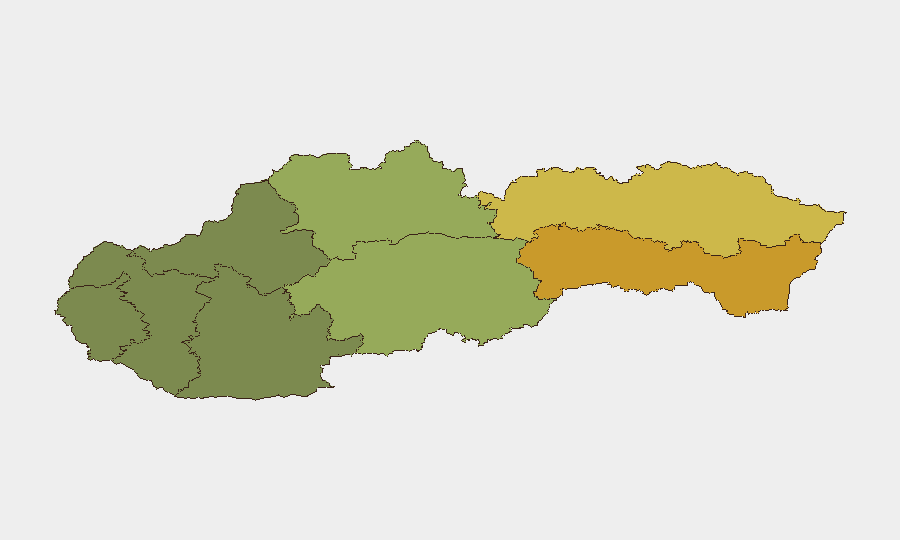
The eastern and central regions—Košice (risk 72), Prešov (risk 68), and Banská Bystrica (risk 55)—drive the country's composite risk ranking. These regions historically concentrate organized crime, economic hardship, and cross-border trafficking vulnerabilities; however, no acute incidents have escalated risk in the past 24–48 hours. Corporate and NGO operations in these areas warrant sustained baseline vigilance, but no emergency operational changes are indicated by current intelligence. Western and central regions (Bratislava, Trenčín, Trnava) carry materially lower risk.
How GeoBit Would Assist
For ongoing Slovakia monitoring, security teams should employ Intel Sweep and global event feeds to detect emerging incidents with 24–48-hour lead time; X/Twitter and Telegram OSINT to capture early public signals of unrest, crime clusters, or infrastructure failure; and AOI Monitoring & Early Warning to maintain persistent watch over highest-risk regions (Košice, Prešov) and critical corporate or supply-chain nodes. Network & Actor Analysis and election monitoring would provide political-stability early warning as the parliamentary campaign develops. For personnel or asset movement, Routing & Network Analysis can identify alternative routes and safe corridors if regional risk escalates.
7-Day Outlook
Slovakia's security picture is expected to remain stable over the next seven days, absent unexpected political flashpoints or cross-border incidents. Continued monitoring of election campaign rhetoric and any labor or protest organizing in high-risk eastern regions is prudent. No force-posture changes or heightened contingency activations are warranted at present; standard duty-of-care protocols remain appropriate.
Highest-Risk Areas — Ranked
| # | State / Region | Risk |
|---|---|---|
| 1 | Region of Košice | 72 |
| 2 | Region of Prešov | 68 |
| 3 | Region of Banská Bystrica | 55 |
| 4 | Region of Žilina | 42 |
| 5 | Region of Nitra | 35 |
| 6 | Region of Bratislava | 28 |
| 7 | Region of Trenčín | 22 |
| 8 | Region of Trnava | 18 |
Sources
Previous Daily Briefs
A new Slovakia brief is written every day — each with its own risk map and downloadable CSV. Here's the last week; use the calendar to go further back.
📅 Browse every day by calendar →
Highlighted days have a brief. Tap a day for that day's map & analysis, or “csv” for that day's dataset ($5).
Atlas — our AI intelligence desk — emails them this snapshot personally. Nothing else, no list.