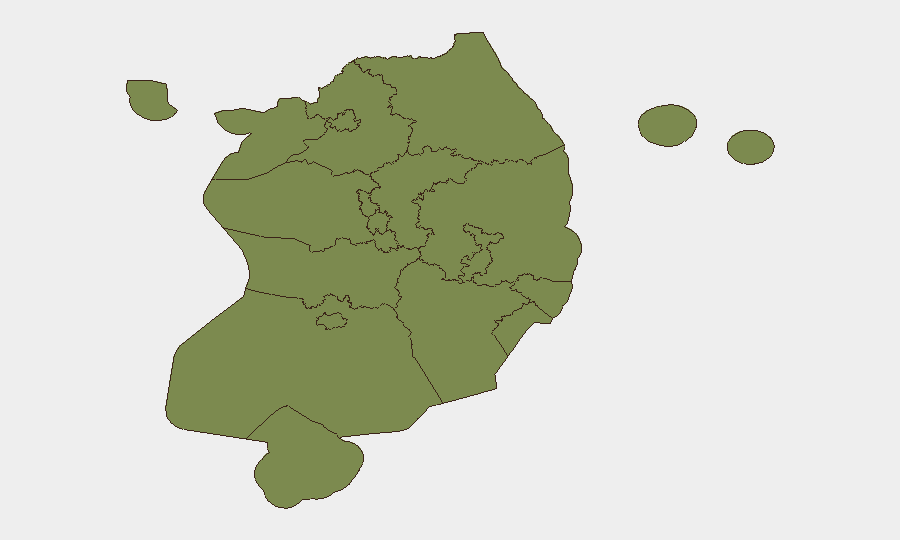
Situation Summary
South Korea faces a moderately elevated security environment driven by acute political polarization, border-zone military incidents, and emerging cyber-compliance risks. The country ranks #null globally with a composite threat score of 29; the last 48 hours have surfaced judicial finality in a high-profile political case, two localized evacuation events near sensitive military infrastructure, and new regulatory constraints on financial markets and media speech. The cumulative effect is increased volatility in political, legal, and operational domains, with Seoul accounting for the largest share of measured risk (31.3 of the national 29-point composite).
Key Developments
- Cheorwon County, Gangwon Province – evening 30 July 2026
South Korean military detected an unidentified unmanned aircraft near the inter-Korean border and issued emergency evacuation orders to residents; aircraft was later identified as a U.S. drone conducting joint training operations. No hostile intent confirmed, but incident reflects heightened border-zone alertness.
- Osan Air Base, Pyeongtaek, Gyeonggi Province – 29 July 2026 (reported 30 July)
A white phosphorus leak inside the U.S. air base triggered precautionary neighborhood evacuations; incident was contained with no major casualties. Localized hazmat risk to surrounding civilian population.
- Seoul – 31 July 2026
South Korea's Supreme Court upheld a seven-year prison sentence for former President Yoon Suk Yeol in a martial-law case. Ruling elevates risk of sustained political protest and civil unrest over rule-of-law and executive-military authority questions.
- Seoul – 31 July 2026
A new "fake news" law took effect, raising press-freedom concerns and increasing legal exposure for media outlets and online publishers reporting on sensitive political or security topics.
- Seoul / financial markets – 31 July 2026
Authorities announced emergency measures to stabilize equity markets, including bans on new leveraged ETF listings and caps on investor leverage, in response to sustained July volatility.
- Nationwide – 31 July 2026
South Korean and Japanese governments publicly noted monitoring of new North Korean troop deployments to Russia as part of ongoing military cooperation; no direct incident on South Korean soil reported, but geopolitical tension underscored.
- Cyber / sanctions compliance – 31 July 2026
Western governments issued a joint alert regarding North Korean IT workers operating under false identities in remote roles, infiltrating corporate networks to fund weapons programs. Risk extends to South Korean firms and their supply chains.
Highest-Risk Areas
Seoul dominates the risk ranking at 31.3, reflecting concentration of political institutions, media, financial markets, and government decision-making in the capital. South Chungcheong (17.7) ranks second, likely influenced by proximity to sensitive military installations and inter-Korean border infrastructure. Gyeonggi Province (7.7), which surrounds Seoul and hosts U.S. military bases and major industrial zones, carries material but lower relative risk. Remaining provinces and districts remain below 7.0, with Jeju, Sejong, and outlying areas at minimal measured risk (1.3 each). The steep drop from Seoul suggests political and institutional concentration drives overall volatility more than geographic diffusion.
How GeoBit Would Assist
Security teams would deploy AOI Monitoring & Early Warning on Seoul political venues, military bases (especially Osan and Pyeongtaek), and the Cheorwon inter-Korean border zone to detect real-time protest, military activity, or infrastructure incidents. Intel Sweep and multi-language OSINT on regulatory and media developments—including the new "fake news" law and court rulings—would flag legal risks to corporate speech and compliance exposure. Cyber and sanctions intelligence would identify North Korean actor penetration in supply chains and remote-hire practices affecting South Korean firms.
7-Day Outlook
Political polarization will likely sustain at elevated levels following the Yoon conviction; protest activity and counter-protest risk should be monitored in central Seoul through early August. Border-zone military alertness will persist amid North Korea–Russia coordination; civilian evacuation drills near U.S. bases may recur. Financial and regulatory volatility will remain high, with compliance and reputational risk rising for media and tech firms navigating the new speech law.
Highest-Risk Areas — Ranked
| # | State / Region | Risk |
|---|---|---|
| 1 | Seoul | 31.3 |
| 2 | South Chungcheong | 17.7 |
| 3 | Gyeonggi | 7.7 |
| 4 | South Gyeongsang | 6.8 |
| 5 | Busan | 2.7 |
| 6 | Gwangju | 2.2 |
| 7 | Gangwon State | 1.8 |
| 8 | Incheon | 1.3 |
| 9 | North Chungcheong | 1.3 |
| 10 | South Jeolla | 1.3 |
| 11 | Jeju | 1.3 |
| 12 | Sejong | 1.3 |
Sources
Previous Daily Briefs
A new South Korea brief is written every day — each with its own risk map and downloadable CSV. Here's the last week; use the calendar to go further back.
📅 Browse every day by calendar →
Highlighted days have a brief. Tap a day for that day's map & analysis, or “csv” for that day's dataset ($5).
Atlas — our AI intelligence desk — emails them this snapshot personally. Nothing else, no list.