Situation Summary
Switzerland remains a low-threat environment with a composite security score of 7 (rank #132 globally), reflecting stable political conditions, effective law enforcement, and minimal active conflict or major infrastructure disruptions. No significant new security incidents, civil unrest, cyberattacks on critical infrastructure, or terrorism-related events have been corroborated in the last 24–48 hours across government advisories, news, or open-source security feeds. Routine urban risks—petty crime in major cities (Basel, Bern, Geneva, Lausanne, Zurich) and the standing potential for demonstrations—remain the primary operational concerns, with no emerging crises or material escalation in the current reporting window.
Key Developments
- No corroborated major incidents (last 24–48 hours, nationwide). Open-source intelligence, government travel advisories (Canada, June 30), and security feeds report no new attacks, foiled plots, infrastructure failures, or violent protests in Switzerland during July 1–3, 2026.
- Geneva: Routine petty crime risk remains baseline. Canadian advisory reiterates endemic risk of pickpocketing and car break-ins in Geneva but confirms no new crime spikes or organized incidents in the last two days.
- Nationwide: Demonstration risk noted as standing (not acute). Generic advisory language flags the *possibility* of demonstrations in Geneva, Bern, and Zurich that could disrupt traffic; no specific, imminent protest activity is reported for the current 48-hour window.
- Nationwide: Cyber incident reporting framework active. Switzerland's 2025 Cybersecurity Ordinance requires critical-infrastructure operators to report cyberattacks to the National Cyber Security Centre within 24 hours; no publicly visible alerts or incidents have been triggered in the last two days.
- No terrorism alerts or incident signals (last 24–48 hours). While European terrorism threat remains generalized, no specific attacks, plots, or heightened alerts have been issued for Switzerland in the reporting period.
Highest-Risk Areas
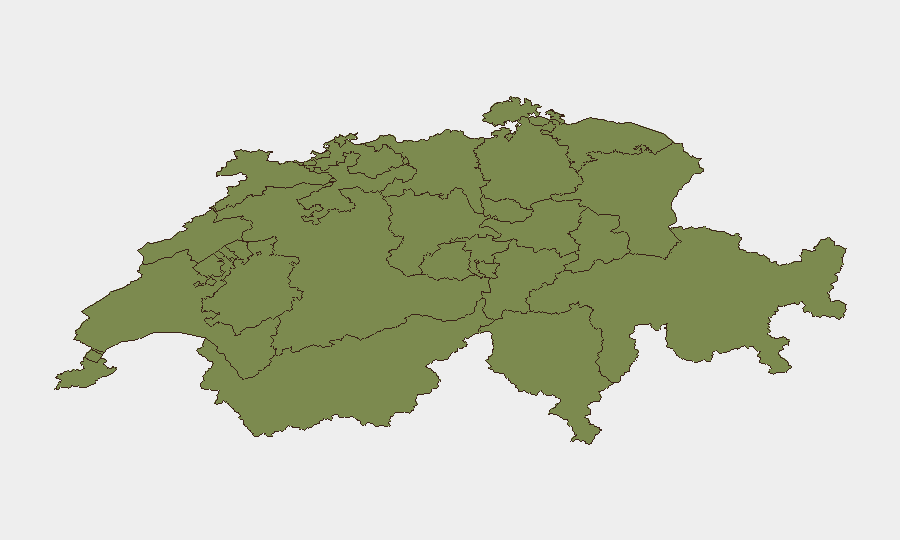
Geneva (risk 31.8) and Lucerne (risk 25.6) dominate Switzerland's sub-national threat profile and account for the majority of tracked events. Geneva's elevated score reflects its role as a hub for international diplomacy, NGO activity, and periodic protests (e.g., anti-government demonstrations); Lucerne's elevation likely reflects regional demonstration potential and transit-corridor exposure. Zurich (7.9), by contrast, shows significantly lower composite risk despite being a major financial center, suggesting concentration of recent event signals in the northwestern and central cantons rather than the largest urban agglomeration. Basel-Landschaft, Vaud, Bern, and the smaller cantons (Basel-City, Jura, Solothurn, Aargau) all show minimal risk scores (1.8–2.5), indicating localized event activity rather than systemic national instability.
How GeoBit Would Assist
Security teams monitoring Switzerland would deploy AOI (area-of-interest) monitoring and early warning on Geneva and Lucerne to detect emerging demonstrations, gatherings, or unrest in near-real time. Intel Sweep and multi-language OSINT fusion across news, social media (X, Telegram), and official feeds would provide continuous corroboration of incident reports and eliminate false signals. Cyber and critical-infrastructure search capabilities, combined with active monitoring of Swiss regulatory databases, would flag any cyberattacks or infrastructure failures within the 24-hour mandatory reporting window, allowing duty-of-care teams to adjust operations or supply chains immediately.
7-Day Outlook
No material escalation in Swiss security risk is anticipated over the next seven days. Baseline conditions—petty urban crime, demonstration potential in major cities, and routine European terrorism vigilance—will likely persist without significant change unless geopolitical events (external to Switzerland) drive new activity or protests in Geneva or Bern. Continued monitoring of demonstration calendars and international forums in Geneva remains a standard precaution for multinational organizations.
Highest-Risk Areas — Ranked
| # | State / Region | Risk |
|---|---|---|
| 1 | Geneva | 31.8 |
| 2 | Lucerne | 25.6 |
| 3 | Zurich | 7.9 |
| 4 | Wallis | 4.8 |
| 5 | Schwyz | 4.8 |
| 6 | Basel-Landschaft | 2.5 |
| 7 | Vaud | 2.5 |
| 8 | Bern | 2.5 |
| 9 | Basel-City | 1.8 |
| 10 | Jura | 1.8 |
| 11 | Solothurn | 1.8 |
| 12 | Aargau | 1.8 |
Sources
Previous Daily Briefs
A new Switzerland brief is written every day — each with its own risk map and downloadable CSV. Here's the last week; use the calendar to go further back.
📅 Browse every day by calendar →
Highlighted days have a brief. Tap a day for that day's map & analysis, or “csv” for that day's dataset ($5).