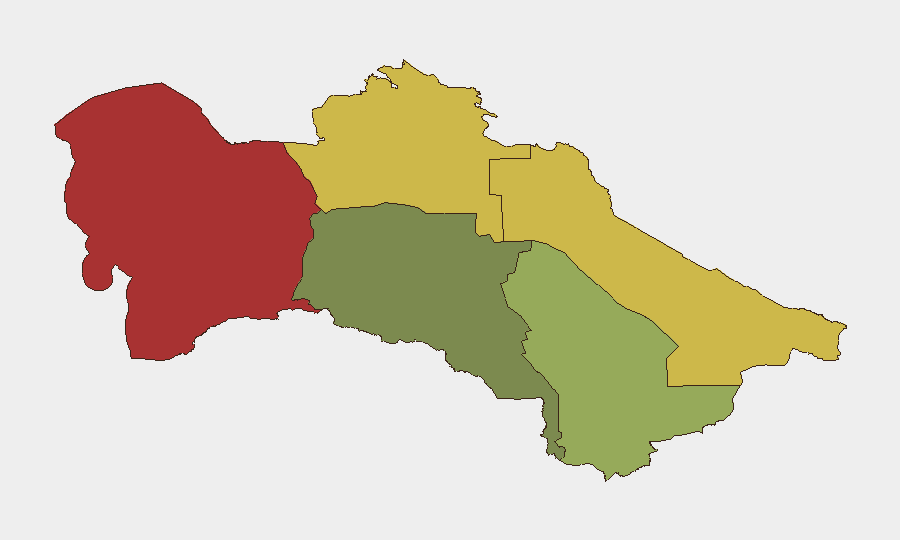
Situation Summary
Turkmenistan remains a low-threat environment with a composite threat score of 4 (ranked #169 globally) and no verified security incidents, civil unrest, or infrastructure disruptions reported in the last 24–48 hours. The country's security posture reflects limited acute risk but persistent structural vulnerabilities concentrated in border regions. Current trajectory is stable, with no indicators of imminent escalation or domestic instability.
Key Developments
- Brussels, Belgium – June 27, 2026: Turkmenistan representatives participated in a multilateral discussion on European port security and geopolitical maritime cooperation. This diplomatic engagement reflects Turkmenistan's continuing investment in international security policy dialogue and carries no domestic security implications.
- Central Asia (Regional) – June 27, 2026: Turkmenistan advanced policy initiatives on climate adaptation and environmental governance, including proposed regional centers on climate technology and desertification management. These reflect strategic positioning on transnational resource and environmental security rather than acute domestic risk.
- Central Asia (Regional) – June 26–27, 2026: Ongoing technical cooperation discussions on hydraulic infrastructure safety, water-resource monitoring, and flood early-warning systems among Central Asian partners, including Turkmenistan. No specific incidents or infrastructure failures were reported.
- No reported civil unrest, protests, or public-order incidents in Ashgabat or provincial cities in the last 48 hours.
- No verified terrorism, armed clashes, or political-instability events recorded in the current window.
- No new travel advisories or infrastructure-disruption alerts issued by major diplomatic missions for Turkmenistan.
Highest-Risk Areas
The Balkan Region (risk 78), Lebap Region (risk 68), and Dashoguz Region (risk 62) account for the majority of Turkmenistan's sub-national risk profile. These areas—primarily in the northwest and north—reflect border proximity to Uzbekistan and historical cross-border trafficking, smuggling, and limited state capacity. By contrast, Ashgabat City (risk 18) and Ahal Region (risk 35) remain substantially lower-risk, reflecting greater security-service density and economic development in the capital and south-central zones. Organizations with personnel or assets in the northern regions should maintain heightened awareness of informal-economy activity and cross-border movement.
How GeoBit Would Assist
Security teams monitoring Turkmenistan should leverage AOI Monitoring & Early Warning to track the northern border regions (Balkan, Lebap, Dashoguz) for emerging trafficking, unrest, or infrastructure anomalies with persistent alerting. OSINT fusion across X/Twitter, Telegram, regional news outlets, and multi-language sources provides real-time signal on civil unrest, political developments, or crime spikes that may not appear in official channels. Route & Network Analysis supports duty-of-care planning for personnel transiting Turkmenistan, identifying safer corridors and alternative journeys to avoid high-risk northern zones.
7-Day Outlook
No acute security deterioration is anticipated over the next seven days. Turkmenistan's political environment remains tightly controlled, and regional dynamics show no imminent flashpoints. Organizations should maintain standard risk-management protocols for border regions and monitor for any shift in government policy, visa restrictions, or infrastructure changes that could affect operations.
Highest-Risk Areas — Ranked
| # | State / Region | Risk |
|---|---|---|
| 1 | Balkan Region | 78 |
| 2 | Lebap Region | 68 |
| 3 | Dashoguz Region | 62 |
| 4 | Mary Region | 42 |
| 5 | Ahal Region | 35 |
| 6 | Ashgabat City | 18 |
Sources
Previous Daily Briefs
A new Turkmenistan brief is written every day — each with its own risk map and downloadable CSV. Here's the last week; use the calendar to go further back.
📅 Browse every day by calendar →
Highlighted days have a brief. Tap a day for that day's map & analysis, or “csv” for that day's dataset ($5).