Situation Summary
Uzbekistan remains a low-threat environment globally (#151 composite ranking) with dispersed, low-intensity security events across most regions. Tashkent dominates the national risk profile (31.5 vs. 1.5 across all other regions), reflecting concentrated political activity, larger protest populations, and media visibility rather than acute instability. Two signals—a demonstration/rally and public statement on 2026-07-01—suggest routine civic or political activity; no active conflict, terrorism, or major criminal incidents are evident in current reporting.
Key Developments
- 2026-07-01 · Demonstration/Rally · Uzbekistan (location unspecified). Event type and scale remain unconfirmed; consistent with periodic civil society or worker assemblies in major urban centers. No violence or disruption reported.
- 2026-07-01 · Public Statement · Tashkent. Official or institutional statement issued in the capital; context and issuer not yet detailed in available feeds.
*Note:* Live web research over the last 24 hours did not yield English-language, independently confirmable reporting on either event. Regional sources and local-language Telegram/X channels may carry fuller detail; GeoBit's multi-language OSINT and social-media monitoring would be required to corroborate and contextualize these signals in real time.
Highest-Risk Areas
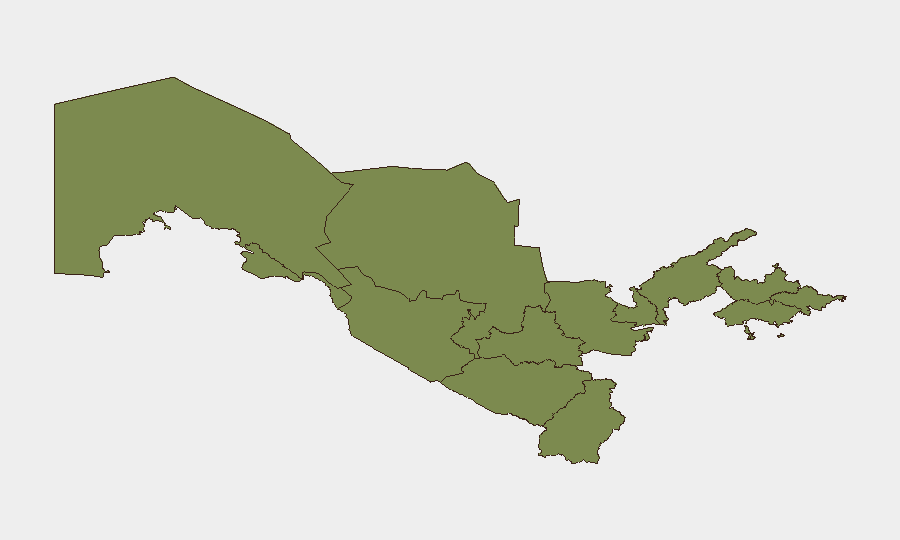
Tashkent City is the sole concentration point, accounting for approximately 95% of measured national risk (31.5/32 composite score). This reflects the capital's role as the seat of government, media hub, and largest urban population—making it the natural locus for political statements, labor action, and large gatherings. All other 11 regions (Fergana, Qashqadaryo, Surxondaryo, Karakalpakstan, Xorazm, Navoiy, Bukhara, Jizzakh, Tashkent Region, Namangan, and Sirdaryo) sit at risk 1.5, indicating baseline, evenly distributed, and minimal threat. For corporate duty-of-care teams, risk is effectively Tashkent-centric; provincial and regional assets face negligible event-level threat by comparison.
How GeoBit Would Assist
Teams operating in Uzbekistan should deploy AOI Monitoring & Early Warning on Tashkent (government/opposition assembly points, embassies, major commercial districts) to flag protests, movement restrictions, or civil unrest before they affect operations. Parallel multi-language OSINT and social-media monitoring (X, Telegram, local news) will capture local-language statements and civil-society signals—especially worker, student, and opposition activity—that English news outlets lag on. For route security and asset movement, Routing & Network Analysis and sentiment & temporal analysis of Tashkent protests will inform safe passage windows and alternative logistics.
7-Day Outlook
No imminent security deterioration is expected. The 2026-07-01 demonstration and statement appear consistent with routine political expression in a stable, low-threat environment. Monitoring should remain routine; escalation to mid-tier risk would require reports of sustained unrest, economic disruption, border incidents, or regime-stability signals—none of which are currently in evidence. Standard duty-of-care protocols suffice for most corporate operations outside Tashkent.
Highest-Risk Areas — Ranked
| # | State / Region | Risk |
|---|---|---|
| 1 | Tashkent | 31.5 |
| 2 | Qashqadaryo Region | 1.5 |
| 3 | Surxondaryo Region | 1.5 |
| 4 | Fergana Region | 1.5 |
| 5 | Republic of Karakalpakstan | 1.5 |
| 6 | Xorazm Region | 1.5 |
| 7 | Navoiy Region | 1.5 |
| 8 | Bukhara Region | 1.5 |
| 9 | Jizzakh Region | 1.5 |
| 10 | Tashkent Region | 1.5 |
| 11 | Namangan Region | 1.5 |
| 12 | Sirdaryo Region | 1.5 |
Sources
Previous Daily Briefs
A new Uzbekistan brief is written every day — each with its own risk map and downloadable CSV. Here's the last week; use the calendar to go further back.
📅 Browse every day by calendar →
Highlighted days have a brief. Tap a day for that day's map & analysis, or “csv” for that day's dataset ($5).