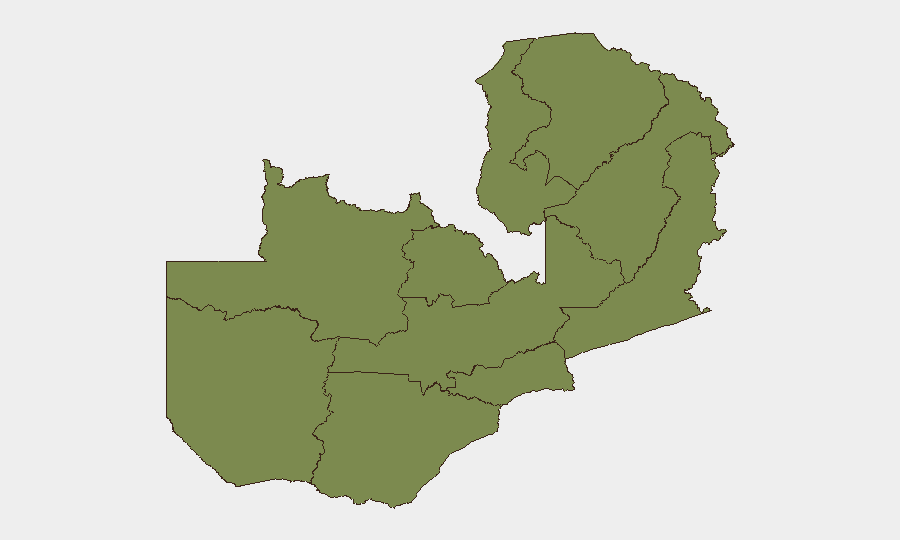
Situation Summary
Zambia remains a low-threat environment (global rank #160, composite score 5) with no major security incidents reported in the last 24–48 hours. The dominant risk signals are political and cyber in nature, centered on electoral security management and state enforcement of the Cyber Crimes Act ahead of the 2026 general elections. Wildfire activity across multiple provinces is ongoing but secondary to institutional and digital-sphere tensions.
Key Developments
- Chipata, Eastern Province – 2 July 2026 (announced 4 July). A 48-year-old male from Chongwe was arrested following an intelligence-led operation by Zambia Police, the Anti-Cyber Crime Unit, and Zambia Cyber Security Agency on charges of publishing abusive and indecent electronic content targeting President Hakainde Hichilema and senior officials under Section 22 of the Cyber Crimes Act. The suspect remains in custody with investigations ongoing.
- Ndola, Zambia International Trade Fair – 4 July 2026. The Zambia Cyber Security Agency used its institutional platform at the trade fair to highlight enforcement patterns under the Cyber Crimes and Cyber Security Act, signalling heightened state focus on cyber-related offences and online political speech.
- National (political sphere) – 4 July 2026. NRPUP presidential running mate Makebi Zulu publicly vowed to repeal the Cyber Crimes and Cyber Security Act if elected, characterizing current enforcement as suppression of free speech. This statement directly links recent arrests to broader electoral contestation and civil-liberties concerns.
- National (Electoral Commission) – 3–4 July 2026. The Electoral Commission of Zambia publicly defended ballot security and confirmed approximately 4.7 million presidential ballot papers in print, responding to social-media allegations of electoral irregularities. The ECZ also issued notice of an indefinite suspension of all presidential campaign activities pending coordination with candidates and party officials.
- National – Cyber-speech enforcement pattern – May–June activity, reported 4 July 2026. Authorities have documented that the arrested Chongwe suspect disseminated vulgar social-media content targeting the President, ECZ Chairperson, and senior information ministry officials over a two-month period, establishing an enforcement pattern linked to online political expression.
Highest-Risk Areas
Eastern Province stands markedly above all other regions with a composite risk score of 31.4, driven primarily by the recent cyber-crime arrest in Chipata District and associated enforcement activity. All other nine provinces cluster at risk score 1.4, indicating an exceptionally uneven threat distribution. The concentration of cyber-crime and electoral-security activity in the political sphere (Lusaka-based actors and institutions) and the Eastern Province arrest suggest that institutional and digital risks, rather than geographic geographic violence or unrest, define the current threat landscape.
How GeoBit Would Assist
Security teams should deploy OSINT fusion and multi-language social-media monitoring (X/Twitter, Telegram, Instagram) to track political speech, electoral disinformation, and cyber-enforcement announcements in real time. Election monitoring and sentiment analysis capabilities would allow early detection of rising polarization or unrest rhetoric ahead of the 2026 general elections. AOI monitoring with alerting on Lusaka political institutions, the Electoral Commission, and Eastern Province would enable duty-of-care teams to receive immediate notification of arrests, campaign disruptions, or institutional statements affecting operational security.
7-Day Outlook
No acute security deterioration is forecast in the near term. Electoral tensions are likely to remain within institutional management channels (campaign suspension, public statements, enforcement actions). Cyber-crime arrests may continue as state enforcement of the Cyber Crimes Act remains active; teams should monitor official statements and political responses for signs of civil-liberties mobilization or counter-enforcement rhetoric.
Highest-Risk Areas — Ranked
| # | State / Region | Risk |
|---|---|---|
| 1 | Eastern Province | 31.4 |
| 2 | North-Western Province | 1.4 |
| 3 | Western Province | 1.4 |
| 4 | Muchinga Province | 1.4 |
| 5 | Luapula Province | 1.4 |
| 6 | Northern Province | 1.4 |
| 7 | Copperbelt Province | 1.4 |
| 8 | Southern Province | 1.4 |
| 9 | Central Province | 1.4 |
| 10 | Lusaka Province | 1.4 |
Sources
Previous Daily Briefs
A new Zambia brief is written every day — each with its own risk map and downloadable CSV. Here's the last week; use the calendar to go further back.
📅 Browse every day by calendar →
Highlighted days have a brief. Tap a day for that day's map & analysis, or “csv” for that day's dataset ($5).
Atlas — our AI intelligence desk — emails them this snapshot personally. Nothing else, no list.