Situation Summary
Belarus remains in a stable security posture with no major incidents or civil unrest documented in the past 24–48 hours. The overall threat environment is assessed as low-to-moderate (global rank #170), with risk concentrated heavily in the capital and its surrounding region. Cross-border military activity and infrastructure vulnerability rhetoric remain present as contextual factors but have not translated into confirmed incidents affecting civilian or corporate populations in the reporting period.
Key Developments
- Minsk / Minsk Region, 22–23 June 2026 — Security assessment confirms stable conditions with no major incidents or civil unrest in the prior 48 hours.
- Gomel border area, 23 June 2026 — Heightened cross-border military tension noted; Belarusian and Russian sources continue rhetoric regarding possible strikes on communications infrastructure, though no confirmed attacks have occurred.
- Bryansk–Gomel corridor, reported 23 June 2026 — An unconfirmed claim of a drone strike involving a school bus circulated in regional media; independent corroboration has not been established and should not be treated as factual.
Highest-Risk Areas
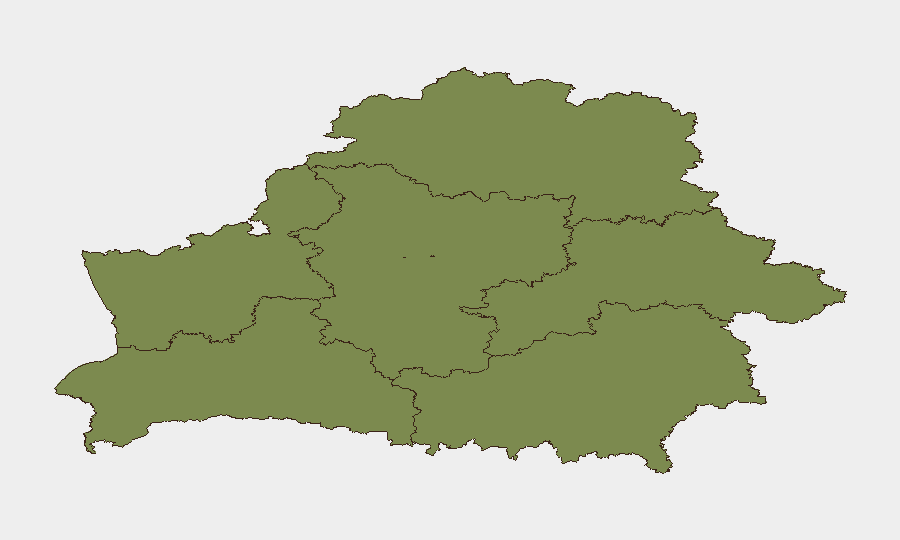
Minsk (risk score 32) and Minsk Region (25.1) account for the overwhelming majority of tracked threat activity and remain the only areas warranting elevated duty-of-care attention. All other regions—Vitsebsk, Hrodna, Brest, Mahilyow, and Homyel—register minimal risk (2.0–2.3). This concentration reflects both Minsk's role as the political and economic center and the historical pattern of security events clustering in the capital. Organizations operating outside the capital corridor face significantly lower exposure; those with personnel or assets in Minsk should prioritize standard access-control, situational awareness, and contingency planning, particularly around government and critical infrastructure proximity.
How GeoBit Would Assist
Security and risk teams can employ Intel Sweep and OSINT fusion to monitor multi-language Telegram, X, and local news feeds for early signals of civil unrest, protest activity, or cross-border escalation affecting Minsk and border regions. AOI Monitoring & Early Warning with persistent watch on Minsk, Gomel, and key transportation corridors would provide automated alerting if event frequency or rhetoric intensity shifts, enabling rapid response to emerging risks. Routing & Network Analysis supports contingency planning by identifying alternative transit corridors and safe zones for personnel extraction if conditions deteriorate.
7-Day Outlook
No material change in threat posture is anticipated over the next seven days absent a major cross-border military escalation, which would likely manifest first in border regions (Gomel, Vitsebsk) before affecting the capital. Routine monitoring of cross-border rhetoric and communications-infrastructure vulnerability claims should continue; any confirmed strike or significant incident would warrant immediate escalation. Standard posture for Minsk-based operations remains appropriate; heightened readiness protocols are not warranted at this time.
NEXT BRIEF: 2026-06-25 | GEOBIT THREAT RANK: #170 (composite 4.0) | EVENTS TRACKED: 43
Highest-Risk Areas — Ranked
| # | State / Region | Risk |
|---|---|---|
| 1 | Minsk | 32 |
| 2 | Minsk Region | 25.1 |
| 3 | Vitsebsk Region | 2.3 |
| 4 | Hrodna Region | 2 |
| 5 | Brest Region | 2 |
| 6 | Mahilyow Region | 2 |
| 7 | Homyel Region | 2 |
Previous Daily Briefs
A new Belarus brief is written every day — each with its own risk map and downloadable CSV. Here's the last week; use the calendar to go further back.
📅 Browse every day by calendar →
Highlighted days have a brief. Tap a day for that day's map & analysis, or “csv” for that day's dataset ($5).