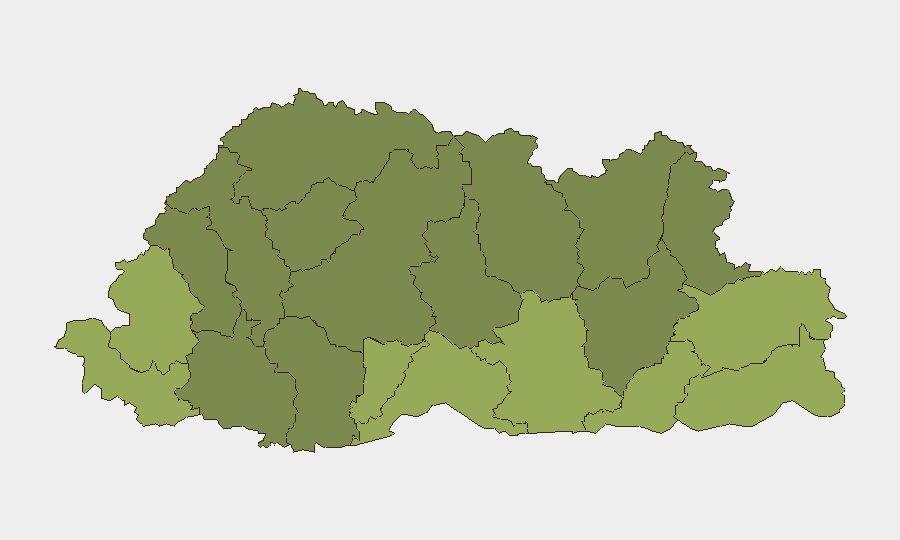
Situation Summary
Bhutan remains a stable, low-risk environment with no credible security incidents, civil unrest, infrastructure disruptions, or major crime reported in the last 24–48 hours. The national composite threat score stands at 4 globally (#171 ranking), reflecting effective law enforcement and institutional stability. However, southern border districts continue to carry elevated structural risk due to proximity to international frontiers and historical trafficking activity, though no new incidents have materialized in the current reporting window.
Key Developments
- No discrete security incidents logged (24–48h window ending 6 July 2026). Open-source monitoring and social media surveillance across all 20 districts confirm absence of protests, cross-border clashes, terrorism, major crime, or travel-advisory triggers.
- Arrest/detain signals flagged in GeoBit event feeds (7 July 2026). Multiple arrest-detain events involving Bhutanese actors, police, and external parties (Kathmandu, Nepal, individual "Sujata Koirala") appear in signal aggregation; open-source corroboration and specificity remain limited pending further intelligence fusion. No confirmed domestic security impact identified.
- Southern districts retain elevated risk profile—structural, not incident-driven. Samtse (58), Sarpang (55), Haa (52), and Pemagatshel (50) districts show highest composite scores; risk concentration reflects border proximity and historical trafficking corridors, not new violent events or unrest in the last 24–48 hours.
- Central and northern districts stable with low incident probability. Lhuntste, Wangdue Phodrang, Gasa, and Mongar districts record minimal risk signals and zero recent security events, supporting normal duty-of-care posture in those zones.
- National political and institutional environment assessed stable. No imminent deterioration forecast; law enforcement and administrative capacity remain functional with no new flashpoints identified.
Highest-Risk Areas
Southern border districts—particularly Samtse, Sarpang, Haa, and Pemagatshel—dominate the sub-national risk profile due to proximity to Nepal and India, historical illicit trafficking activity, and limited state presence in remote border valleys. These areas merit elevated structural vigilance despite the current absence of acute incidents. Central and northern districts, by contrast, show substantially lower composite scores and pose minimal near-term risk to corporate personnel and assets. Risk concentration in the south reflects geography and cross-border dynamics rather than active conflict or civil unrest.
How GeoBit Would Assist
Security teams with personnel or assets in Bhutan would employ AOI (area-of-interest) monitoring and early-warning alerting on southern border districts to track emerging cross-border activity, trafficking, or official enforcement actions. OSINT fusion—combining Intel Sweep feeds, X/Telegram intelligence, and open-source corroboration—would clarify the nature and operational impact of current arrest-detain signals. Risk & threat assessment dashboards would enable real-time tracking of duty-of-care exposure by district, allowing proportionate response posture scaling if conditions change.
7-Day Outlook
Bhutan's security trajectory remains stable over the near term, with no indicators suggesting deterioration or heightened risk to expatriate communities. Southern districts warrant continued baseline monitoring for cross-border activity; national institutional capacity and law enforcement effectiveness provide confidence in ongoing stability. Standard corporate vigilance and liaison with local authorities remain appropriate.
Highest-Risk Areas — Ranked
| # | State / Region | Risk |
|---|---|---|
| 1 | Samtse District | 58 |
| 2 | Sarpang District | 55 |
| 3 | Haa District | 52 |
| 4 | Pemagatshel District | 50 |
| 5 | Samdrup Jongkhar District | 48 |
| 6 | Tsirang District | 45 |
| 7 | Zhemgang District | 42 |
| 8 | Trashigang District | 40 |
| 9 | Mongar District | 38 |
| 10 | Gasa District | 35 |
| 11 | Lhuntse District | 32 |
| 12 | Wangdue Phodrang District | 30 |
Sources
Previous Daily Briefs
A new Bhutan brief is written every day — each with its own risk map and downloadable CSV. Here's the last week; use the calendar to go further back.
📅 Browse every day by calendar →
Highlighted days have a brief. Tap a day for that day's map & analysis, or “csv” for that day's dataset ($5).
Atlas — our AI intelligence desk — emails them this snapshot personally. Nothing else, no list.