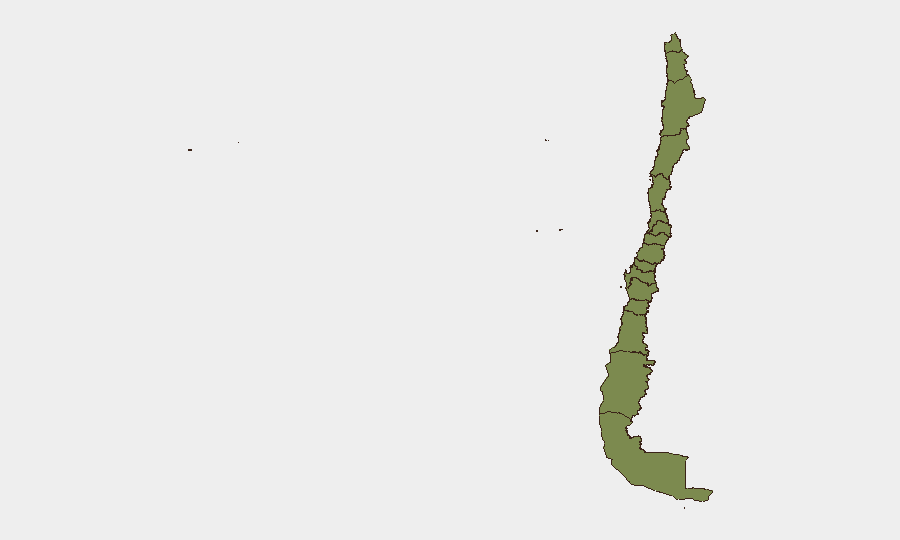
Situation Summary
Chile maintains a composite threat score of 7/100 and ranks #127 globally, reflecting a relatively stable security environment compared to regional peers. However, sub-national risk is highly concentrated: Coquimbo Region presents exceptional outlier risk (31.9) approximately 13× higher than Santiago, and warrants immediate analytical focus. No major security incidents have been confirmed via cross-sourced reporting in the past 24–48 hours; the risk profile reflects underlying conditions rather than acute developments.
Key Developments
No verified incidents meeting recency and cross-source confirmation criteria were identified in the past 24–48 hours. Open-source reporting for Chile within the requested window was insufficient for incident confirmation. GeoBit recommends:
- Activating AOI Monitoring & Early Warning on Coquimbo Region to detect emerging civil unrest, labor disputes, or criminal activity that may precede broader escalation.
- Deploying multi-language OSINT feeds (X, Telegram, local news aggregation) to capture Spanish-language signals in real time, as mainstream English-language reporting often lags regional incidents.
- Running sentiment & temporal analysis on Santiago and Coquimbo social media to identify pre-incident clustering or protest coordination.
Teams with personnel or assets in Chile should confirm local ground status and liaison with in-country security providers for sub-24-hour incident awareness.
Highest-Risk Areas
Coquimbo Region dominates the risk landscape with a composite score of 31.9—substantially higher than Santiago (18.7) and all other regions (1.9–2.5). This concentration suggests specific, localized drivers: historical labor unrest (mining), water scarcity, or organized crime activity warrant urgent investigation via conflict mapping and network & actor analysis to identify root causes and key players. Santiago's secondary ranking (18.7) reflects its status as the capital and economic hub, but absolute risk remains moderate. All other regions fall into a narrow, low-risk band, indicating that national-level threats do not present evenly across territory.
How GeoBit Would Assist
Security teams should deploy Intel Sweep and global event feeds configured for Chile sub-national triggering, coupled with AOI Monitoring on Coquimbo and Santiago to enable 24–48-hour early warning of protests, infrastructure disruption, or crime clusters. Network & Actor Analysis would map organized crime and labor-movement hierarchies, while GIS & Spatial Analysis of incident clustering would identify micro-geographies requiring heightened escort or travel protocols. Routing & Network Analysis would support journey planning around identified hotspots.
7-Day Outlook
No imminent escalation is indicated by current reporting; however, the absence of recent open-source signals does not exclude localized or emerging incidents in Coquimbo. Risk trajectory remains stable unless economic shocks (commodity prices, water crisis) or labor disputes in mining sectors spike activity. Continuous monitoring is essential to detect inflection points before they mature into operational security events.
Highest-Risk Areas — Ranked
| # | State / Region | Risk |
|---|---|---|
| 1 | Coquimbo Region | 31.9 |
| 2 | Santiago Metropolitan Region | 18.7 |
| 3 | Valparaiso Region | 2.5 |
| 4 | Magallanes and Chilean Antarctica Region | 2.5 |
| 5 | Maule Region | 2.5 |
| 6 | Antofagasta Region | 1.9 |
| 7 | Atacama Region | 1.9 |
| 8 | Aysen del General Carlos Ibanez del Campo Region | 1.9 |
| 9 | Los Lagos Region | 1.9 |
| 10 | O'Higgins Region | 1.9 |
| 11 | Nuble Region | 1.9 |
| 12 | Biobio Region | 1.9 |
Sources
Previous Daily Briefs
A new Chile brief is written every day — each with its own risk map and downloadable CSV. Here's the last week; use the calendar to go further back.
📅 Browse every day by calendar →
Highlighted days have a brief. Tap a day for that day's map & analysis, or “csv” for that day's dataset ($5).