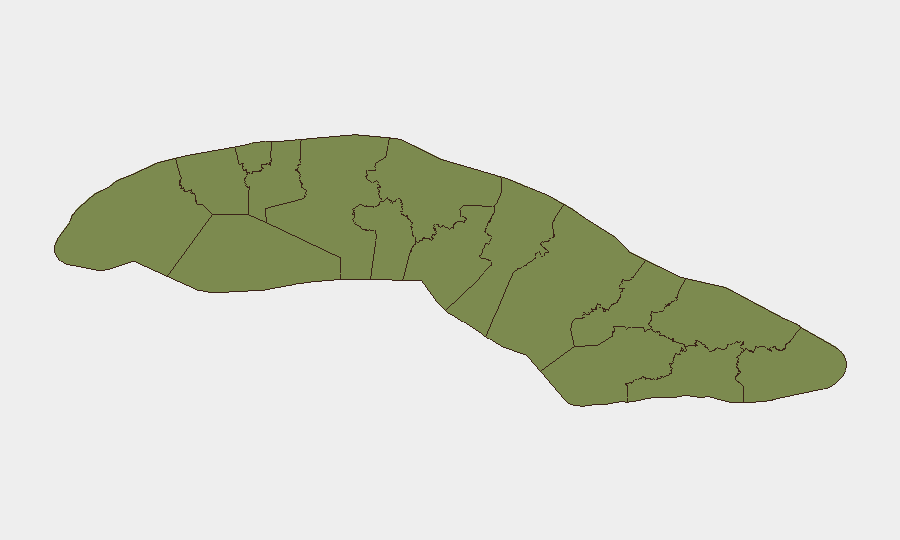
Situation Summary
Cuba remains a lower-tier global security concern (rank #100, composite score 10), but risk is heavily concentrated in Havana, which accounts for the majority of tracked threat activity. The current environment reflects chronic economic stress—prolonged power blackouts, fuel shortages, and strain on critical infrastructure—rather than acute security incidents. Open-source reporting for July 4–6 does not surface discrete, verifiable incidents (protests, clashes, or major crime events) in specific locations; available signals suggest ongoing political and informational tensions with the U.S., but without timestamped operational events meeting incident-level confirmation criteria in the last 48 hours.
Key Developments
No independently verified, geolocation-specific security incidents were confirmed in Cuba during July 4–6, 2026 via open-source corroboration. Available reporting identifies:
- Nationwide chronic infrastructure failure (early July 2026): Prolonged blackouts and fuel shortages continue to affect power supply, transportation, and hospital operations across multiple provinces, but these reflect ongoing conditions rather than newly occurring discrete events.
- Political and diplomatic messaging (late June – early July, outside 48h window for reference): Cuban leadership approved 176 economic measures in mid-June in response to U.S. sanctions; "No War on Cuba" campaigns were active through early July, but no new incident can be cleanly attributed to July 4–6.
- U.S.–Cuba bilateral tensions: Media and diplomatic exchanges regarding sanctions, security accusations, and policy statements remain active, but do not correspond to a specific, dated incident in Cuba during the reporting window.
Assessment: Open-source and visible social-media monitoring do not provide incident-level detail (named location, timestamp, multi-source corroboration) for July 4–6. Risk remains elevated due to chronic infrastructure disruption and political stress, but no acute security event is currently reportable.
Highest-Risk Areas
Havana dominates the threat landscape with a composite sub-national risk score of 33.4—more than three times higher than the second-ranked region (Matanzas, 10.2). This concentration reflects the capital's role as the administrative, economic, and information hub; it accounts for the majority of political activity, diplomatic presence, and open-source event reporting. Secondary risk clusters in Matanzas, Sancti Spiritus, and Las Tunas (scores 8.4–10.2) suggest distributed vulnerability across eastern and central provinces, likely tied to economic strain and infrastructure fragility. Personnel and assets in Havana should be the primary focus of corporate duty-of-care planning; regional offices in Matanzas or larger provincial centers face material but lower-tier risk.
How GeoBit Would Assist
Intel Sweep and OSINT Fusion would enable continuous monitoring of political, diplomatic, and protest activity across Cuban social media, news feeds, and Telegram channels—surfacing early signals of unrest or localized incidents before they reach mainstream reporting. AOI Monitoring & Early Warning with persistent geolocation tracking of Havana and secondary risk zones would alert security teams to developing protests, infrastructure failures, or security incidents in near-real time. Risk & Threat Assessment capabilities, combined with regime-stability search and network & actor analysis, would help contextualize chronic economic stress and political messaging to forecast near-term escalation risk and inform travel or operations decisions.
7-Day Outlook
Risk trajectory remains flat to slightly elevated. Chronic infrastructure disruption and U.S.–Cuba diplomatic friction are expected to persist without a major policy shift. No acute security event is anticipated in the immediate term, but cumulative economic strain and political messaging create latent conditions for localized protest or civil unrest; Havana remains the highest-probability locus for any such activity. Duty-of-care teams should assume ongoing power/fuel constraints and monitor diplomatic signals for any sudden policy change.
Highest-Risk Areas — Ranked
| # | State / Region | Risk |
|---|---|---|
| 1 | Havana | 33.4 |
| 2 | Matanzas | 10.2 |
| 3 | Sancti Spiritus | 8.4 |
| 4 | Las Tunas | 8.4 |
| 5 | Artemisa | 4.6 |
| 6 | Cienfuegos | 4.6 |
| 7 | Villa Clara | 4.6 |
| 8 | Pinar del Rio | 3.4 |
| 9 | Mayabeque | 3.4 |
| 10 | Isle of Youth | 3.4 |
| 11 | Ciego de Avila | 3.4 |
| 12 | Camagüey | 3.4 |
Sources
Previous Daily Briefs
A new Cuba brief is written every day — each with its own risk map and downloadable CSV. Here's the last week; use the calendar to go further back.
📅 Browse every day by calendar →
Highlighted days have a brief. Tap a day for that day's map & analysis, or “csv” for that day's dataset ($5).
Atlas — our AI intelligence desk — emails them this snapshot personally. Nothing else, no list.