Situation Summary
Equatorial Guinea remains a low-frequency, moderate-risk environment (global rank #139) with no major armed conflict or mass-casualty incidents reported this week. However, the government's September 22 designation of the opposition coalition CORED as a terrorist organization, coupled with allegations of abuse against deportees and social-media restrictions, signals an intensifying pattern of state repression and political polarization. The northern provinces—particularly Bioko Norte and Litoral Province—continue to drive the country's overall risk profile, reflecting longstanding governance challenges and marginalization of opposition networks.
Key Developments
- Malabo, September 22: Equatorial Guinea's attorney general designated the exiled opposition coalition CORED a terrorist or criminal organization and announced bounties up to €1.5 million for information leading to the capture and repatriation of named opposition figures. CORED publicly rejected the designation.
- Malabo, September 23: Two men deported from the United States were allegedly restrained, hooded, beaten, and pushed down stairs at Hotel Bamy, where deportees were being held. Local authorities are reported to have carried out the abuse; no independent official investigation has been confirmed.
- Malabo, September 26–28: Follow-up reporting indicated that at least one deportee was arrested and beaten after complaining about detention conditions and threats. The incident is linked to the Hotel Bamy case rather than a discrete new event.
- Equatorial Guinea, nationwide, September 26: Facebook and TikTok were reportedly inaccessible and internet speeds restricted following a woman's online accusations of corruption against Vice President Teodoro Nguema Obiang Mangue. The woman was reportedly arrested; independent technical confirmation of the social-media outage is not available.
- New York / Malabo, September 24: Vice President Teodoro Nguema Obiang Mangue addressed the UN General Assembly and promoted over US$2.5 billion in infrastructure projects for 2026–2030, while highlighting disputed maritime and island boundaries with Gabon (diplomatic rather than security incident).
- Malabo and opposition communities abroad, September 24–26: CORED and exiled opposition figures condemned the terrorist designation and bounties, warning of increased risks of transnational intimidation, abduction, and violence. No verified attack was reported during the review period.
Highest-Risk Areas
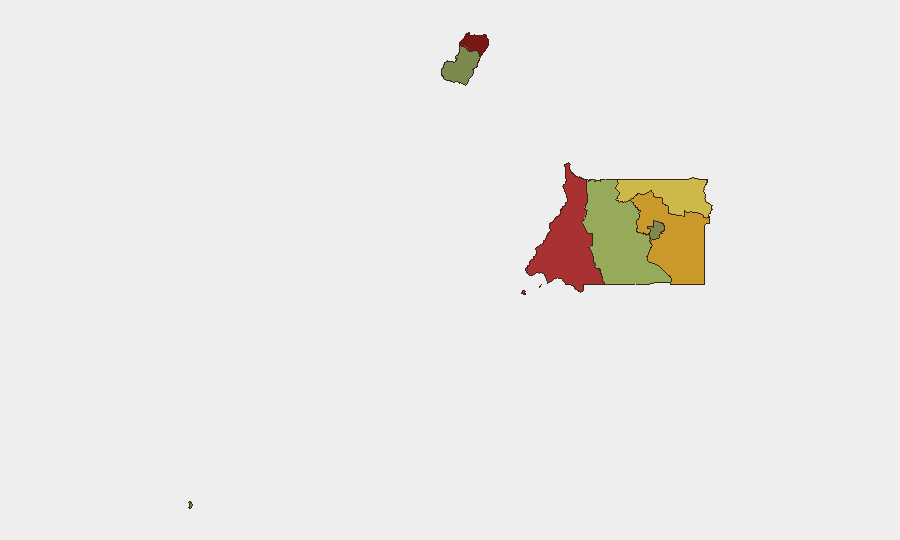
Bioko Norte (risk 85) and Litoral Province (risk 78) remain the primary risk drivers, reflecting weaker state capacity, historical marginalization of opposition networks, and proximity to maritime borders. Wele-Nzas and Kié-Ntem Provinces (scores 72 and 68) also pose elevated risk, likely due to border porosity and limited formal security presence. The capital Malabo, while hosting government and diplomatic institutions, has become a focal point for state repression of opposition activity, as demonstrated by this week's arrests and alleged abuses. By contrast, Annobón and Djibloho carry minimal risk scores, reflecting geographic isolation and lower political activity.
How GeoBit Would Assist
Corporate and duty-of-care teams should employ OSINT fusion and entity extraction to track opposition designations, bounties, and transnational intimidation networks; sentiment and temporal analysis on social media and government announcements to detect escalation patterns; and persistent area-of-interest monitoring in Bioko Norte and Litoral Province to flag arrests, demonstrations, or security-force movements. Network and actor analysis would map CORED's diaspora structure and assess repatriation or rendition risks for named individuals and their associates.
7-Day Outlook
The government's terrorist designation and bounty system will likely persist as a tool of political control, creating elevated risk for opposition figures and potentially triggering transnational incidents. Internet restrictions and arrests suggest the regime intends to suppress dissent ahead of any planned political event. Personnel and assets in Bioko Norte and government-adjacent facilities in Malabo face the highest near-term exposure to arbitrary detention or abuse.
Highest-Risk Areas — Ranked
| # | State / Region | Risk |
|---|---|---|
| 1 | Bioko Norte | 85 |
| 2 | Litoral Province | 78 |
| 3 | Wele-Nzas Province | 72 |
| 4 | Kié-Ntem Province | 68 |
| 5 | Centro Sur Province | 45 |
| 6 | Bioko Sur | 38 |
| 7 | Djibloho | 15 |
| 8 | Annobón Province | 8 |
Sources
Previous Weekly Briefs
A new Equatorial Guinea brief is written every Monday, covering the week — each with its own risk map and downloadable CSV. Use the calendar to go further back.
- September 22, 2026
- September 15, 2026
- September 8, 2026
- September 1, 2026
- August 29, 2026
- August 26, 2026
- August 24, 2026
📅 Browse past briefs by calendar →
Highlighted days have a brief. Tap a day for that day's map & analysis, or “csv” for that day's dataset ($5).
Atlas — our AI intelligence desk — emails them this snapshot personally. Nothing else, no list.