Situation Summary
Eswatini remains a low-threat environment globally (ranked #112), with no verified security incidents, civil unrest, or acute travel disruptions documented in the last 24–48 hours. The country's composite threat score of 8 reflects baseline risks typical of the region—localized crime, transport vulnerabilities in border zones, and routine political dynamics—rather than acute conflict or instability. Current open-source reporting does not indicate deterioration or emerging flashpoints that would warrant elevated alert status for corporate operations.
Key Developments
No verified security, conflict, civil unrest, crime, political instability, infrastructure, or travel-risk events have been documented in Eswatini within the last 24–48 hours from cross-confirmed sources. Open web and social-media monitoring identified only routine administrative and political-economy news (e.g., parliamentary salary discussions) without acute security implications or clearly recent timestamps. Foreign government travel advisories, local law-enforcement notices, and regional security reporting have not flagged new incidents or warnings for Eswatini in the current window.
Highest-Risk Areas
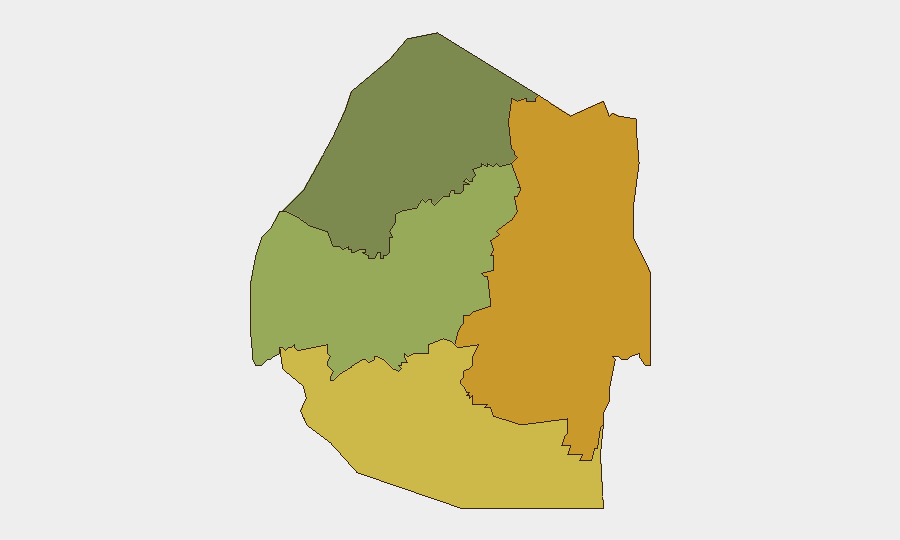
Lubombo region (risk score 72) and Shiselweni (68) represent the country's persistent vulnerability hotspots, likely driven by their proximity to international borders, informal cross-border trade activity, and historically higher incidence of opportunistic crime and smuggling networks. Manzini Region (55) carries moderate-elevated risk associated with urban density and transit corridors. Hhohho (35) remains the lowest-risk administrative zone. Organizations with personnel or assets in Lubombo and Shiselweni should maintain elevated situational awareness and enforce standard duty-of-care protocols around movement, curfews, and border-zone transit.
How GeoBit Would Assist
Security and risk teams operating in Eswatini would deploy Intel Sweep and global event feeds to detect emerging unrest, protests, or crime spikes in real time; AOI Monitoring & Early Warning to establish persistent watch on high-risk districts (Lubombo, Shiselweni border areas) with automated alerting; and Routing & Network Analysis to identify and pre-plan alternative travel routes and safe corridors for personnel or supply movements. Multi-language OSINT and X/Telegram monitoring would provide early signals of localized disruptions or civil-society activity before mainstream news confirmation, supporting proactive protective action.
7-Day Outlook
Eswatini's security posture is expected to remain stable over the next week absent external shocks (major regional conflict spillover, significant commodity-price volatility, or unexpected political events). Routine border and crime risks in Lubombo and Shiselweni will persist; teams should continue baseline hygiene protocols. Monitoring of local political discourse, cross-border activity, and any foreign-government travel advisory updates will provide early warning if baseline risk conditions change.
Highest-Risk Areas — Ranked
| # | State / Region | Risk |
|---|---|---|
| 1 | Lubombo | 72 |
| 2 | Shiselweni | 68 |
| 3 | Manzini Region | 55 |
| 4 | Hhohho Region | 35 |
Sources
Previous Daily Briefs
A new Eswatini brief is written every day — each with its own risk map and downloadable CSV. Here's the last week; use the calendar to go further back.
📅 Browse every day by calendar →
Highlighted days have a brief. Tap a day for that day's map & analysis, or “csv” for that day's dataset ($5).
Atlas — our AI intelligence desk — emails them this snapshot personally. Nothing else, no list.