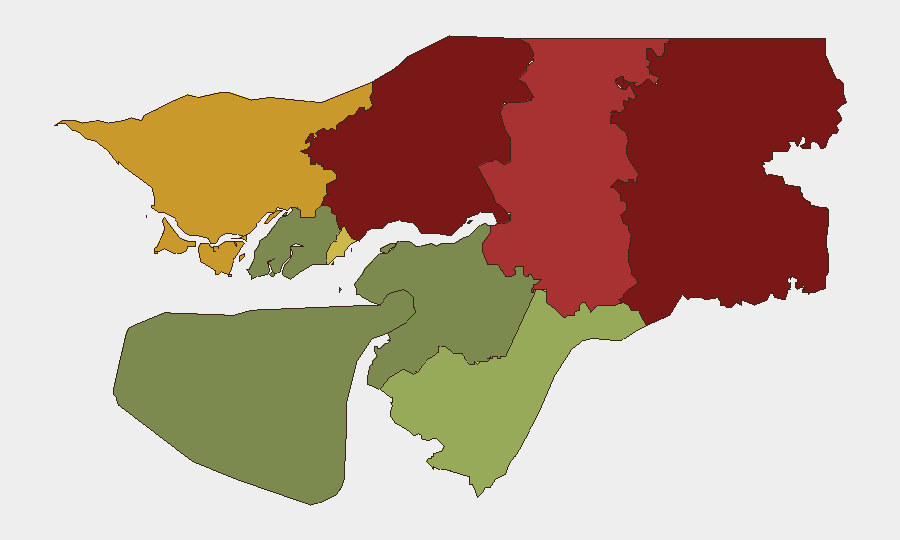
Situation Summary
Guinea-Bissau remains stable with no confirmed security incidents reported in the last 24–48 hours. The country maintains a composite threat ranking of #54 globally (score 27), reflecting a relatively benign current threat environment. However, subnational risk remains concentrated in the northern and eastern regions—particularly Gabu, Oio, and Bafatá—where historical patterns of trafficking, smuggling, and limited state presence persist. Overall trajectory is steady with no indicators of imminent escalation.
Key Developments
- No verified incidents in the last 24–48 hours. Cross-source OSINT monitoring (major news outlets, specialist security feeds, and social media) detected no discrete security, civil unrest, crime, political instability, or infrastructure disruptions meeting recency and multi-source confirmation criteria within Guinea-Bissau territory.
- Extraterritorial context only. A reported strike on a vessel flagged to Guinea-Bissau occurred in the Strait of Hormuz and reflects broader Iran–US maritime tensions, not conditions affecting Guinea-Bissau itself or traveler safety within the country.
- Defense-diplomacy activity. Nigeria–Guinea-Bissau military cooperation during Nigerian Army Day Celebration (NADCEL 2026) represents routine alliance-building, not an acute incident or emergency deployment in Guinea-Bissau.
- Public health monitoring. Earlier mpox case confirmations in the region remain on public-health radar but do not constitute a new outbreak or security-relevant disruption in the last 24–48 hours.
- Criminal-justice case in Liberia. Arrest of a Guinea-Bissau national in Monrovia for alleged drug trafficking is a Liberian law-enforcement action, not an incident on Guinea-Bissau soil.
Caveat: Absence of reported incidents in open sources does not guarantee absence of localized activity, particularly in remote areas with limited reporting infrastructure. Current stability is based on credible public reporting; heightened attention to AOI monitoring and local intelligence networks remains warranted.
Highest-Risk Areas
Gabu Region (risk score 92) and Oio Region (85) drive subnational threat concentration, reflecting their status as trafficking corridors and zones of limited state capacity. Bafatá (78) and Cacheu (72) follow, linked to porous borders, contraband movement, and historical instability. The capital region (Bissau Autonomous Sector, 68) carries moderate risk from urban crime and political volatility. Southern regions (Tombali, Quinara, Bolama) show significantly lower scores, reflecting stronger security presence and lower incident density. Northern and eastern border zones remain the primary concern for duty-of-care teams.
How GeoBit Would Assist
Security teams operating in Guinea-Bissau should employ AOI Monitoring & Early Warning to track the high-risk Gabu, Oio, and Bafatá regions for emerging incidents, coupled with Intel Sweep and multi-language OSINT fusion to capture localized reporting that may not reach major outlets. Routing & Network Analysis can support safe journey planning for personnel transiting northern routes or cross-border operations. Real-time maritime and aviation tracking, combined with sentiment and temporal analysis on regional social media, provides secondary early-warning coverage for transnational crime or instability spillover from neighboring states.
7-Day Outlook
No imminent security escalation is forecasted for the next seven days based on current indicators and historical patterns. The operating environment is expected to remain stable, with risk concentrated in northern and eastern subnational zones rather than capital or southern regions. Continued monitoring of cross-border trafficking activity and regional political developments in neighboring Senegal and Guinea-Conakry remains routine best practice.
Highest-Risk Areas — Ranked
| # | State / Region | Risk |
|---|---|---|
| 1 | Gabu Region | 92 |
| 2 | Oio Region | 85 |
| 3 | Bafatá Region | 78 |
| 4 | Cacheu Region | 72 |
| 5 | Bissau Autonomous Sector | 68 |
| 6 | Tombali Region | 45 |
| 7 | Quinara Region | 38 |
| 8 | Biombo Region | 32 |
| 9 | Bolama Region | 15 |
Sources
Previous Daily Briefs
A new Guinea-Bissau brief is written every day — each with its own risk map and downloadable CSV. Here's the last week; use the calendar to go further back.
📅 Browse every day by calendar →
Highlighted days have a brief. Tap a day for that day's map & analysis, or “csv” for that day's dataset ($5).
Atlas — our AI intelligence desk — emails them this snapshot personally. Nothing else, no list.