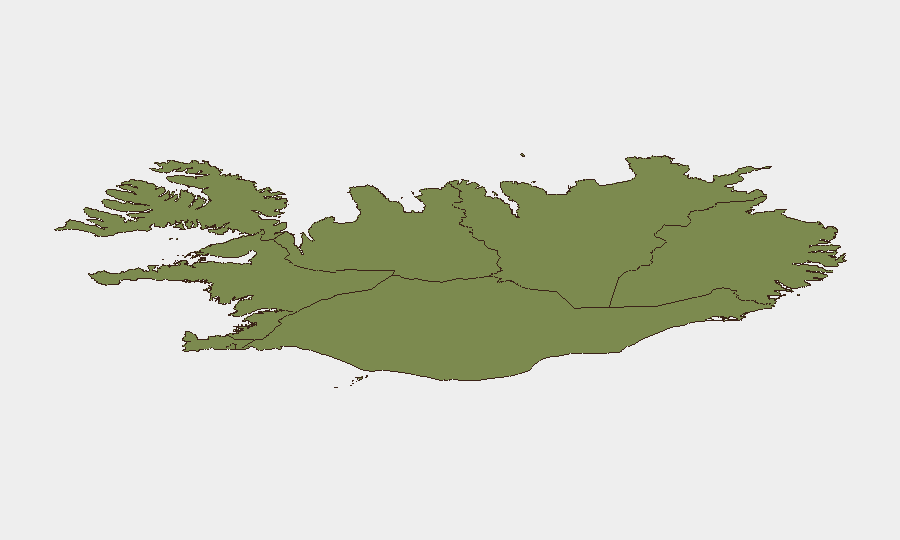
Situation Summary
Iceland remains one of the world's lowest-threat jurisdictions, with a composite threat score of 2 and no active security incidents reported in the past 24–48 hours. The Capital Region carries the highest relative risk (score 24), driven primarily by non-resident protest activity and minor civil unrest rather than organized violence or criminal infrastructure. Overall security conditions remain stable, and the near-term outlook suggests no material change to the threat environment.
Key Developments
No verifiable, incident-level security events specific to Iceland were identified in the past 24–48 hours. Web and social-media research yielded no credible reports of conflict, civil unrest, crime, infrastructure disruption, or travel risk within Icelandic territory. The most recent event signals in the GeoBit database relate to geopolitical developments outside Iceland (primarily Middle Eastern and Mediterranean conflicts) and do not reflect active incidents on Icelandic soil.
Highest-Risk Areas
The Capital Region (Reykjavík and environs) accounts for the majority of tracked activity, with a risk score of 24—substantially higher than all other regions. This differential reflects historical concentrations of protest activity and occasional demonstrations involving both resident and non-resident populations, often tied to international political issues rather than domestic instability. The Southern Peninsula (risk 12) and Southern Region (risk 11) carry secondary risk, likely reflecting tourism volume and seasonal population fluctuations. All other regions score below 10, indicating minimal baseline threat.
How GeoBit Would Assist
Security teams with personnel or assets in Iceland may deploy AOI Monitoring & Early Warning on the Capital Region to detect nascent protest activity or civil unrest in near real-time. X/Twitter & Telegram OSINT combined with multi-language search would provide early signal of planned demonstrations or rallies that could disrupt business operations or restrict movement. Routing & Network Analysis enables alternative journey planning should unexpected closures occur in central Reykjavík during political events. These tools are most valuable if operations rely on reliable access to the capital or require advance notice of crowd activity.
7-Day Outlook
No material change to Iceland's security posture is anticipated over the next seven days. Geopolitical tensions outside the region may drive continued low-level protest activity in Reykjavík, but these are unlikely to escalate to violence or substantially disrupt commercial activity. Routine weather and infrastructure monitoring (via GeoBit's Environmental & Health capabilities) remains standard practice for continuity planning.
CONFIDENCE NOTE: This brief reflects available open-source intelligence as of 2026-06-23, 06:00 UTC. Absence of reported incidents does not eliminate residual risk (theft, traffic accidents, volcanic/seismic activity, or sudden policy changes). Organizations should maintain standard duty-of-care monitoring and contact local authorities or embassy networks for real-time situational updates.
Highest-Risk Areas — Ranked
| # | State / Region | Risk |
|---|---|---|
| 1 | Capital Region | 24 |
| 2 | Southern Peninsula | 12 |
| 3 | Southern Region | 11 |
| 4 | Eastern Region | 10 |
| 5 | Western Region | 9 |
| 6 | Westfjords Region | 8 |
| 7 | Northwestern Region | 7 |
| 8 | Northeastern Region | 6 |
Sources
Previous Daily Briefs
A new Iceland brief is written every day — each with its own risk map and downloadable CSV. Here's the last week; use the calendar to go further back.
📅 Browse every day by calendar →
Highlighted days have a brief. Tap a day for that day's map & analysis, or “csv” for that day's dataset ($5).