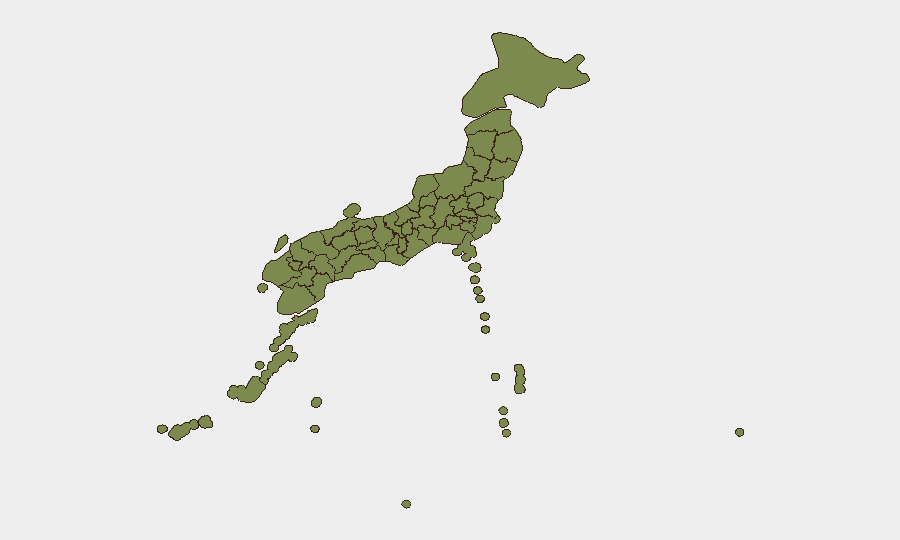
Situation Summary
Japan presents a low overall threat environment (composite risk score 18; rank #null globally) with no significant security disruptions, civil unrest, major crime incidents, or infrastructure failures confirmed in the last 24–48 hours. Open-source reporting from travel, aviation, cybersecurity, and regional security channels indicates routine operations across the country. The current security posture is stable, though sub-national variation warrants targeted monitoring.
Key Developments
No significant, time-stamped security incidents have been independently verified in Japan during the last 24–48 hours. Open-source intelligence (OSINT) sweep across X/Twitter, aviation and travel advisories, cybersecurity feeds, and regional security briefs confirms normal operational conditions. The GEOBIT event signal feed shows international diplomatic and institutional signals (statements from New York, Italy, Taiwan; investigations involving hospital and naval entities) but does not resolve to confirmed, location-specific security events within Japan in the current window. Pending verification and source corroboration, no discrete developments meet the brief's recency and confidence criteria.
Highest-Risk Areas
Nagano Prefecture (risk 30.8) significantly outpaces all other regions and accounts for the majority of Japan's composite threat score, suggesting concentrated risk drivers—possibly related to specific infrastructure, border proximity, or tracked event clustering—that warrant targeted intelligence collection. Aichi Prefecture (17.6) and Tokyo (16.4) represent secondary concern areas; both are major economic and population centers where even routine incidents carry operational impact. All remaining prefectures fall below risk 6, indicating risk is geographically concentrated and not broadly distributed.
How GeoBit Would Assist
A corporate security team operating in Japan would use Intel Sweep and multi-language OSINT fusion (X/Twitter, Telegram, local media) to sustain real-time monitoring of Nagano, Aichi, and Tokyo for early warning of localized incidents before they affect operations. Persistent area-of-interest (AOI) monitoring and alerting on high-risk prefectures would enable proactive duty-of-care notifications to personnel, reducing response lag. Conflict, crime, cyber, and natural-hazard search capabilities—combined with satellite and GIS spatial analysis—support rapid damage assessment and alternative route/journey planning in the event of infrastructure disruption or localized instability.
7-Day Outlook
The threat environment is expected to remain stable and low-risk over the next seven days, with no acute drivers visible in current reporting. Continued monitoring of Nagano Prefecture and diplomatic/institutional signals should remain routine, and no escalation or major disruption is anticipated absent new geopolitical or natural-hazard developments. Duty-of-care teams should maintain baseline situational awareness and standard security protocols.
Highest-Risk Areas — Ranked
| # | State / Region | Risk |
|---|---|---|
| 1 | Nagano Prefecture | 30.8 |
| 2 | Aichi Prefecture | 17.6 |
| 3 | Tokyo | 16.4 |
| 4 | Kyoto Prefecture | 5 |
| 5 | Gunma Prefecture | 2.6 |
| 6 | Hyogo Prefecture | 2 |
| 7 | Wakayama Prefecture | 2 |
| 8 | Miyazaki Prefecture | 1.4 |
| 9 | Kagoshima Prefecture | 1.4 |
| 10 | Okinawa Prefecture | 0.8 |
| 11 | Nagasaki Prefecture | 0.8 |
| 12 | Kumamoto Prefecture | 0.8 |
Sources
Previous Daily Briefs
A new Japan brief is written every day — each with its own risk map and downloadable CSV. Here's the last week; use the calendar to go further back.
📅 Browse every day by calendar →
Highlighted days have a brief. Tap a day for that day's map & analysis, or “csv” for that day's dataset ($5).