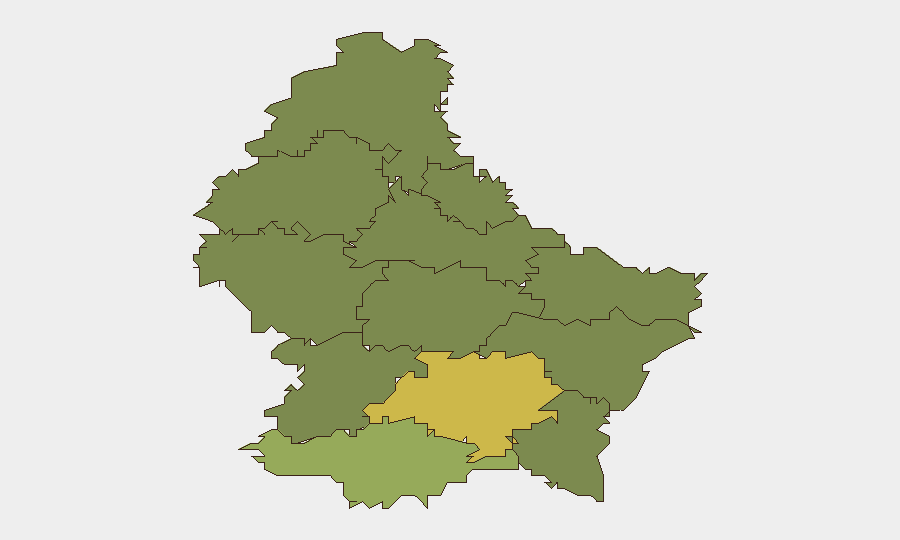
Situation Summary
Luxembourg remains in a stable, low-threat security environment with no major incidents, civil unrest, infrastructure disruptions, or terrorism-related events recorded in the last 24–48 hours. Open-source police, media, and regional security feeds confirm routine crime activity only, with no corroborated spike in violent incidents, organized activity, or public disorder. The composite national threat score of 4 reflects this benign operational picture.
Key Developments
- No significant security incidents documented in Luxembourg for August 4–6, 2026. Available police and media feeds (Grand Ducal Police "actualités," RTL Today, L'essentiel, Chronicle.lu) show no time-stamped, corroborated events meeting the threshold for reporting in the immediate 24–48-hour window.
- Routine police operations continue across all cantons. Standard interventions—traffic checks, noise complaints, minor disturbances, and alcohol enforcement—remain the dominant operational load, consistent with normal low-level criminality in a stable jurisdiction.
- No civil-unrest indicators or protest activity detected. Social-media monitoring (X/Twitter, Telegram) and civil-protection channels show no mobilization, announcements, or unrest reporting for August 4–5.
- Regional stability extends to neighboring territories. Parallel OSINT feeds for Switzerland and the Greater Region confirm no cross-border security incidents, migrations of risk actors, or infrastructure events that would secondarily affect Luxembourg.
- No cyber, critical-infrastructure, or transportation disruptions reported. Absence of alerts on energy, banking, telecommunications, or transport networks indicates operational continuity.
Highest-Risk Areas
Luxembourg Canton (risk 68) and Esch Canton (risk 55) carry the highest sub-national composite scores, consistent with their role as the nation's primary urban and industrial centers. Luxembourg City (capital) and the Esch-sur-Alzette agglomeration host the largest concentrations of population, commerce, government, and financial assets, generating a proportionally higher baseline of routine crime, petty theft, and organized-crime presence. Mersch Canton (risk 32) and Capellen Canton (risk 28) follow, reflecting secondary urban density and transport corridors. Rural and border cantons (Vianden, Clervaux, Wiltz) show the lowest scores, indicating lower incident frequency and localized, non-transnational risk profiles.
How GeoBit Would Assist
Corporate security and duty-of-care teams operating in Luxembourg should employ Intel Sweep and OSINT fusion to maintain real-time awareness of police activity, media reporting, and social-media signals across all cantons, with particular focus on Luxembourg and Esch. AOI Monitoring & Early Warning capabilities—persistent area-of-interest watch on offices, facilities, or travel routes—can alert to emerging protests, public-order disruptions, or localized crime spikes before they escalate. Network & Actor Analysis would support identification of organized-crime or extremist networks operating in higher-risk urban zones, enabling proactive asset and personnel protection.
7-Day Outlook
No indicators suggest a near-term shift in Luxembourg's threat profile. Barring unforeseen civil, political, or external triggering events, the country is expected to remain in a stable, low-incident state through mid-August. Seasonal summer patterns and vacation-period staffing of both policing and business operations may have minor dampening effects on reported incident volume.
GeoBit Intelligence, Luxembourg Daily Security Brief | 6 August 2026
Highest-Risk Areas — Ranked
| # | State / Region | Risk |
|---|---|---|
| 1 | Luxembourg Canton | 68 |
| 2 | Esch Canton | 55 |
| 3 | Mersch Canton | 32 |
| 4 | Capellen Canton | 28 |
| 5 | Grevenmacher Canton | 22 |
| 6 | Diekirch Canton | 18 |
| 7 | Echternach Canton | 16 |
| 8 | Redange Canton | 15 |
| 9 | Remich Canton | 14 |
| 10 | Wiltz Canton | 12 |
| 11 | Clervaux Canton | 10 |
| 12 | Vianden Canton | 8 |
Sources
Previous Daily Briefs
A new Luxembourg brief is written every day — each with its own risk map and downloadable CSV. Here's the last week; use the calendar to go further back.
📅 Browse every day by calendar →
Highlighted days have a brief. Tap a day for that day's map & analysis, or “csv” for that day's dataset ($5).
Atlas — our AI intelligence desk — emails them this snapshot personally. Nothing else, no list.