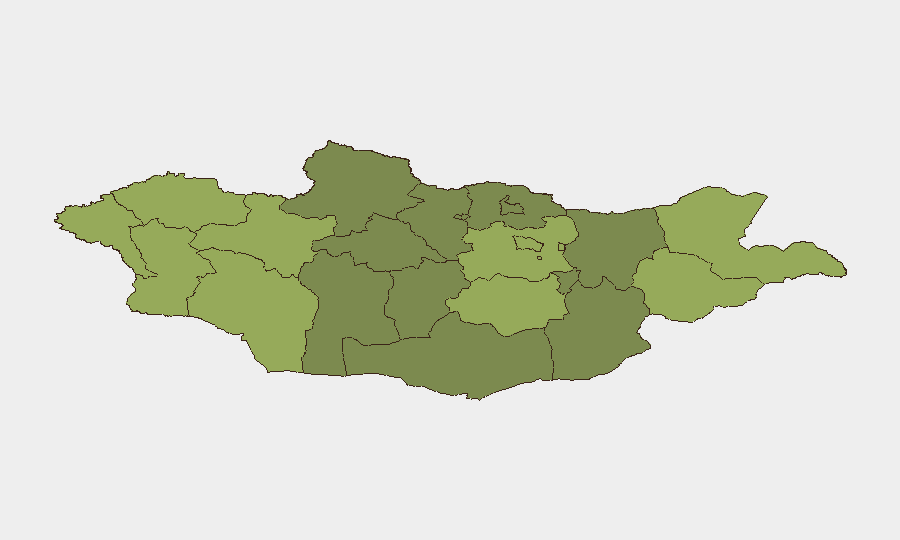
Situation Summary
Mongolia remains a stable, low-threat environment for international operations, ranked #158 globally with a composite threat score of 4. No verified security incidents, civil unrest, terrorism, organized-crime activities, or infrastructure disruptions were documented in the past 48 hours across Ulaanbaatar or provincial areas. Recent diplomatic and state-visit activity proceeded without disruption, indicating normal governance and operational conditions.
Key Developments
- No acute incidents verified in the last 24–48 hours. Web and social-media monitoring across Ulaanbaatar and all provincial regions documented no active conflict, terrorism, crime spikes, or infrastructure failures as of 16 July 2026.
- Eastern border regions (Dornod, Sükhbaatar) remain elevated-risk zones by composite score (58 and 55 respectively), but no immediate tactical incidents or cross-border activity requiring operational response was reported in the current reporting window.
- Western border regions (Uvs, Khovd, Bayan-Ölgii) carry persistent mid-to-high risk scores (52, 50, 48) consistent with historical patterns, but no acute incidents affecting travel, supply chains, or personnel safety were logged in the past 48 hours.
- Ulaanbaatar security posture remains stable. Capital-region risk score of 45 reflects baseline subnational risk; no protests, criminal escalation, or political destabilization occurred during the reporting period.
- Diplomatic engagement continues normally. A Korean presidential state visit in early July proceeded without disruption, indicating continued diplomatic presence and normal cross-border relations.
Highest-Risk Areas
Eastern and western border regions drive Mongolia's sub-national risk profile. Dornod and Sükhbaatar (scores 58 and 55) are the highest-risk provinces, likely reflecting cross-border activity, limited state capacity, and remote geography. Uvs, Khovd, and Bayan-Ölgii (52, 50, 48) along the western border present similar structural vulnerabilities. Ulaanbaatar, despite its larger footprint and international presence, scores lower (45), suggesting that provincial remoteness and border exposure—rather than urban crime or political instability—are the primary drivers of subnational risk. These areas warrant elevated monitoring for supply-chain disruption, personnel movement restrictions, and cross-border spillover, though current activity does not indicate acute threat escalation.
How GeoBit Would Assist
Corporate security teams with operations or personnel in Mongolia should employ AOI (Area-of-Interest) Monitoring & Early Warning for the high-risk eastern and western border regions (Dornod, Sükhbaatar, Uvs, Khovd) to detect any emerging cross-border activity, trafficking, or organized-crime movements before they affect supply chains or personnel. Intel Sweep, OSINT fusion, and multi-language media monitoring would provide continuous visibility of political, economic, and security developments across all provinces. Routing & Network Analysis should inform contingency planning for personnel movement, particularly in Ulaanbaatar and routes to/from border zones, to identify safe alternative corridors in the event of localized disruption.
7-Day Outlook
Mongolia's security environment is forecast to remain stable over the next 7 days, with no indicators of imminent civil unrest, terrorism, or major cross-border incidents. Border regions will retain elevated subnational risk scores, but current trajectory does not suggest operational disruption for international business or travel. Continued monitoring of diplomatic relations and cross-border activity is recommended as routine practice.
Highest-Risk Areas — Ranked
| # | State / Region | Risk |
|---|---|---|
| 1 | Dornod | 58 |
| 2 | Sükhbaatar | 55 |
| 3 | Uvs | 52 |
| 4 | Khovd | 50 |
| 5 | Bayan-Ölgii | 48 |
| 6 | Govi-Altai | 46 |
| 7 | Ulaanbaatar | 45 |
| 8 | Zavkhan | 44 |
| 9 | Töv | 42 |
| 10 | Dundgovi | 40 |
| 11 | Darkhan-Uul | 38 |
| 12 | Ömnögovi | 37 |
Sources
Previous Daily Briefs
A new Mongolia brief is written every day — each with its own risk map and downloadable CSV. Here's the last week; use the calendar to go further back.
📅 Browse every day by calendar →
Highlighted days have a brief. Tap a day for that day's map & analysis, or “csv” for that day's dataset ($5).
Atlas — our AI intelligence desk — emails them this snapshot personally. Nothing else, no list.