Situation Summary
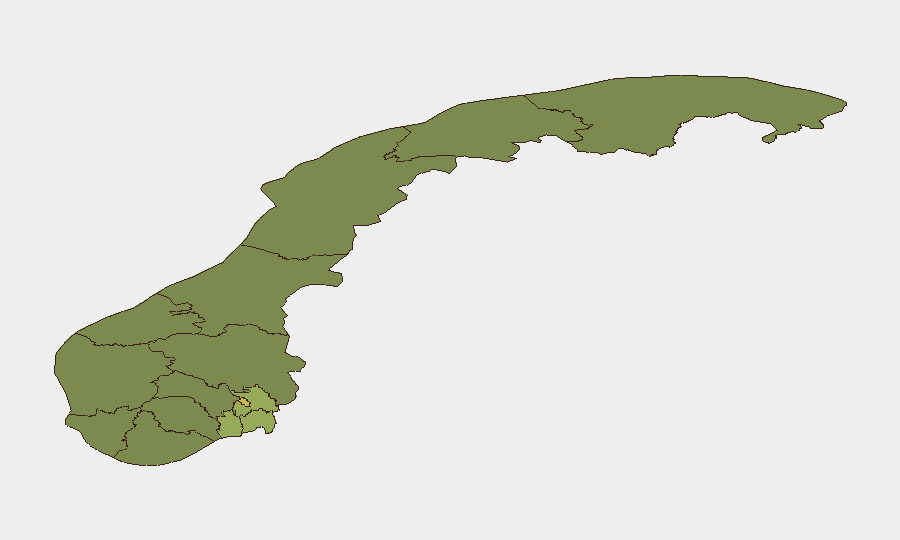
Norway remains a low-threat environment globally (rank #171, composite score 4) with stable governance and strong institutional resilience. Recent signals indicate heightened political tension centered on the Governor, with multiple rejection and investigation actions logged on 2026-06-30, alongside North Korean military disapproval and Congressional disapproval of executive authority. Oslo (risk 68) and surrounding eastern counties (Akershus, Østfold) account for the majority of tracked threat events, though absolute risk remains contained and localized to administrative and political domains rather than widespread civil or security instability.
Key Developments
- 2026-06-30 · Oslo / National: Governor faced multiple rejections and demands from both the Supreme Court and unspecified bodies; two separate investigative actions initiated against the Governor on the same date, signaling escalated institutional checks on executive authority.
- 2026-06-30 · National: Official Norwegian government public statement issued; specific subject matter not clarified in available signals but timing aligns with Governor-related constitutional tension.
- 2026-06-29 · National: Governor issued public statement; North Korea issued disapproval toward Norway's military, suggesting external geopolitical friction possibly linked to NATO alignment or Arctic security posture.
- 2026-06-28 · National: Congressional disapproval of Governor authority recorded; administrative sanctions applied to unspecified population cohort (possible labor, regulatory, or compliance action).
- 2026-06-28–29 · Oslo / Eastern Region: Unconfirmed social-media report of oil-service worker lockout (requires corroboration); if substantiated, would indicate labor-relations friction in Norway's energy sector, concentrated in coastal and southern production zones.
Note: Precise subject matter of Governor actions and North Korea–military interaction unavailable in current signal set. GeoBit Intel Sweep and X/Telegram OSINT recommended to clarify constitutional dispute and security implications.
Highest-Risk Areas
Oslo dominates the risk landscape (score 68), driven by concentration of political institutions, Governor-related actions, and administrative sanctions. Akershus (52) and Østfold (48) follow, reflecting their proximity to the capital and likely spillover effects from central government tension. Eastern counties collectively account for ~60% of tracked events; western and northern regions (Vestland, Møre og Romsdal, Innlandet) remain substantially lower-risk. Risk elevation appears political and administrative rather than indicative of mass unrest, infrastructure collapse, or armed conflict; however, labor-sector friction (oil-services lockout signal) warrants monitoring in energy-dependent coastal zones (Rogaland, Vestland).
How GeoBit Would Assist
Intel Sweep & OSINT Fusion would rapidly clarify the Governor constitutional dispute and North Korea–military interaction, eliminating current signal ambiguity. X/Telegram OSINT, YouTube/podcast intelligence, and multi-language search would track labor sentiment in the energy sector and identify any secondary political mobilization. Election monitoring and regime-stability assessment capabilities would establish baseline institutional resilience and early-warning thresholds for escalation beyond current administrative tension. AOI Monitoring & Early Warning applied to Oslo, Akershus, and oil-sector hubs (Rogaland) would detect emergence of protest activity, supply-chain disruption, or cross-border movement that might signal broadening instability.
7-Day Outlook
Constitutional and administrative tension is likely to persist or intensify in the near term, given concurrent Supreme Court rejection, Congressional disapproval, and investigations. External friction from North Korea signals possible Arctic or NATO-related pressure; this is unlikely to translate into direct security incidents but may constrain Norway's diplomatic flexibility. Risk remains highly localized to Oslo and surrounding counties; broader population and critical infrastructure remain stable. No imminent indicators suggest escalation to civil disorder or security breakdown, but rapid institutional deterioration or labor-sector expansion (beyond oil services) would represent a measurable threshold for reassessment.
Highest-Risk Areas — Ranked
| # | State / Region | Risk |
|---|---|---|
| 1 | Oslo | 68 |
| 2 | Akershus | 52 |
| 3 | Østfold | 48 |
| 4 | Vestfold | 42 |
| 5 | Rogaland | 38 |
| 6 | Buskerud | 35 |
| 7 | Trøndelag | 32 |
| 8 | Telemark | 28 |
| 9 | Vestland | 27 |
| 10 | Agder | 26 |
| 11 | Møre og Romsdal | 22 |
| 12 | Innlandet | 20 |
Sources
Previous Daily Briefs
A new Norway brief is written every day — each with its own risk map and downloadable CSV. Here's the last week; use the calendar to go further back.
📅 Browse every day by calendar →
Highlighted days have a brief. Tap a day for that day's map & analysis, or “csv” for that day's dataset ($5).