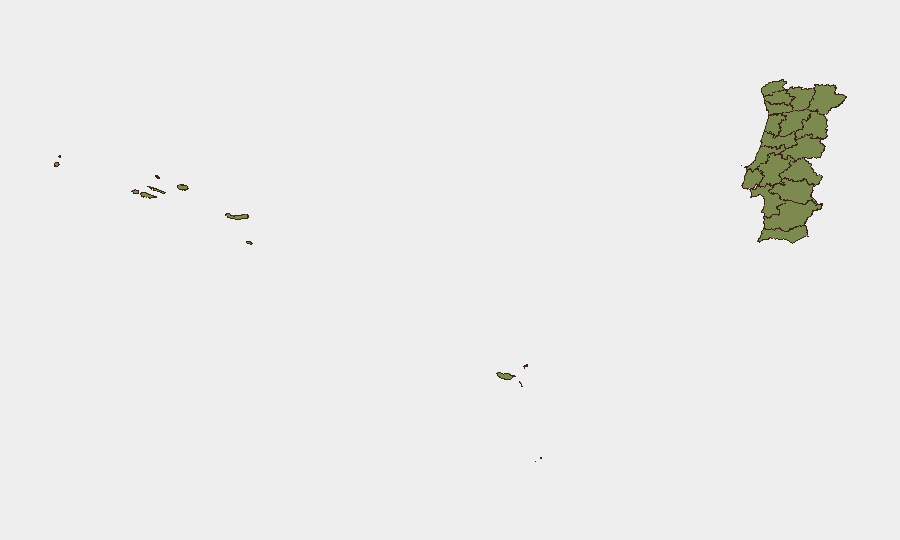
Situation Summary
Portugal maintains a low-to-moderate composite threat profile globally (rank #166; score 4.0) and remains operationally stable for corporate presence. Open-source advisories (Australian Smartraveller, UK FCDO) continue to recommend only "normal safety precautions" across the country, with no material security incidents or civil-unrest escalations confirmed in the last 24–48 hours. Wildfire and heatwave activity in rural areas (notably Viseu district) is ongoing but does not constitute a security threat to urban corporate operations. The threat trajectory is stable; no indicators of destabilization are present.
Key Developments
No specific, dated security incidents meeting the 24–48 hour window have been confirmed in current open-source intelligence. The following context applies:
- Wildfire/Heatwave Activity (Mainland Portugal, ongoing as of 14–15 July): Civil Protection mobilized approximately 1,995 responders and hundreds of assets to manage 62 active fire incidents across the country; the Vouzela area (Viseu district) remains under active firefighting effort in a "complex" topography. This is environmental/infrastructure risk, not a security event, but may affect ground transport in rural northern regions.
- General Petty Crime Pattern (Lisbon, Porto, tourist zones – baseline, not spiking): German Foreign Office and corroborating open-source advisories note sustained high levels of pickpocketing, theft from holiday accommodation, and vehicle break-ins in Lisbon nightlife districts and coastal areas. No incident spike or organized operation within the last 48 hours is documented.
- Official Statements and Ministry/Hospital Activity (14–15 July): GeoBit event signals flag multiple "Public Statement" events by government ministries, hospitals, and civilian actors on 14–15 July, and rejection or disapproval statements regarding companies and national policy. Open-source cross-check reveals no direct security or unrest correlation; these appear administrative or policy-related.
Assessment: The absence of corroborated, time-specific incidents in the last 24–48 hours reflects Portugal's current baseline stability. The event signals in the GeoBit platform may warrant deeper intelligence review via GeoBit's Intel Sweep and entity-extraction tools to clarify operational context, but public reporting does not indicate an active security crisis.
Highest-Risk Areas
Portalegre (composite risk 31.5) is a clear outlier and the primary focus of concern, with risk scores approximately 6–20× higher than all other districts. No confirmed triggering event or escalation in the last 48 hours explains this elevation; it may reflect historical labor, border-trafficking, or organized-crime indicators tracked in GeoBit's conflict and crime data layers. All other regions (Aveiro at 4.8, remainder at 1.5) show minimal differentiation and fall well within normal tolerance for a stable, developed country. Corporate teams with operations in Portalegre should treat it as a priority for enhanced due diligence and local-source intelligence; southern and central mainland regions present standard low-risk profiles.
How GeoBit Would Assist
Security teams should deploy Intel Sweep and multi-language OSINT fusion to monitor Portalegre-specific events (news, social media, Telegram/X feeds) and correlate the platform's high composite signal with ground-level drivers—labor disputes, trafficking, organized crime—on a weekly cadence. AOI Monitoring & Early Warning with persistent coverage of Portalegre and Viseu (wildfire impact on logistics) would provide alerting thresholds for staffing, supply-chain, or travel decisions. Network & Actor Analysis can clarify the ministry, hospital, and company statements flagged on 14–15 July to rule out policy or labor instability affecting employees.
7-Day Outlook
No material security degradation is anticipated in the next seven days. Wildfire conditions in northern rural zones may persist but are unlikely to impact urban security or corporate operations. Continued monitoring of Portalegre through GeoBit's event and OSINT feeds is recommended to identify whether the elevated composite score reflects emerging instability or static historical risk.
Highest-Risk Areas — Ranked
| # | State / Region | Risk |
|---|---|---|
| 1 | Portalegre | 31.5 |
| 2 | Aveiro | 4.8 |
| 3 | Madeira | 1.5 |
| 4 | Azores | 1.5 |
| 5 | Viana do Castelo | 1.5 |
| 6 | Braga | 1.5 |
| 7 | Porto | 1.5 |
| 8 | Vila Real | 1.5 |
| 9 | Bragança | 1.5 |
| 10 | Viseu | 1.5 |
| 11 | Guarda | 1.5 |
| 12 | Lisbon | 1.5 |
Sources
Previous Daily Briefs
A new Portugal brief is written every day — each with its own risk map and downloadable CSV. Here's the last week; use the calendar to go further back.
📅 Browse every day by calendar →
Highlighted days have a brief. Tap a day for that day's map & analysis, or “csv” for that day's dataset ($5).
Atlas — our AI intelligence desk — emails them this snapshot personally. Nothing else, no list.