Situation Summary
Qatar faced an active air-defense engagement on 2026-07-17 following what appears to be a coordinated regional escalation. A missile or drone attack on Doha was intercepted by Qatari armed forces, resulting in one child injured by shrapnel and triggering emergency shelter-in-place directives across the capital. The incident reflects broader regional tensions, with signal traffic indicating military and diplomatic friction involving Iran, multiple state actors, and internal Qatari disagreement on response posture. Risk trajectory is elevated and volatile.
Key Developments
- Doha, 2026-07-17, 0400–0600 UTC (estimated): Qatari armed forces intercepted an inbound missile or drone attack; mobile emergency alerts instructed residents to shelter indoors and avoid windows. Audible explosions and air-defense activity reported across the capital.
- Doha, 2026-07-17: Qatar's Interior Ministry confirmed one child sustained shrapnel injuries during interception operations and was receiving medical treatment. No mass-casualty reports; extent of structural damage not yet detailed.
- Qatar (national), 2026-07-17: Qatari authorities issued two successive threat-level elevations in early morning hours; security posture raised and airspace activity heightened.
- Qatar, 2026-07-17: Signal data indicates reciprocal military responses by Qatar against both military and ministry-linked targets, alongside a formal rejection of Iranian communications—consistent with a tit-for-tat escalation cycle.
- Regional diplomatic friction, 2026-07-15 to 2026-07-17: Sri Lankan arrest/detention activity in Qatar, German rejection of Qatari actions, and Iranian public statements preceded the missile intercept. Internal Qatari disapproval signals suggest policy disagreement on escalation response.
- Doha, 2026-07-17: Live reporting and social media corroborate witness accounts of air-defense engagement, shelter orders, and emergency services response; no conflicting accounts of the intercept itself.
Highest-Risk Areas
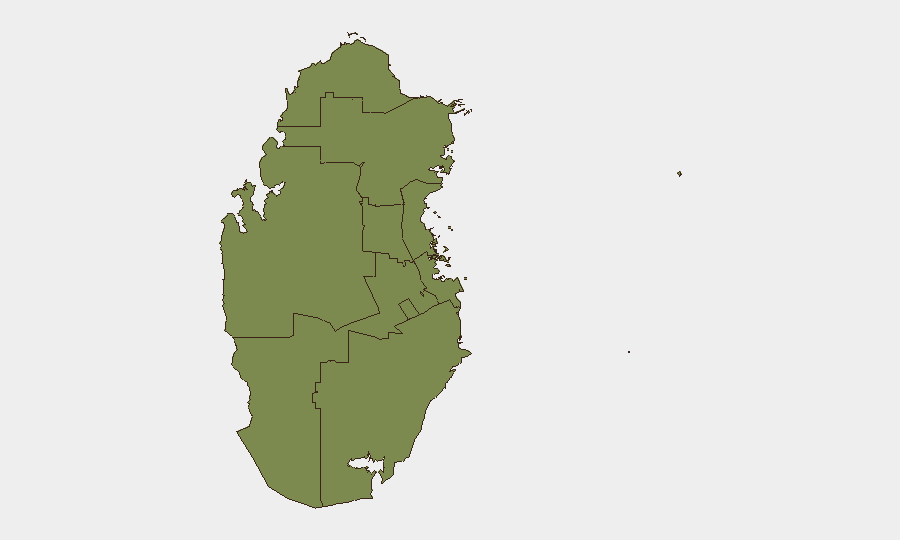
Doha dominates the risk ranking (31.8) and is the current epicenter: the missile intercept, injury, and emergency response occurred within the capital, and ongoing air-defense readiness, diplomatic friction, and potential for secondary incidents concentrate there. Al Shahaniya (18.1) shows elevated risk—likely reflecting industrial/strategic assets or proximity to sensitive facilities—and warrants secondary monitoring. Remaining emirates (Al Khor, Ash Shamal, Al Rayyan, and others) register minimal composite scores, indicating risk is highly concentrated in the capital and its immediate vicinity.
How GeoBit Would Assist
Security teams should deploy AOI Monitoring & Early Warning on Doha and Al Shahaniya to detect further air activity, military mobilization, or emergency response patterns in real time. OSINT Fusion & Corroboration (X/Twitter, Telegram, local media, radio SIGINT) will isolate official statements from rumor, validate casualty counts, and track escalation signals. Satellite & Imagery Analysis combined with GIS & Spatial Analysis would identify damage extent, air-defense positions, and infrastructure impact for duty-of-care assessment of personnel and assets in affected zones.
7-Day Outlook
Short-term risk remains elevated: tit-for-tat military signaling, diplomatic rejections, and internal Qatari disagreement on response posture suggest further exchanges are possible within 48–72 hours. Doha will likely maintain heightened air-defense operations and restricted airspace. Corporate operations should assume continued shelter protocols and potential supply/mobility disruptions through 2026-07-20, with monitoring for de-escalation cues (diplomatic statements, stand-down orders) or further escalation triggers.
Highest-Risk Areas — Ranked
| # | State / Region | Risk |
|---|---|---|
| 1 | Doha | 31.8 |
| 2 | Al Shahaniya | 18.1 |
| 3 | Al Khor and Al Thakhira | 2.7 |
| 4 | Ash Shamal | 1.8 |
| 5 | Al Rayyan | 1.8 |
| 6 | Al-Daayen | 1.8 |
| 7 | Umm Salal | 1.8 |
| 8 | Al Wakrah | 1.8 |
Sources
Previous Daily Briefs
A new Qatar brief is written every day — each with its own risk map and downloadable CSV. Here's the last week; use the calendar to go further back.
📅 Browse every day by calendar →
Highlighted days have a brief. Tap a day for that day's map & analysis, or “csv” for that day's dataset ($5).
Atlas — our AI intelligence desk — emails them this snapshot personally. Nothing else, no list.